
short term rental website
What a Great Short Term Rental Website Needs to Show
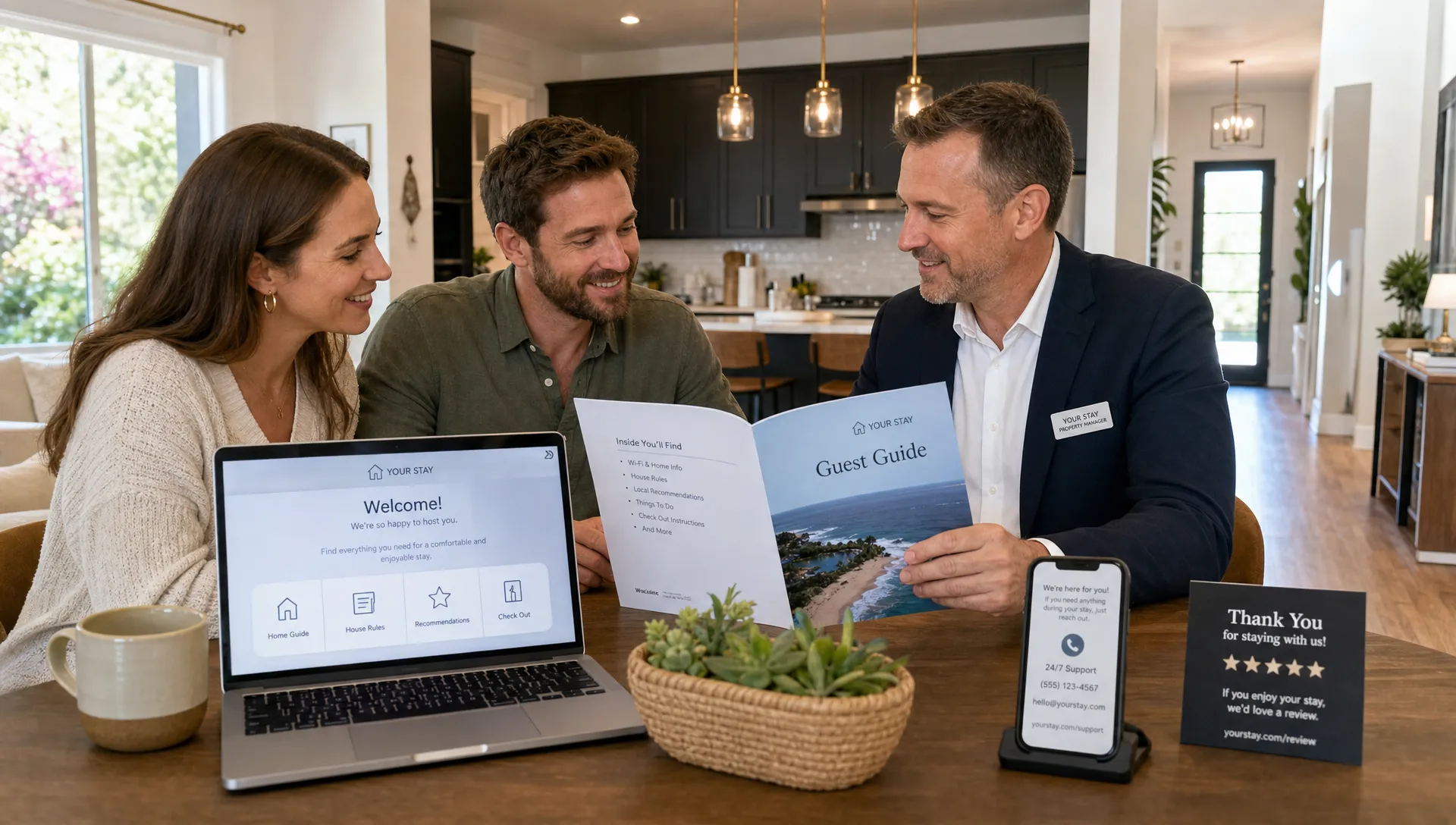
A great short term rental website should show trust, total cost, property reality, guest support and operating competence before it asks anyone to book. Pretty photos matter, but they are not enough. Luxury guests want to know exactly what they are paying for. Owners want to know whether the company behind the site can protect their asset, reviews and revenue.
A short term rental website is not just a digital brochure. It is the place where travelers decide whether a home feels credible and where homeowners decide whether a management company understands the details that make luxury rentals work.
Generic sites usually make the same mistake: they lead with lifestyle copy, hide the practical details and assume the guest will ask questions later. That creates friction. In our world, friction becomes abandoned bookings, preventable messages or mismatched expectations after arrival.
A short term rental website has to prove the home is real
Luxury travelers are skeptical, and they should be. A rental home can look beautiful in six wide-angle photos and still be wrong for the trip. The website needs to show the home clearly enough that guests can picture the stay before they commit.
At minimum, every property page should answer the practical questions without making the guest hunt:
- Where is the home, and what is nearby?
- How many people does it truly sleep?
- Which amenities are private, shared or optional?
- What does check-in look like?
- What fees apply before payment?
- Who helps if something goes wrong?
For Lumina, this matters because we manage private luxury homes, not hotel rooms or shared resort inventory. If a listing says “pool,” guests need to know whether that means a private backyard pool, a community pool or a staged amenity shot from a nearby club. Those are not small differences when someone is planning a family trip, executive stay or anniversary weekend.
What should guests understand in the first minute?
Guests should understand the property type, location, total cost, sleeping layout, standout amenities, booking terms and support model in the first minute. If they have to open five tabs or send three questions before they know whether the home works, the website is not doing its job.
Here is the simple test we use when reviewing a rental page.
| Guest question | What the website should show | Why it matters |
|---|---|---|
| “Is this the right location?” | Neighborhood context, drive times and nearby anchors | Guests book based on trip purpose, not just city name |
| “Will everyone sleep comfortably?” | Room-by-room bed details, not just total guest count | Overstated capacity leads to poor reviews |
| “What is private?” | Clear notes on pools, hot tubs, patios, garages and workspaces | Luxury guests pay for privacy |
| “What will this cost?” | Nightly rate, taxes, fees and optional add-ons before checkout | Surprise costs create distrust |
| “Who is taking care of me?” | Support hours, response expectations and arrival process | Service quality is part of the product |
If you are comparing booking platforms from the guest side, our guide to vacation rental property websites worth using goes deeper on what separates useful rental sites from glossy ones.
Pricing transparency is no longer optional
Guests do not object to paying for a premium home. They object to being surprised.
A strong short term rental website should show total price early, explain mandatory fees clearly and separate optional upgrades from required charges. Cleaning fees, occupancy taxes, pet fees, pool heat, early check-in, late checkout and security deposits should not appear as a final-step surprise.
The direction of travel is clear. The Federal Trade Commission announced a final Junk Fees Rule covering short-term lodging and live-event ticketing, focused on making total prices visible upfront. Even aside from compliance, transparent pricing is better hospitality.
We learned this operationally with pool heat in Scottsdale. In winter, pool heat can materially change a host’s margin if it is treated as an afterthought. The better approach is to say plainly what is included, what is optional and how the fee works. Guests appreciate clarity, and owners avoid absorbing costs that should have been priced properly.
That is the standard I like to see on a rental website: no games, no mystery line items, no “luxury” language covering up unclear economics.
The best property pages sell the stay, then remove anxiety
A property page has two jobs. It should make the home desirable, then make booking feel safe.
Desire comes from strong photography, good design and a clear sense of place. Safety comes from proof: reviews, policies, accurate amenities, fast support, secure payments and visible operating standards.
This is where many short term rental websites fall apart. They show the pool, but not the parking. They show the kitchen, but not whether it is equipped for a real family dinner. They show the bed, but not the room layout. They use words like “concierge” without explaining what support actually looks like.
For Lumina guests, the operational details are part of the stay. Smart lock access, high-speed Wi-Fi, full kitchens, laundry, workspaces and proactive communication are not website filler. They are the things that make a private home feel easier than a hotel room, especially for longer stays and corporate travel.
If your trip is more than a weekend, our guide on how to choose home rentals short term for longer trips covers the details I would check before booking an extended stay.
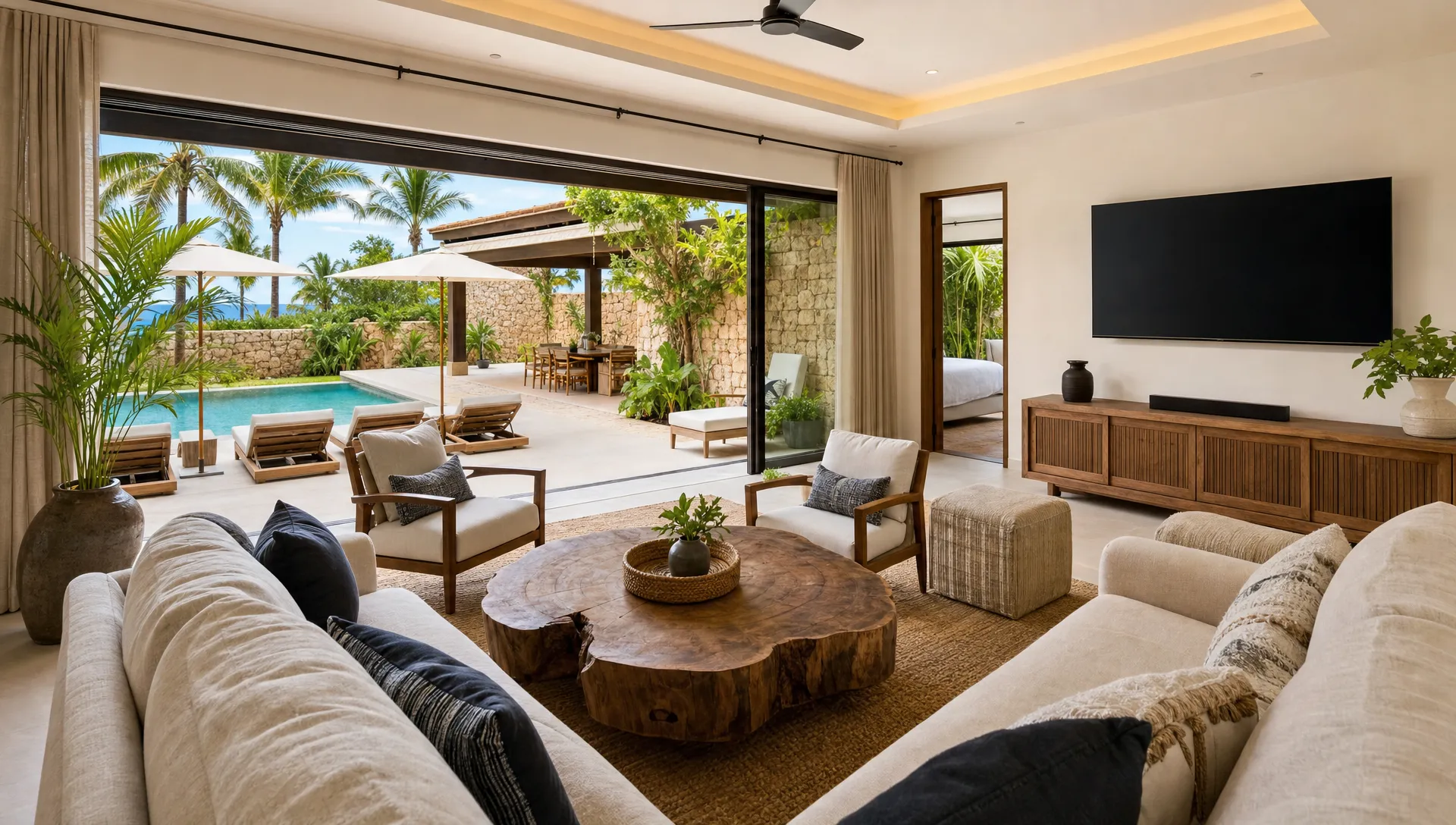
What a luxury short term rental website should show owners
Owners read rental websites differently than guests. They are not just asking, “Would I stay here?” They are asking, “Would I trust this company with my home?”
A homeowner-facing website should show the service model behind the scenes. That means more than “we maximize revenue” or “we handle everything.” Those claims are everywhere. Owners need to see what “everything” includes.
A credible owner page should make these points clear:
- How the company handles guest communication
- Who coordinates cleaning and inspections
- How maintenance is identified and dispatched
- How pricing decisions are made
- Which platforms the home is listed on
- What smart home tools are used
- How owners receive performance visibility
- What kind of homes the company is built to manage
For luxury properties, positioning matters. A five-bedroom Scottsdale home, a Manhattan Beach retreat and a San Juan extended-stay property should not be marketed like generic apartment inventory. The brand has to match the asset. If an owner is building a direct booking brand from scratch, working with a branding and go-to-market partner for ambitious brands can help clarify the market position before money is spent on design, copy or ads.
The same principle applies to property management. A strong website should reveal the company’s operating philosophy. If it only talks about income and never talks about guest experience, maintenance standards or response time, I would be cautious.
Should an owner rely only on marketplace listings?
Marketplace listings are useful, but owners should not rely on them as the entire strategy. A dedicated short term rental website or branded booking presence helps build trust, support repeat guests and show the service standards behind the property. The key is that the website must be backed by real operations, not just a booking button.
Owners evaluating management partners can use our guide on how to compare short term rental management companies to pressure-test what a company promises against what it actually handles.
Design matters, but operations convert
A beautiful site can make a guest stop scrolling. Operations make them book, arrive smoothly and leave a five-star review.
When we audit how a rental is presented online, we look for the unglamorous details first. Can the guest tell how they get inside? Are pool and hot tub rules clear? Is parking explained? Does the checkout process feel secure? Are cancellation terms written in plain English? Does the support promise sound real?
At Lumina, our guest service model uses AI-powered support with a sub-10-minute average response time, backed by operational oversight. That only works because the property information is organized before the guest ever asks. A website should reduce repetitive questions by answering the right ones upfront.
| Website signal | What it tells the guest | Operational requirement behind it |
|---|---|---|
| Smart lock check-in | Arrival will be simple and private | Reliable codes, backup access and clear instructions |
| Detailed amenity notes | The home matches the trip need | Accurate inspections and updated listing content |
| Fast support promise | Help is available when needed | Messaging coverage and escalation process |
| Transparent add-ons | No hidden surprises | Pricing rules and owner margin protection |
| Recent reviews | Other guests had a good stay | Consistent cleaning, maintenance and service |
A website is only one layer of what a great vacation rental company should handle. The real value is in the system behind the site: pricing, photography, listing accuracy, guest care, maintenance, cleaning coordination and owner reporting.
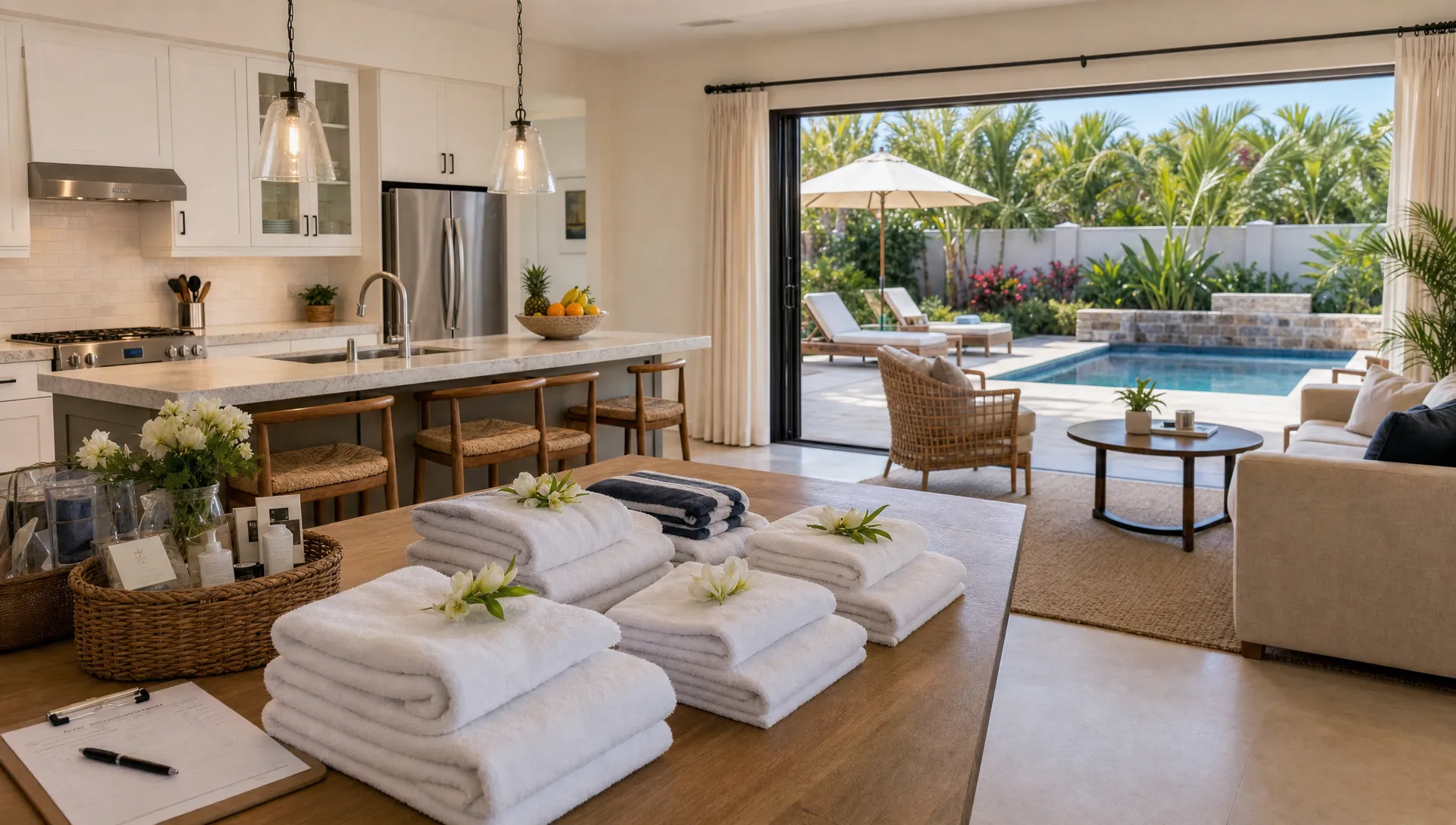
How to evaluate whether a short term rental website is doing its job
A good website should make the next decision easier. For travelers, that decision is whether to book. For owners, it is whether to trust the company managing the booking experience.
Use this checklist when evaluating any short term rental website:
- The photos show full rooms, outdoor spaces and practical details, not just styled corners.
- The description explains who the home is best for, such as couples, families, executives or extended-stay guests.
- The sleeping layout is specific enough to prevent awkward surprises.
- Fees and optional upgrades are visible before checkout.
- Policies are written for guests, not lawyers.
- Reviews are easy to find and tied to the real guest experience.
- The support model is clear, including response expectations.
- Owner-facing pages explain the management scope, not just projected upside.
If a site can do those things cleanly, it is already ahead of most rental websites. The goal is not to overwhelm guests with every operational detail. The goal is to show enough of the right detail that people feel safe making a high-value decision.
Common mistakes we see on short term rental websites
The biggest mistake is using “luxury” as a substitute for specificity. Luxury is not a marble countertop in one photo. It is the combination of privacy, design, location, service and reliability.
Other mistakes show up often:
- Over-edited photography that makes the home feel less credible
- No captions explaining which amenities are private
- Vague neighborhood descriptions with no real trip context
- Fees that appear too late in the checkout flow
- Missing parking, Wi-Fi, pet or pool heat details
- Owner pages that promise revenue without explaining execution
- Contact forms that feel like a dead end
One owner once told us he was nervous that smart locks would make his home feel impersonal. In practice, guests usually prefer not waiting on a key handoff. The warmth comes from communication, preparation and thoughtful touches inside the home, not from making arrival more complicated than it needs to be.
That is the kind of lesson a website should reflect. It should not just market the home. It should show that the operator understands how guests behave.
Frequently Asked Questions
What is the most important thing a short term rental website should show? It should show trust first: accurate photos, clear pricing, real reviews, specific amenities, support details and easy booking terms. Guests need to feel confident that the home they see online is the home they will walk into.
Does a direct booking website need reviews? Yes. Reviews reduce perceived risk, especially for luxury travelers booking high-value stays. A direct booking site without visible guest proof asks the traveler to trust the brand without evidence.
What should owners look for on a property management website? Owners should look for clear service scope, pricing strategy, guest communication standards, cleaning and maintenance coordination, reporting visibility and proof that the company understands luxury positioning.
Can a website make up for weak operations? No. A polished website can win the first booking, but weak operations show up in messages, refunds, complaints and reviews. The website should reflect a real operating system, not hide the lack of one.
If you own a luxury home, your website should not be doing all the work
A strong short term rental website helps, but the real performance comes from the management system behind it. Lumina handles luxury vacation rental positioning, guest communication, booking management, cleaning coordination, smart home tools, pricing strategy and owner support across premium U.S. markets.
If you want to see what your home could earn without self-managing the day-to-day work, connect with Lumina for a free revenue estimate, email newhomes@staywithlumina.com or call (602) 905-7540.
I care about this topic because websites set expectations our operations have to fulfill. A polished page can win attention, but the guest remembers whether arrival, pool heat, Wi-Fi and support matched the promise. That is where trust is built.
Signed, Shariann