
vacation rental property websites
Vacation Rental Property Websites Worth Using
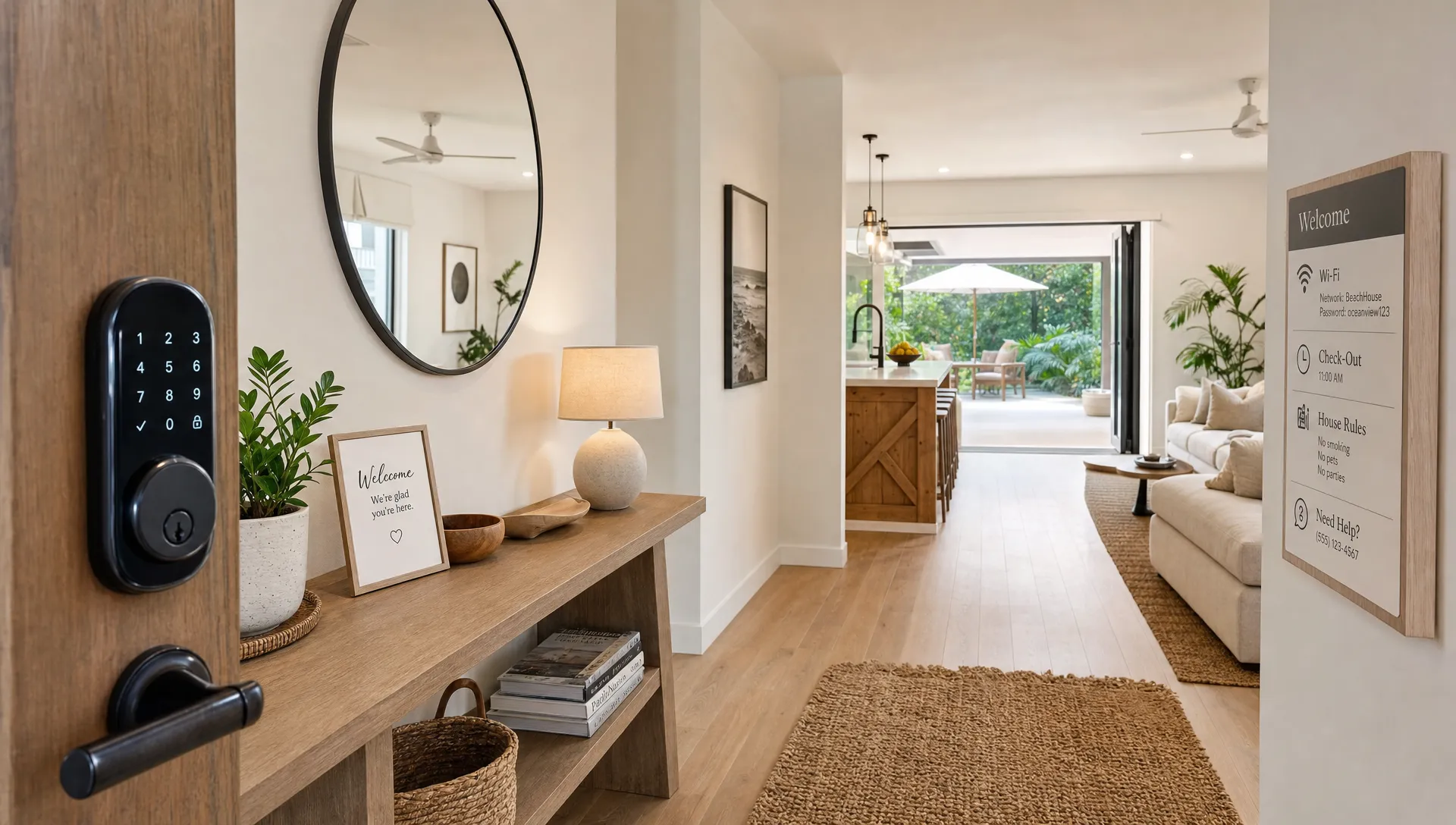
The vacation rental property websites worth using are the ones that make the real stay easy to verify before you pay: who operates the home, what the total cost is, how fast support responds, which amenities are private and what happens if something breaks. Pretty photos matter, but they are not proof of a good stay. I judge a rental website by operational clarity first and design second.
At Lumina, we read listing pages like operators, not casual browsers. A good website answers the questions guests ask at 9 p.m. after a flight, not just the questions a marketer thinks will sell the house.
What makes a vacation rental property website worth using?
A vacation rental property website is any site that lets travelers discover, compare, book or manage a private vacation home. The useful ones give enough detail to reduce risk before the reservation: accurate amenity lists, current availability, transparent fees, review history and a clear path to human or AI-assisted support.
The weak ones feel polished but thin. They show the pool at sunset, then hide parking rules, pool heat costs, house access instructions, cancellation terms and cleaning standards until after you pay.
When we onboard a home, one of the first things we audit is whether the online promise matches the real operation. If a site says luxury but the guest has to wait hours for a reply about early check-in, that is not luxury. Lumina properties are built around private-home stays, smart lock access, high-speed Wi-Fi, proactive communication and 24/7 AI-powered guest support with an under 10-minute average response time. The website should make that support visible.
What should the best vacation rental property websites show before you book?
The best vacation rental property websites show the full stay, not just the prettiest room. Before you enter a card, you should be able to confirm the exact property type, total price, bedroom layout, parking, amenities, check-in process, support model, cancellation policy and review quality.
The basics I look for are:
- Clear total pricing before checkout
- Full-home access, not a shared or partial property
- Recent reviews that mention cleanliness, communication and accuracy
- Amenity details with real limits, such as pool heat, EV charging or pet rules
- A local or professional operator with verifiable contact information
- Arrival instructions that do not depend on a manual key handoff
- Support expectations before, during and after the stay
If a site avoids these details, I do not assume the details are fine. I assume the stay will require more work from the guest.
Vacation rental property websites worth using, by type
No single website type wins every trip. For a family gathering, a direct operator site may be best. For early research, a large marketplace can be useful. For a two-month executive stay, an extended-stay or corporate housing site might show details a weekend leisure platform skips.
| Website type | Best use | What to verify | My operator take |
|---|---|---|---|
| Direct booking websites | Booking professionally managed private homes | Operator identity, support response time, fee clarity | Best when you already trust the operator |
| Curated luxury rental sites | High-end homes with stronger design standards | Management quality, local support, exact amenities | Good for filtering out generic inventory |
| Large rental marketplaces | Broad discovery and review volume | Fees, cancellation terms, host responsiveness | Useful for research, but compare carefully |
| Extended-stay housing sites | Corporate trips, relocations and long stays | Workspace, laundry, parking, Wi-Fi, invoicing | Strong fit when the stay has business needs |
| Local operator websites | Destination-specific expertise | Permit status, local rules, guest support | Often more accountable than anonymous listings |
This is why I do not tell guests to use one universal site. I tell them to use the right site for the trip and to verify the operator behind the page.
1. Direct booking websites from professional operators
Direct booking websites are usually the strongest option when the operator has a real hospitality system behind the homes. You are not just booking a listing. You are booking the company that will answer the message, prepare the home, handle the cleaner, fix the Wi-Fi issue and tell you whether the driveway fits two cars.
This matters more in luxury homes because the stakes are higher. A five-bedroom Scottsdale stay with a private pool is not the same operational challenge as a one-night city apartment. Pool heat, trash pickup, landscape crews, smart locks, garage access and outdoor quiet hours all need management. The website should explain enough for you to feel the home is being run, not just advertised.
A direct site is worth using when it offers:
- Specific home pages with real photos and accurate amenity descriptions
- A clear booking path without surprise steps
- Fast messaging before booking
- Policies written for guests, not just legal protection
- Proof that the operator manages multiple details beyond taking payment
At Lumina, that is the model we care about: handpicked private luxury homes, exclusive access to the amenities, smart home technology and concierge-level support. If you are comparing booking paths, our guide to rental homes websites that make booking easier goes deeper on the friction points that usually separate a smooth reservation from a stressful one.
Soft note from our team: If you already know you want a managed private home rather than a hotel room, start with the operator's direct site. You will usually get a clearer sense of the home, the support and the real stay before you commit.
2. Curated luxury rental websites
Curated luxury rental websites can be useful because they remove some of the noise. Instead of forcing you to sort through thousands of unrelated listings, they tend to emphasize design, location and premium amenities.
The caution is that curation does not always mean operational control. Some sites are marketing layers over properties managed by someone else. That can still work well, but you need to know who is responsible if the spa is cold, the gate code fails or the home is missing a promised crib.
I look for language that explains the management model. Does the site say who handles the property locally? Are reviews tied to the home or only the platform? Can you ask detailed questions before booking and get a precise answer? Luxury is not just marble countertops. It is how quickly someone solves an issue without making the guest chase.
3. Large marketplaces for discovery
Large marketplaces are good research tools. They give travelers broad availability, comparison filters and review volume. I use them the way I use a map: helpful for orientation, but not the final authority.
The problem is inconsistency. Two properties can sit side by side in search results and operate completely differently. One may be run by a full-service team with professional cleaning, smart locks and proactive communication. The next may be a lightly managed second home where the owner replies when they have time.
That is not always visible from the search page. You have to read the reviews for operational clues. Look for guests mentioning accurate photos, easy arrival, spotless condition, fast help and quiet privacy. Also pay attention to what they do not mention. If a listing has dozens of reviews about the view but none about communication or cleanliness, I keep digging.
The Federal Trade Commission has also warned travelers to be cautious of vacation rental scams, especially requests to pay outside secure systems or listings that feel too good to be true. Their guidance on avoiding vacation rental scams is worth reading before sending money to any unfamiliar operator.
4. Extended-stay and corporate housing websites
For executives, production crews, insurance housing, relocations or month-long work trips, a standard leisure booking page may not provide enough information. Extended-stay rental websites should make practical living details obvious.
A strong extended-stay page should answer questions about Wi-Fi reliability, workspace, laundry, parking, kitchen equipment, noise expectations, access, receipts and mid-stay cleaning options. A luxury home can be beautiful and still be a poor corporate rental if guests cannot take video calls or receive packages.
At Lumina, we think about this differently than a hotel. Corporate travelers often need privacy, space and consistency, but they also need the home to function like a work base. That means full kitchens, laundry, smart access and support that does not disappear after check-in.
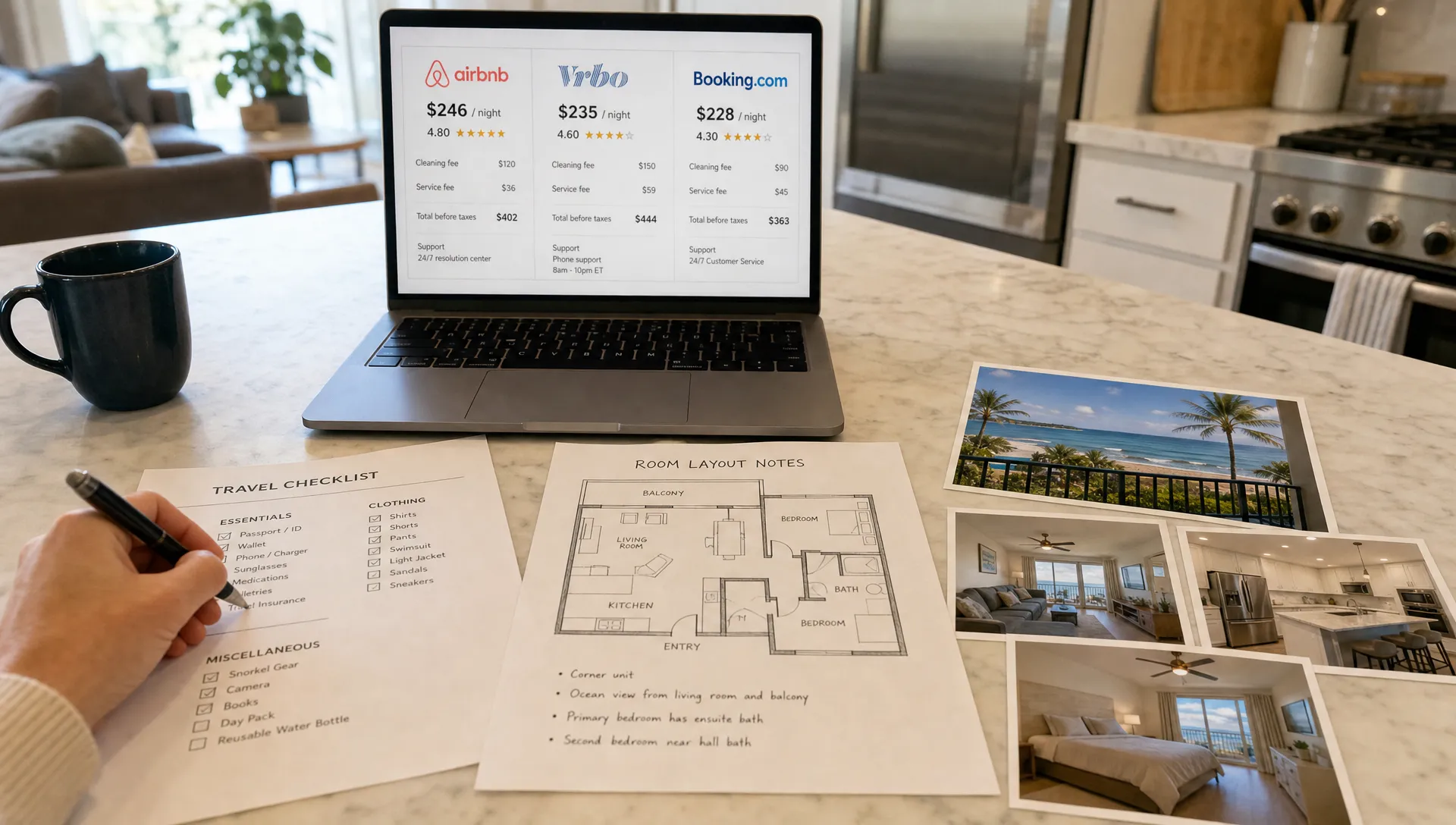
5. Local operator and destination-specific websites
Local operator websites are often underrated. A good local team knows the neighborhood, the parking constraints, the seasonal quirks and the realistic drive times. This matters in beach markets, mountain towns and high-demand urban neighborhoods where a few blocks can change the entire stay.
The same principle applies to the non-lodging pieces of a trip. When guests are planning a high-touch itinerary, I prefer direct websites for the people delivering the experience. If you are building a wellness day into a Spain itinerary, for example, a direct provider such as Relax VLC's Valencia massage studio gives you a clearer view of treatments, booking options and the actual team than a generic reseller page.
For vacation rentals, the local site should still meet a high bar. Local does not excuse vague policies or poor checkout flow. It should add context, not create extra work.
The comparison checklist I use before trusting a rental website
When travelers ask me how to choose between several homes, I tell them to stop ranking properties by photo quality alone. A better method is to compare the operational signals side by side. We built a fuller process in our guide on how to compare vacation rental properties like an expert, but this table covers the quick version.
| Signal | What good looks like | Red flag |
|---|---|---|
| Pricing | Taxes, fees and optional charges are visible before payment | The low nightly rate changes late in checkout |
| Photos | Rooms, outdoor areas, bathrooms and amenities are shown clearly | Only lifestyle shots or repeated angles |
| Support | Response expectations are stated and easy to test | No clear contact path before booking |
| Reviews | Recent guests mention cleanliness, accuracy and communication | Old reviews or vague praise only |
| Amenities | Details explain what is private, shared or seasonal | Pool, hot tub or EV charger listed without usage notes |
| Access | Smart lock or clear arrival process | Unclear key handoff or last-minute instructions |
| Policies | Cancellation, pets, events and quiet hours are written plainly | Important rules appear only after payment |
Operator tip: Send one specific question before booking. Ask something practical, such as whether the pool is heated in your travel month or whether two vehicles can park on-site. The speed and accuracy of that reply tells you a lot.
Red flags that a vacation rental website is not worth using
A weak website usually reveals itself before checkout. The issue is that travelers get emotionally attached to the photos and start excusing missing details. I have watched guests do this with homes that looked beautiful online but were clearly under-managed from the first message.
The biggest red flags are vague ownership, unclear fees, old reviews, no local context, slow replies and policies that appear only after you start paying. I am also cautious when a property description reads like it could belong in any city: luxury finishes, perfect location, unforgettable experience. That language tells you nothing about where you will park, how the beds are arranged or whether the hot tub is serviced between stays.
For higher-end trips, the website should also avoid hiding behind automation. I like technology. We use AI-powered guest service because it helps guests get faster answers. But technology should make hospitality more responsive, not more distant. If a site has chat widgets but nobody can answer a real property question, that is decoration, not service.
What owners can learn from the websites guests trust
Property owners should pay attention to this too. The website your home appears on shapes the type of guest you attract, the expectations they bring and the reviews they leave afterward.
A cheap-looking or incomplete listing can train guests to shop only on price. A polished but vague listing can create disputes because people imagined details the site never confirmed. A strong property website positions the home accurately, explains the value and attracts guests who understand what they are booking.
One owner we worked with was hesitant about smart locks because he thought guests would find them impersonal. After seeing guest feedback, his concern changed. People liked not coordinating a key handoff after flights, dinners or late arrivals. The lesson was simple: high-end guests do not need more ceremony. They need a smooth arrival and confidence that support is there if something goes wrong.
For owners, that means your website presence should show operational depth: professional photography, accurate copy, thoughtful pricing, fast messaging, clear house rules and support that protects the guest experience. If the website cannot communicate that, the property is underrepresented before the guest even arrives.
Which website type should you use for each trip?
The right choice depends on the trip's complexity.
For a romantic weekend, I would prioritize direct booking sites or curated luxury operators that can help with occasion details, privacy and arrival timing. For a family vacation, I would care most about layout, bathrooms, kitchen function, laundry and private outdoor space. For a corporate stay, I would look for extended-stay readiness and support that can handle receipts, Wi-Fi concerns and flexible arrival plans.
For groups, do not let the search filter make the decision for you. A home that sleeps ten on paper may not work for ten adults if two beds are in a loft, there are only two bathrooms or the dining table seats six. Good websites make those tradeoffs easy to see.
If a site forces you to guess, keep looking.
Frequently Asked Questions
What is the safest vacation rental property website to use? The safest option is usually a website that clearly identifies the operator, protects payment, shows recent reviews and gives you a direct support path before booking. Direct booking sites from reputable professional managers can be excellent when the company is verifiable and responsive.
Is it better to book direct or through a large marketplace? Book direct when you trust the operator and want clearer communication, fewer layers and a stronger understanding of the home. Use large marketplaces for discovery, review comparison and early research, then evaluate whether the direct operator site gives you a better booking experience.
How do I know if a luxury vacation rental website is legitimate? Check for specific property details, consistent branding, secure checkout, recent reviews, clear policies and contact information that produces a real response. Be careful with sites that pressure you to wire money, avoid written communication or offer luxury homes far below market norms.
What features matter most on vacation rental property websites for families? Families should look for accurate bedroom layouts, bathroom count, laundry, kitchen equipment, parking, pool safety notes, child-related policies and fast support. A pretty home can still be a poor family fit if the layout is vague.
What features matter most for corporate or extended stays? Corporate travelers should verify Wi-Fi, workspace, laundry, parking, kitchen function, quiet hours, access instructions, receipts and mid-stay service options. Extended stays need a home that works operationally, not just visually.
Book through websites that make the stay clear
The vacation rental property websites worth using all have one thing in common: they reduce uncertainty. They make the home, the operator, the price and the support model easy to understand before you book.
If you want a private luxury home with professional support behind it, browse Lumina's handpicked vacation rentals. We manage entire homes across premium U.S. destinations with the details that matter in real stays: smart access, private amenities, high-speed Wi-Fi, flexible check-in options and proactive guest communication from booking to checkout.
If you own a luxury home and want it represented with the same level of care, reach us at newhomes@staywithlumina.com or call (602) 905-7540 to talk through whether Lumina is the right management partner.
Luxury is not the photo. It is the follow-through. We see that every week in the questions guests ask, the details owners overlook and the reviews that mention the small things done right.
- Shariann