
vacation rental properties
How to Compare Vacation Rental Properties Like an Expert
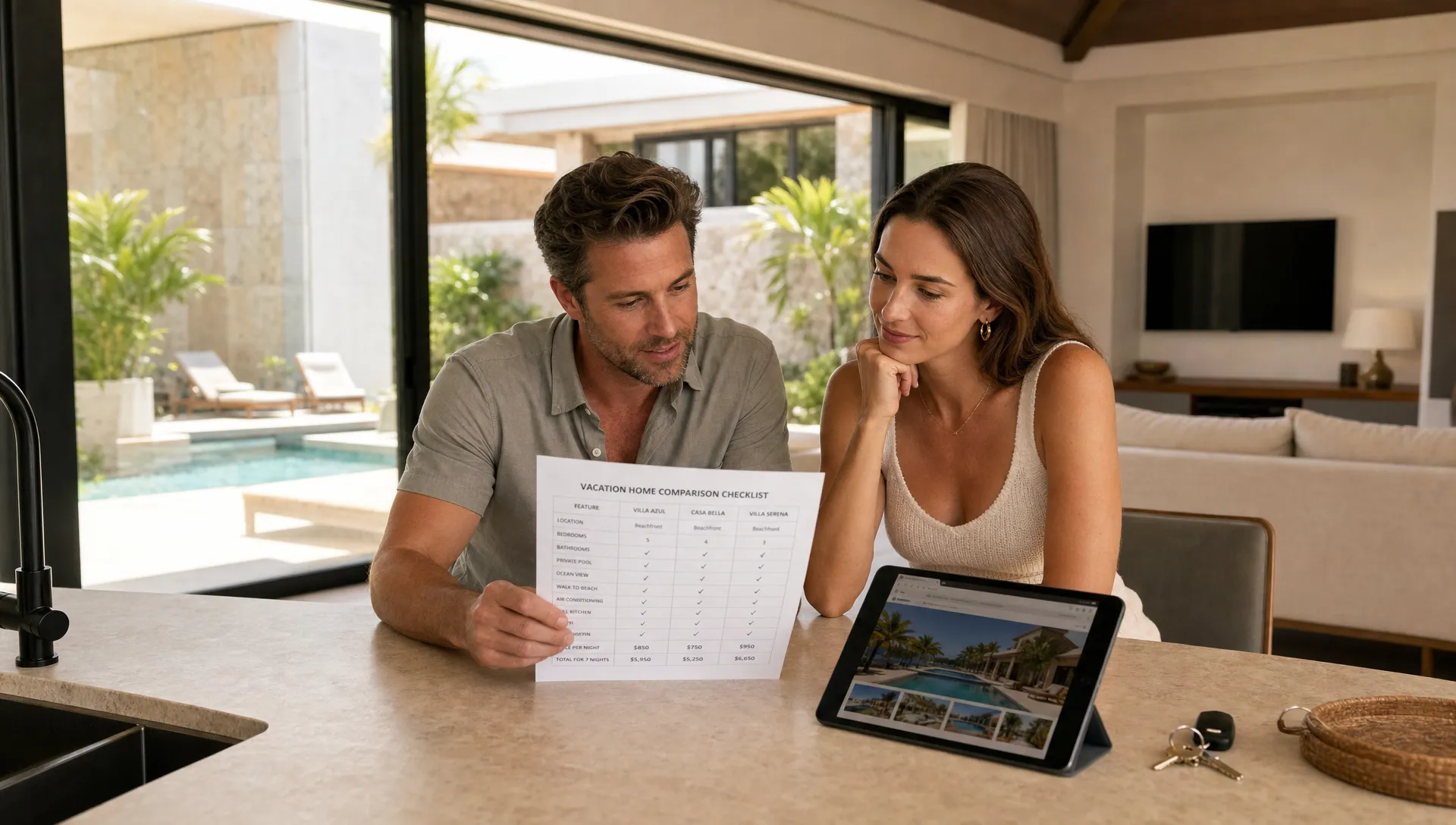
The best vacation rental properties are the ones that match your trip, price transparently, operate smoothly, and feel exactly as promised when you arrive. Don’t compare listings by the prettiest cover photo alone. Compare location, privacy, layout, amenities you’ll actually use, total cost, safety, reviews, and how the host handles problems. At Lumina, we manage homes daily, and the difference between a good stay and an expensive disappointment is usually operational detail, not square footage.
What should you compare first in vacation rental properties?
Start with fit. A beautiful home can still be the wrong rental if it makes your trip harder.
A luxury vacation rental is a private, fully equipped home that gives guests exclusive access to the property, elevated design, responsive support, and practical amenities that improve the stay. That definition matters because many listings borrow luxury language while offering a basic apartment, shared amenities, or a home that photographs better than it functions.
When I compare properties, I separate the decision into three layers:
- Trip fit: location, layout, privacy, parking, workspaces, pet or family needs, and proximity to the reason you’re traveling.
- Operational quality: communication speed, check-in process, cleanliness standards, maintenance responsiveness, and house rules.
- True value: total cost after fees, included amenities, cancellation terms, and whether the property can deliver the experience promised.
Most travelers over-focus on the first layer. Experienced operators look hardest at the second and third.
Is the location convenient or just photogenic?
A listing can say beach access, mountain views, or near downtown and still be inconvenient. Map the actual trip you’re planning.
If you’re traveling with kids, a five-minute drive can be fine, but a 15-minute walk with beach chairs, towels, and tired toddlers may not feel luxurious. If you’re booking for an executive stay, being near meetings matters less if the home lacks secure parking, fast Wi-Fi, and a real desk. If you’re planning a couples’ weekend, walkable restaurants may matter more than an extra bedroom.
Look for specifics, not adjectives. Good listings tell you what is nearby, what requires a car, whether parking is included, and how private the setting feels. Generic listings lean on phrases like close to everything without explaining what that means.
Does the layout match the way you’ll use the home?
Bedrooms and bathrooms are only the start. Compare how the home lives.
For families, split-bedroom layouts can help adults stay up after kids are asleep. For couples, a smaller home with a private hot tub, good lighting, and a walkable dinner scene may beat a larger house with unused space. For corporate travelers or production crews, multiple work zones, laundry, kitchen storage, and easy access become more important than decorative amenities.
I also look for friction points. Are the bathrooms attached or shared? Is the pool visible from the main living area if children are coming? Is the kitchen built for cooking or just reheating takeout? Does the outdoor space have shade, seating, and lighting, or is it just staged for photos?
For more on what makes a premium stay feel worth the rate, our guide to luxury vacation rentals that feel worth every night breaks down the details guests notice once they’re inside the home.
What does the total cost include?
Nightly rate is not the price of the stay. Compare the full booking total.
Cleaning fees, service fees, pool heat, pet fees, parking, resort fees, extra guest charges, and early check-in or late checkout can change the value quickly. A lower nightly rate may be less attractive once you see the full cost, especially if a more expensive home includes better amenities, stronger support, or a more convenient location.
This is where luxury travelers should be direct with themselves. If you’ll use the pool every day, a private heated pool has real value. If you’ll eat every meal out, a chef’s kitchen matters less. If you’re staying for two weeks, laundry, storage, work setup, and reliable climate control become part of the value equation.
Compare the operation behind the property
The property is only half the product. The other half is the operation behind it.
A well-run rental should make the stay feel simple. You should know how to get in, where to park, how to use the key amenities, who to contact, and what happens if something goes wrong. At Lumina, our guest service is AI-powered for 24/7 instant response, with an average reply time under 10 minutes. That matters because the most expensive vacation rental problem is the one that sits unresolved while the guest is trying to enjoy the trip.
Operator lesson: We’ve learned that a gorgeous home can lose trust quickly if the operational details are vague. A hot tub without clear instructions, a smart lock code sent too late, or a Wi-Fi password buried in a message thread can create frustration before the trip even starts. We now compare every home by how easy it is for a guest to use, not just how good it looks online.
Managed luxury stays usually have more consistent systems than one-off owner-run listings. That does not mean every owner-managed rental is bad. Some are excellent. The risk is accountability. If you’re choosing between the two, our comparison of vacation rentals by owner vs managed luxury stays explains where the real differences show up.
A soft rule I use: if the listing cannot explain check-in, parking, support, and key amenities clearly before you book, do not assume those details will become smoother after arrival.
The vacation rental properties comparison table I use
Use this table when comparing two or three finalists. It keeps the decision practical instead of emotional.
| Comparison category | Expert question to ask | Red flag | Strong signal |
|---|---|---|---|
| Location | Does this location support the actual trip plan? | Vague distance claims and no parking detail | Clear proximity, parking notes, and honest drive or walk times |
| Privacy | Will we have exclusive use of the home and amenities? | Shared pool, shared yard, or unclear access | Entire home access with private outdoor space |
| Layout | Does the floor plan match the group? | Bedroom count only, no layout explanation | Clear sleeping arrangements, bathrooms, and gathering spaces |
| Fees | What is the total cost after all charges? | Low nightly rate with unclear add-ons | Transparent total cost and clear optional fees |
| Amenities | Will we use these amenities daily? | Long amenity list with little detail | Practical features like hot tub, pool, laundry, workspace, and full kitchen |
| Support | Who responds if something breaks? | Slow replies or no stated support process | Fast, direct communication before and during the stay |
| Reviews | Do reviews mention the same strengths repeatedly? | Generic reviews or repeated complaints | Specific praise for cleanliness, location, service, and accuracy |
| Safety | Are access, smoke alarms, pool rules, and exterior lighting addressed? | No safety or access details | Clear house guide, smart lock access, and responsible instructions |

Amenities that actually change the stay
A good amenity is not the one that looks best in a photo. It’s the one that improves the rhythm of the trip.
For couples, the most valuable amenities are often privacy, a hot tub, a quiet bedroom, good lighting, comfortable seating, and easy access to dinner or the beach. For families, it may be a private pool, fenced outdoor space, laundry, a stocked kitchen, and enough bathrooms to keep mornings sane. For corporate travelers, it is high-speed Wi-Fi, a real workspace, keyless entry, flexible check-in, and a home that can support longer stays without feeling temporary.
At Lumina, we pay close attention to amenities that create independence. Smart lock keyless access means guests are not waiting for a key handoff. Full kitchens and laundry make extended stays workable. EV chargers at select properties can remove a daily logistics problem. Smart climate control helps guests settle in quickly, especially in markets with strong seasonal temperature swings.
There is also a construction and maintenance side travelers rarely see but feel immediately. A patio with poor drainage, a pergola without shade where it’s needed, or an outdoor kitchen that cannot handle real use becomes a disappointment. Owners evaluating upgrades should think beyond aesthetics and work with experienced builders when adding functional outdoor living features, especially in markets where patios, garages, workshops, and outdoor kitchens influence guest experience. For example, a turn-key contractor such as Summit Barndominiums & Outdoor Living is the kind of specialist owners might consult when comparing build quality, exterior spaces, and long-term usability.
The expert question is simple: will this amenity make the stay easier, more private, or more memorable? If not, it may just be decoration.
How to read reviews and photos like an expert
Photos sell the dream. Reviews tell you whether the dream survived contact with real guests.
I look for patterns. One complaint about a firm mattress is personal preference. Repeated comments about noise, cleanliness, weak air conditioning, or poor communication are operational warnings. The best reviews mention specific details: the pool was clean, check-in was seamless, the host responded quickly, the kitchen had what we needed, the location was accurate, the beds were comfortable.
Also compare photo quantity and photo honesty. A trustworthy listing does not hide bathrooms, parking, exterior access, or the least glamorous parts of the home. If every photo is a tight angle of decor and there are no wide shots of the layout, you may be missing important context.
Before you pay outside a reputable platform or respond to unusual payment instructions, check basic fraud guidance. The FTC’s vacation rental scam guidance is a useful reminder to verify the listing, avoid pressure tactics, and be careful with wire transfers or payment methods that offer little protection.
Red flags I would not ignore
Some issues are minor. Others tell you the stay may be harder than it needs to be.
Be cautious when you see:
- No recent reviews, especially in a high-demand market.
- Professional-looking photos but thin listing details.
- Unclear cancellation terms or house rules that appear after booking.
- A host who avoids direct answers about parking, pool heat, Wi-Fi, or check-in.
- No mention of maintenance, support, or who to contact during the stay.
- Heavy emphasis on luxury without proof of privacy, service, or amenities.
Luxury is not a word in a headline. It’s the absence of preventable friction.
For owners and investors: compare property potential, not fantasy revenue
If you’re comparing vacation rental properties as an owner or investor, your lens should be different from a guest’s lens. Guests compare comfort and confidence. Owners should compare net performance, maintenance burden, regulatory risk, and how much operational complexity the home creates.
A private pool can increase appeal, but it also adds cleaning, heat, utility, and maintenance considerations. A large home can earn more per night, but it may require larger cleaning teams, more frequent repairs, and tighter guest screening. A beach location can command premium rates, but parking constraints and local rules may limit who books comfortably.
The mistake I see owners make is comparing gross nightly rates before understanding the work required to support that rate. A beautiful property that needs constant manual coordination may underperform a slightly simpler home with better layout, clearer systems, and stronger guest experience.
Owners should evaluate:
- Local demand and seasonality.
- Permit, HOA, and neighborhood restrictions.
- Cleaning complexity and turnover timing.
- Outdoor amenity costs, especially pools and hot tubs.
- Durability of furniture, finishes, and flooring.
- Guest profile fit, such as families, couples, executives, or extended-stay travelers.
- Whether the property can be operated professionally without owner involvement.
If the next question is who should operate the home, not which home to buy or book, our guide on how to compare vacation rental management companies goes deeper into service scope, reporting, guest communication, and owner income.
A simple 15-minute scoring system before you book
When two properties look close, score them instead of debating endlessly. Give each category a score from 1 to 5, then compare the totals.
- Location fit: Score the home based on proximity to the actual activities, meetings, restaurants, beach, mountain access, or family needs that matter for this trip.
- Layout fit: Score whether the bedrooms, bathrooms, kitchen, work areas, and gathering spaces support your group comfortably.
- Operational confidence: Score the clarity of communication, check-in instructions, reviews, support process, and listing accuracy.
- Amenity usefulness: Score only the amenities you will use, not the longest amenity list.
- Total value: Score the full price after fees against the privacy, service, location, and convenience you receive.
If a rental wins only because it is cheaper, ask what you are giving up. If it wins because it reduces friction throughout the trip, it is usually the better choice.
Frequently Asked Questions
What is the best way to compare vacation rental properties? Compare the full experience, not just the nightly rate. Look at location, layout, privacy, total fees, amenities, reviews, safety details, and how quickly the host or management team responds.
Are managed vacation rentals better than owner-run rentals? Not always, but managed rentals are usually more consistent when the operator has strong standards for cleaning, guest communication, maintenance, and check-in. Owner-run rentals can be excellent, but quality varies widely.
What fees should I check before booking a vacation rental? Check cleaning fees, platform fees, pool heat, pet fees, parking, extra guest charges, resort fees, and optional early check-in or late checkout. Compare the final booking total, not the advertised nightly rate.
What makes a luxury vacation rental worth the higher price? A luxury vacation rental is worth it when it delivers privacy, design, useful amenities, responsive support, accurate listing details, and a smooth arrival-to-checkout experience. Pretty photos alone are not enough.
How should owners compare vacation rental properties before investing? Owners should compare net income potential, local rules, seasonality, maintenance costs, cleaning complexity, guest demand, and how easily the home can be operated at a high standard.
Compare less, enjoy more
The right rental should feel clear before you arrive and effortless once you’re there. If you want private luxury homes that have already been vetted for design, location, privacy, and service, you can browse Lumina’s luxury vacation rentals and book directly for your next stay.
If you own a luxury home and want an operator’s view on its rental potential, contact sales@staywithlumina.com or call (602) 905-7540 for a free revenue estimate.
Personal note: We’re picky about this because we’ve seen both sides, guests arriving tired after travel, and owners trusting us with homes they care about. The best rentals protect both. Signed, Shariann