
vacation rental maintenance services
Vacation Rental Maintenance Services That Protect Reviews
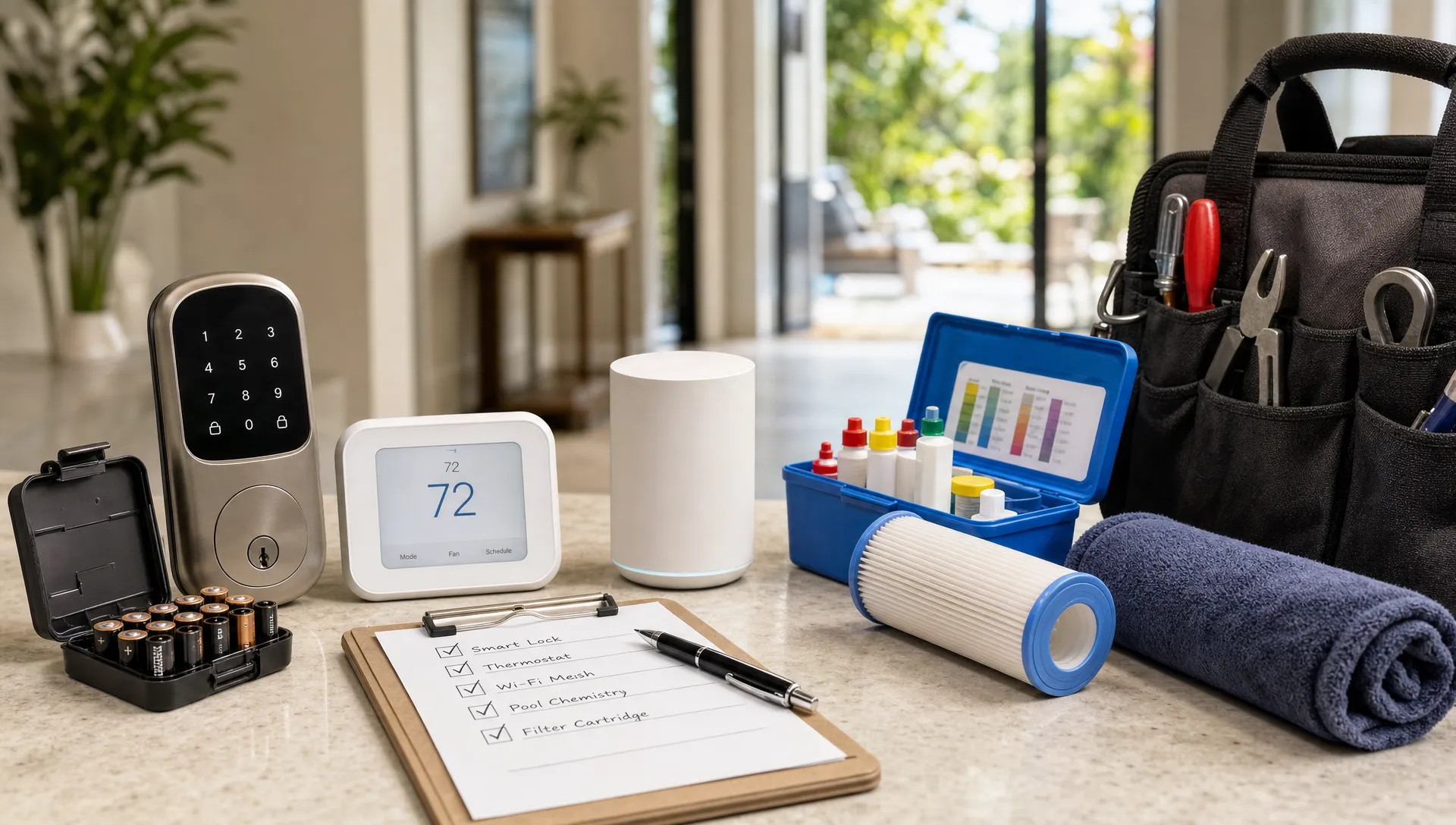
Vacation rental maintenance services protect reviews by keeping small issues from becoming guest-facing problems. In a luxury rental, maintenance is not just fixing a broken disposal after checkout. It is HVAC readiness before arrival, pool and hot tub oversight, smart lock reliability, Wi-Fi checks, vendor dispatch, supply control and fast guest communication when something goes wrong.
Owners often ask us whether maintenance should be separate from property management. For lower-end rentals, maybe. For luxury homes, we believe maintenance has to sit inside the guest experience. A guest who paid for privacy, design and amenities does not judge the stay by your contractor list. They judge it by whether the spa was hot, the door code worked, the air conditioning held temperature and someone answered quickly when they needed help.
Why vacation rental maintenance services protect reviews
Reviews are usually won or lost in the least glamorous parts of the stay. Clean sheets matter, but so does the sliding door that closes without sticking. The same goes for outdoor lights, pool heat, coffee makers, thermostats, garage remotes, Wi-Fi speed and plumbing pressure.
Luxury guests rarely leave five-star reviews because a home was merely functional. They leave them because everything felt easy. They had no key handoff friction, no awkward service delays, no guessing who to call and no feeling that the owner was scrambling behind the scenes.
The maintenance standard is higher because the booking value is higher. A $900-per-night family stay has less tolerance for a broken ice maker than a budget one-bedroom. That does not mean every issue is avoidable. It means the owner or manager needs a system that catches predictable problems and responds quickly to the unpredictable ones.
What usually triggers a bad vacation rental review?
The most damaging issues are not always the most expensive repairs. They are the problems that interrupt the guest’s reason for booking.
A couple on an anniversary trip will remember a hot tub that never heated. A family in Scottsdale will remember a pool gate that would not latch. A corporate guest will remember unstable Wi-Fi more than the imported tile in the kitchen. A production crew will remember whether access, parking and climate control worked without constant follow-up.
The common review killers we watch for are:
- HVAC problems during heat or cold snaps
- Pool, spa and hot tub temperature issues
- Smart lock failures, dead batteries or confusing access instructions
- Wi-Fi drops, weak mesh coverage or router resets
- Plumbing backups, slow drains and low water pressure
- Broken appliances guests expected to use daily
- Outdoor lighting, grill, fire pit and patio furniture issues
- Pest activity, especially in warm-weather and coastal markets
- Worn linens, stained upholstery and visible wear that photographs poorly
None of these feel like “maintenance” to the guest. They feel like disappointment.
How fast should vacation rental maintenance be handled?
For urgent guest-facing issues, acknowledgement should happen within minutes, not hours. At Lumina, our guest service model is built around 24/7 instant response with an under 10-minute average reply time, because silence makes almost every maintenance issue worse.
Resolution time depends on the issue. A dead smart lock battery should be handled fast. A non-urgent cabinet hinge can wait until checkout. The mistake we see from self-managed owners is treating everything like a contractor problem instead of a guest-experience problem.
| Maintenance issue | Guest impact | Luxury rental standard |
|---|---|---|
| No heat or air conditioning | High | Immediate response, same-day dispatch whenever possible |
| Smart lock not working | High | Immediate remote troubleshooting and backup access plan |
| Pool or hot tub not heating | High | Same-day diagnosis, clear guest communication and documented follow-up |
| Wi-Fi outage | High | Immediate reboot support, backup instructions and technician escalation if needed |
| Minor appliance issue | Medium | Same-day acknowledgement, repair timing based on guest needs |
| Cosmetic wear | Low | Track, schedule and resolve between stays |
The guest may forgive the problem if the response feels competent. They rarely forgive uncertainty.
Reactive maintenance vs proactive maintenance
Reactive maintenance is what happens when an owner waits for guests to report problems. Proactive maintenance is what happens when a manager inspects, tests, documents and services the home before the issue reaches the guest.
Both cost money. Only one protects reviews.
| Area | Reactive owner approach | Proactive luxury management approach | Review risk |
|---|---|---|---|
| Pool and spa | Wait for guest complaint | Check heat, chemicals, equipment and cleanliness before arrival | High if reactive |
| HVAC | Service after failure | Seasonal tune-ups, filter changes and thermostat testing | High if reactive |
| Smart locks | Replace battery after lockout | Battery schedule, backup code process and remote monitoring | High if reactive |
| Wi-Fi | Reset when guest reports issue | Test speed, coverage and router function during turnovers | High if reactive |
| Furnishings | Replace after a bad review | Track wear, stains and breakage after each stay | Medium if reactive |
| Appliances | Repair only when broken | Test essentials before arrivals, especially fridge, oven, dishwasher and laundry | Medium to high if reactive |
We learned this the hard way with pools. In Scottsdale, pool heat is not a casual amenity in winter. If the heater is not monitored, priced correctly and checked before arrival, it can turn into a margin problem for the owner and a review problem from the guest. Now we treat pool systems like revenue-critical infrastructure, not a backyard extra.
That mindset changes everything. A pool vendor is not just cleaning water. They are protecting the reason many guests booked the home in the first place.
Vacation rental maintenance services owners should expect
A proper maintenance program for a luxury short-term rental should cover the full guest journey: before arrival, during the stay, after checkout and between seasons. If your manager only calls a handyman when something breaks, that is not a maintenance program. That is damage control.
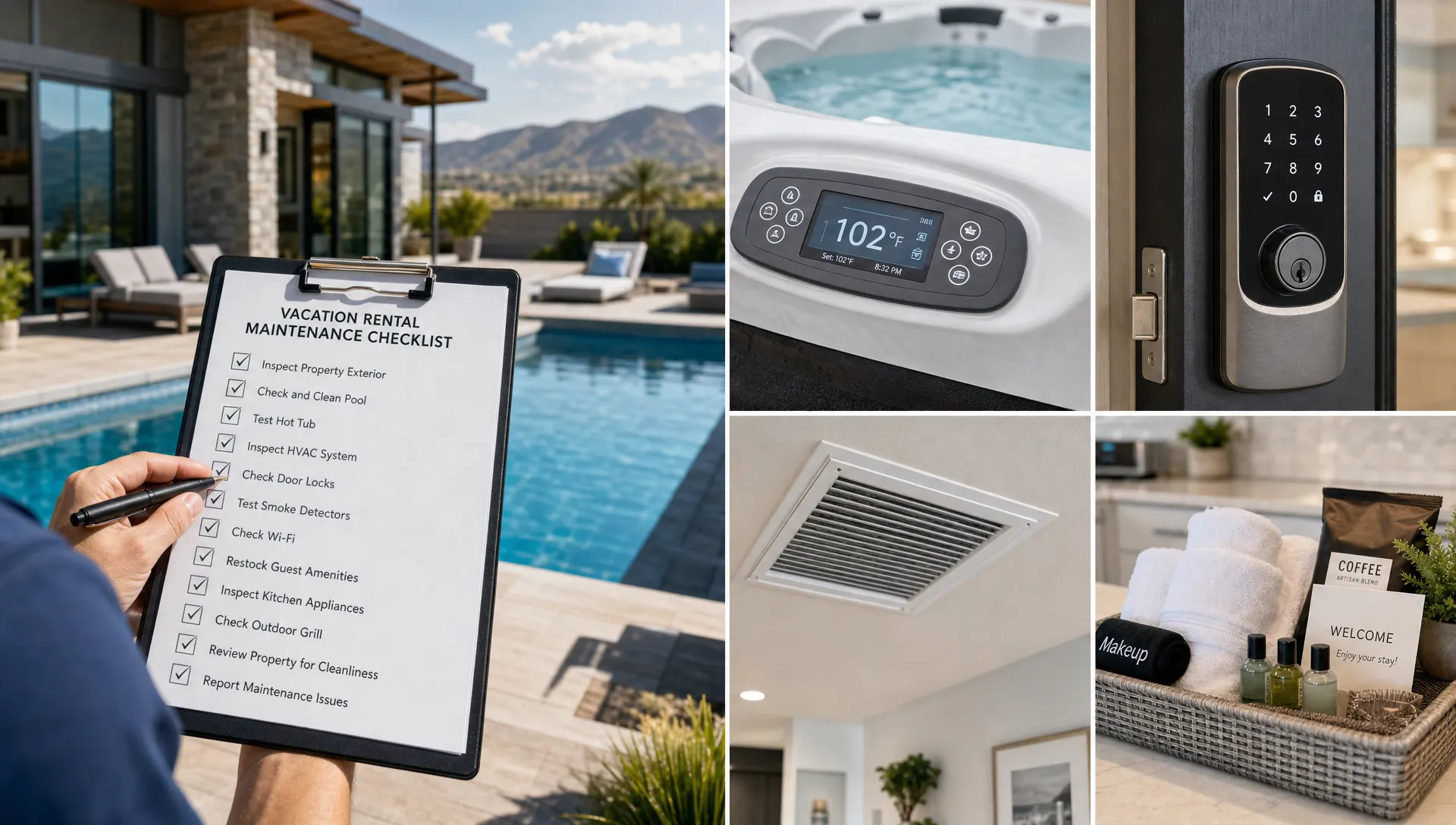
At a minimum, owners should expect these vacation rental maintenance services to be clearly assigned and documented:
- Pre-arrival systems check: Test entry codes, Wi-Fi, climate control, major appliances, lighting, pool or spa controls and guest-facing electronics before the stay.
- Turnover maintenance inspection: Have cleaners or field teams flag broken items, stains, missing inventory, loose hardware, water leaks and wear after each departure.
- Preventive service calendar: Schedule HVAC filters, pest control, pool service, landscaping, gutter cleaning, fire safety checks and seasonal tune-ups before peak demand.
- Emergency vendor dispatch: Keep vetted vendors available for plumbing, electrical, HVAC, locksmith, pool, appliance and restoration issues.
- Smart home monitoring: Manage smart locks, noise monitors, climate systems and connected devices so the owner does not become tech support.
- Owner reporting: Track what was repaired, what is pending, what is recurring and what should be replaced before it affects revenue.
If you are comparing management companies, maintenance should be evaluated alongside pricing, guest communication and housekeeping. We break down that bigger picture in our guide to what vacation rental management services should include, but maintenance deserves its own scrutiny because it is where many “full-service” promises fall apart.
The maintenance categories that matter most in luxury homes
Luxury homes have more failure points than basic rentals. More square footage, more amenities, more outdoor systems and more guest expectations. That is why maintenance needs to be property-specific, not copied from a generic Airbnb checklist.
HVAC, plumbing and electrical systems
Climate control is one of the fastest ways to lose a guest’s confidence. In Scottsdale, guests expect strong air conditioning. In coastal California, they expect fresh airflow and comfortable sleeping temperatures. In Colorado, heating reliability can define the stay.
We like to see filter schedules, seasonal servicing and simple thermostat instructions. Smart climate control helps, but only when someone monitors the system and understands how guests use the home. A thermostat locked too aggressively can create just as many complaints as no smart system at all.
Plumbing deserves the same attention. Slow drains, running toilets and garbage disposal issues often start small. Left alone, they become emergency calls during dinner, showers or checkout morning.
Pools, hot tubs and outdoor spaces
Private pools, spas, fire pits and outdoor kitchens drive bookings in many luxury markets. They also create some of the highest-maintenance areas of the home.
A good program checks temperature, water clarity, chemical balance, equipment function, safety gates, outdoor lighting, cushions, umbrellas, grills and propane or gas connections. The guest sees “beautiful backyard.” The manager should see a system of parts that needs constant oversight.
For pool homes, I also recommend clear guest instructions. Not a binder full of legal language. Simple, plain instructions about pool heat, spa controls, safety rules and who to contact if something looks off.
Smart locks, Wi-Fi and connected devices
Smart home technology can make a rental feel seamless, but it can also create high-stress failures. A dead lock battery at 10 p.m. feels bigger than it is. A Wi-Fi outage during a corporate stay can turn into a refund conversation.
At Lumina, we use smart lock keyless access, high-speed Wi-Fi and smart climate control as part of the guest experience. At select properties, owners may also have EV chargers or other connected amenities. The maintenance program has to support these systems with battery schedules, reset protocols, access backups and vendor escalation.
One owner we worked with was hesitant about smart locks because he thought guests would find them impersonal. Six months in, his review quality improved because guests preferred not waiting for a key handoff. The lesson was not “install technology everywhere.” It was that technology works when the operations behind it are tight.
Maintenance is also brand protection
Owners tend to think about maintenance as a cost line. I think about it as review insurance, asset protection and revenue preservation.
A bad review can affect conversion long after the repair is complete. If the review says “pool was cold,” future guests do not know whether you fixed the heater. If it says “host was slow to respond,” they assume that is how every issue will be handled. If it says “home looked tired,” the photos start working against you.
This is especially true for luxury homes. Guests are not only buying bedrooms. They are buying certainty. They want to know the home will match the listing, the amenities will work and someone competent is watching the details.
For owners who want less day-to-day involvement, this is where full-service management earns its keep. Maintenance coordination, guest communication, cleaning oversight and vendor accountability need to work together. If you want the hands-off version, our article on vacation home property management for hands-off owners explains how that structure should feel from the owner side.
How we vet maintenance vendors for luxury rentals
A maintenance vendor for a luxury vacation rental needs more than technical skill. They need responsiveness, documentation, discretion and an understanding that guests may be in the home while they work.
We look for vendors who communicate clearly, show up when promised, send photos when helpful and understand the difference between a vacant repair and an occupied-stay repair. The best vendors do not create more work for the owner or manager. They reduce uncertainty.
A strong vendor file should include licensing where applicable, insurance, service areas, emergency availability, after-hours policies, pricing structure and contact paths. That same principle applies to any local professional service you trust from a distance. For example, a site like CP Dental's Brisbane dentistry services makes locations, service categories, patient information and contact options easy to verify before booking, which is the kind of clarity owners should expect from anyone responsible for high-value property care.
Vacation rental vendors also need hospitality judgment. If a plumber arrives while guests are getting ready for dinner, they need to communicate respectfully. If an HVAC technician needs access to a bedroom, the manager needs to coordinate timing. This is where cheap maintenance becomes expensive. The wrong vendor can solve the mechanical issue and still damage the guest experience.
What owners should ask before hiring maintenance support
Before you hire a standalone maintenance company or a full-service manager, ask operational questions. Vague answers usually mean the system depends on one person remembering to follow up.
Good questions include:
- Who checks the property between stays?
- What gets tested before every arrival?
- How are urgent issues triaged during guest stays?
- Which vendors are available after hours?
- How do guests reach support, and how fast should they expect a reply?
- Are repairs documented with photos, invoices and owner notes?
- Who decides whether to repair, replace or upgrade a recurring problem?
- How do you prevent maintenance visits from disrupting guests?
- What smart home systems do you monitor or manage?
- How do you handle seasonal maintenance in my market?
When an owner asks us these questions, I take it as a good sign. Sophisticated owners understand that maintenance is not a side task. It is part of the revenue engine.
If you are interviewing local companies, you may also want our guide on how to choose vacation rental management in your area. The same due diligence applies here: ask for process, proof and accountability rather than promises.
Standalone maintenance company or full-service vacation rental manager?
A standalone maintenance company can be useful if you self-manage and only need vendors. But if your goal is a premium guest experience with less owner involvement, maintenance should connect to reservations, guest messaging, housekeeping and revenue decisions.
| Option | Best for | Limitation |
|---|---|---|
| Standalone handyman | Small repairs and occasional fixes | Usually not built for guest communication or 24/7 hospitality |
| Trade-specific vendors | HVAC, plumbing, electrical, pool and appliance issues | Requires owner or manager to coordinate timing and guest updates |
| Co-host with vendor list | Owners who still want some control | Quality depends heavily on the co-host’s systems |
| Full-service luxury manager | Hands-off owners with high-value homes | Management fee is higher, but operations are integrated |
At Lumina, we manage luxury short-term and mid-term rentals with guest communication, cleaning coordination, maintenance dispatch, smart home integration, pricing strategy and owner visibility under one operating system. That matters because the guest does not care which department failed. They only know whether the stay felt effortless.
Frequently Asked Questions
What are vacation rental maintenance services? Vacation rental maintenance services include preventive inspections, repairs, vendor coordination, emergency dispatch, smart home upkeep, pool and spa service, HVAC care, plumbing support, appliance repairs and documentation for owners.
How often should a vacation rental be inspected? A luxury vacation rental should be checked after every guest departure, before each arrival and on a seasonal preventive maintenance schedule. Homes with pools, hot tubs, large outdoor areas or smart technology need more frequent oversight.
Can better maintenance improve vacation rental reviews? Yes. Guests mention broken amenities, slow responses, uncomfortable temperatures, access problems and cleanliness-adjacent maintenance issues in reviews. A proactive maintenance system reduces those complaints and gives managers a better chance to recover well when something unexpected happens.
Who pays for maintenance on a managed vacation rental? Owners typically pay for property repairs, replacements and preventive maintenance, while the manager coordinates the work and documents the issue. The exact approval thresholds, emergency rules and reporting process should be defined before the home goes live.
What should emergency maintenance coverage include? Emergency coverage should include 24/7 guest response, backup access plans, HVAC support, plumbing support, electrical support, lock assistance, pool or spa escalation when relevant and clear owner communication after the situation is stable.
Protect the home, protect the reviews
If your vacation rental has premium amenities, maintenance cannot be an afterthought. The systems behind the stay need to be as polished as the photos: fast communication, reliable vendors, preventive inspections and an operator who knows when a small detail can become a review problem.
If you own a luxury home and want full-service management that handles maintenance, guest communication and revenue strategy together, contact Lumina for a free revenue estimate. You can reach us at newhomes@staywithlumina.com or call (602) 905-7540.
I care about this topic because maintenance is where owners either protect the asset or slowly lose trust with guests. The best stays look effortless, but they are not accidental. They come from systems, standards and a team that treats every home like the next review depends on it.
Signed, Shariann