
vacation home property management
Vacation Home Property Management for Hands-Off Owners
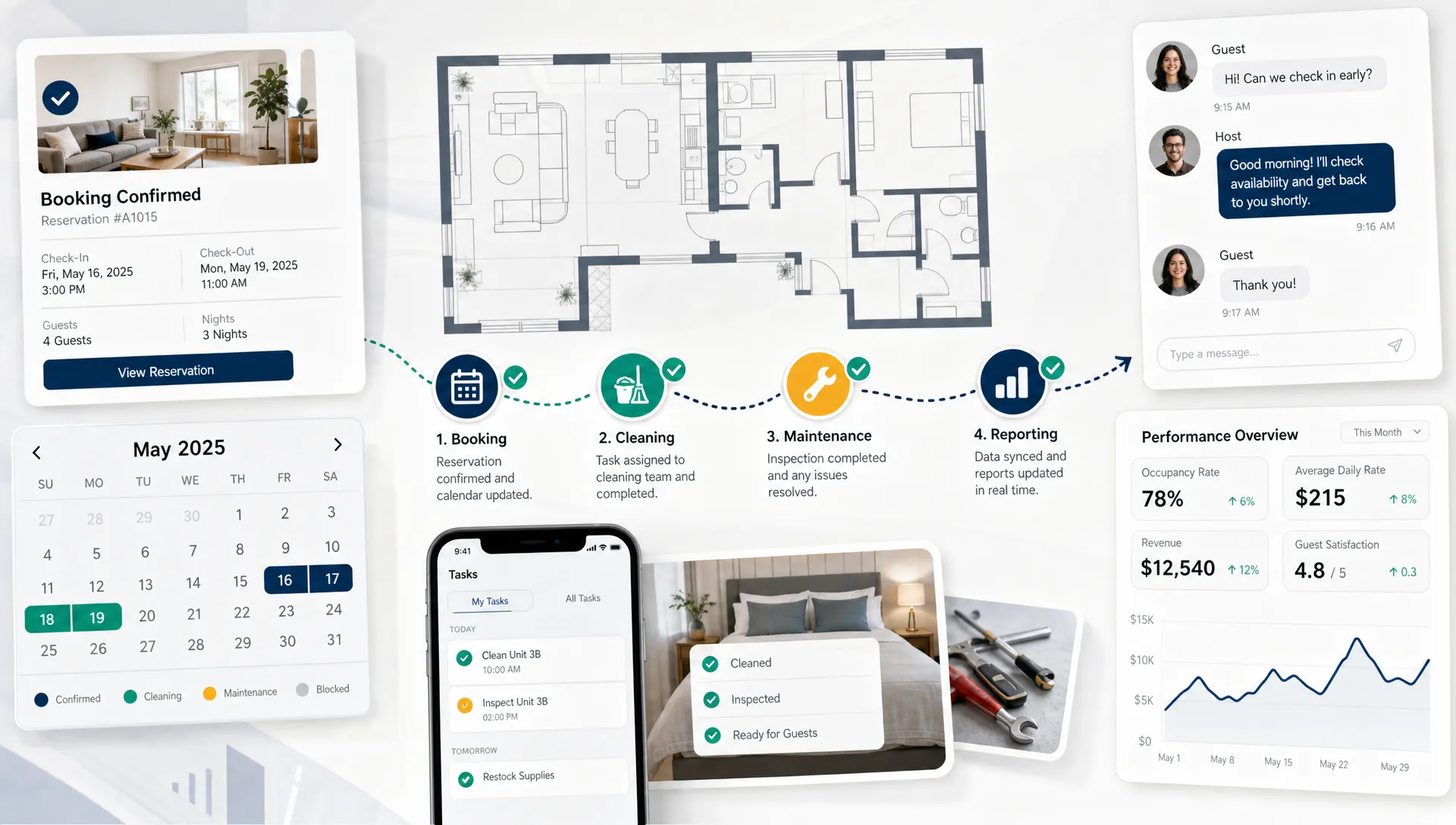
Vacation home property management works for hands-off owners only when the manager owns the full operation, not just the listing. That means pricing, guest communication, housekeeping, maintenance, smart access, reviews, compliance and owner reporting all run without you chasing updates. If you still schedule cleaners, answer late-night messages or wonder whether the pool heater was turned off, you have help, not management.
For luxury homeowners, the goal is simple: protect the asset, improve net income and remove the daily drag of running a hospitality business.
What vacation home property management means for hands-off owners
A clear definition helps because this industry uses the same words for very different service levels.
Vacation home property management is the end-to-end operation of a private home as a short-term or mid-term rental, including guest acquisition, pricing, hospitality, cleaning, maintenance, technology, compliance support and owner reporting.
For a hands-off owner, the word end-to-end matters. A basic co-host may answer messages. A cleaner may reset the home. A pricing tool may suggest rates. None of those pieces, by themselves, creates a stable rental business.
The manager has to connect the pieces so the home performs consistently. Luxury guests do not care that the cleaner was late, the lock battery died or the listing calendar failed to sync. They booked a premium home and expect premium execution.
What should a hands-off owner still control?
Hands-off should never mean blind. You should not be inside the guest thread, but you should understand the strategy, approve major decisions and receive clean reporting.
| Decision area | Owner should control | Manager should handle |
|---|---|---|
| Asset strategy | Whether the home should be rented, held for personal use or sold | Market analysis, rental positioning and performance recommendations |
| Brand standards | Your tolerance for wear, pets, events and guest type | Rules, screening processes, house manual and guest communication |
| Capital improvements | Major upgrades, furniture replacement and renovation budget | Recommendations based on review trends, guest demand and revenue impact |
| Daily operations | Not involved unless an approval is needed | Bookings, cleaning, maintenance, pricing, guest support and inspections |
| Financial visibility | Review monthly performance and ask questions | Revenue reports, occupancy trends, expense notes and payout summaries |
The best owner-manager relationship feels calm. You know what is happening without becoming the operations department.
Where owners get pulled back into operations
Most owners underestimate the number of small decisions inside a high-performing rental. A five-bedroom home with a pool, outdoor furniture, smart locks, landscaping, HVAC, linen inventory and premium guests can create dozens of micro-tasks every week.
Generic management often looks fine on paper. The company says it handles bookings, cleaning and guest communication. Then the owner discovers the missing layer: nobody is thinking like an operator.
A real operator notices when a recurring maintenance issue is about to become a review problem. They check whether pool heat should be priced separately during a cold week. They know that a beautiful listing photo can create the wrong expectation if the outdoor space is not staged the same way every arrival day.
We learned this lesson in Scottsdale with pool heat. If you treat it as a free amenity in winter, it can quietly erode margin. We now look at pool heat as an operational and pricing decision, not a casual extra. The same principle applies to EV charging, early check-in, late checkout, pet fees and mid-stay cleanings.
What can still go wrong with a beautiful luxury home?
Plenty. The homes that look easiest to rent are often the hardest to operate well.
A luxury property can lose revenue or reviews because of:
- Slow guest replies during check-in or checkout windows
- Cleaners who reset the home visually but miss drawers, grills or outdoor areas
- Seasonal pricing that ignores events, holidays and shoulder-season demand
- Maintenance vendors who do not understand guest urgency
- Smart lock codes that are not tested before arrival
- Owners approving upgrades that look good but do not improve guest experience
The difference between average and excellent management is not one dramatic move. It is hundreds of small decisions made before the guest notices a problem.
Full-service, co-host or self-managed: what are you buying?
Owners often compare management fees without comparing responsibility. That is a mistake. A lower fee can be expensive if it leaves you managing vendors, replacing broken systems or losing review quality.
| Model | Best for | Owner involvement | Main risk |
|---|---|---|---|
| Self-managed | Local owners with time, hospitality experience and vendor relationships | High | Burnout, missed pricing opportunities and inconsistent response times |
| Co-host support | Owners who want help with messages or platform tasks but still control operations | Medium to high | Gaps between guest support, cleaning, maintenance and revenue strategy |
| Full-service management | Owners who want income without running the rental business | Low | Choosing a manager who promises full-service but only delivers listing support |
| Luxury brand management | High-end homes where positioning, guest experience and asset protection matter | Low | Requires trust, clear reporting and aligned standards |
If you want to go deeper on scope, we broke down what vacation rental management services should include from launch preparation through ongoing operations.

The operating system behind luxury vacation home property management
Luxury rental performance comes from an operating system, not a prettier listing description.
At Lumina, we think in layers. The listing has to attract the right guest. The pricing has to respond to the market. The house has to be ready every time. The communication has to feel immediate without sounding robotic. The owner needs visibility without being copied on every problem.
| Operating layer | What strong management does | Why it matters for owners |
|---|---|---|
| Positioning | Defines the right guest profile, amenity story and listing angle | Prevents the home from competing only on price |
| Revenue management | Adjusts rates for seasonality, events, booking pace and property features | Protects net income, not just occupancy |
| Guest communication | Provides fast, helpful responses before, during and after the stay | Reduces friction and protects reviews |
| Cleaning quality | Uses detailed turnover standards and issue escalation | Keeps premium homes consistent across back-to-back stays |
| Maintenance | Dispatches vendors, tracks recurring issues and prevents avoidable failures | Protects the asset and avoids guest-facing surprises |
| Smart home systems | Uses keyless access, noise monitoring where appropriate and connected devices | Improves control without owner involvement |
| Reporting | Gives owners performance visibility without daily management | Helps owners make better long-term decisions |
Our AI-powered operations help with 24/7 guest messaging and under-10-minute average reply times. That speed matters, but technology is not the whole answer. A guest asking about a locked thermostat, a pool question or an early arrival still needs the right operational context behind the reply.
If you are interviewing managers, our guide to choosing vacation rental management in your area will help you separate true operators from listing administrators. You can also ask Lumina for a free revenue estimate if you want a second opinion on whether your home fits a hands-off model.
Revenue management should protect net owner income
Owners tend to focus on nightly rate first. I care more about net owner income.
A high nightly rate with weak occupancy, excessive discounts or uncontrolled operating costs can look impressive and still underperform. A high occupancy calendar can also be misleading if the home is underpriced during peak demand.
Good revenue management considers:
- Seasonality and local event calendars
- Day-of-week demand patterns
- Booking windows for leisure, family and corporate guests
- Minimum night rules that protect peak periods
- Amenity pricing for pools, hot tubs, EV chargers or added services
- Cleaning fees, maintenance exposure and owner-use blocks
The question is not whether management has a cost. The question is whether the right operator increases revenue, reduces mistakes and gives you back enough time to justify that cost. We explained the math more fully in when vacation rental management pays for itself.
Taxes are separate from property management, but clean records matter. The IRS guidance on rental real estate income and expenses is a useful starting point for understanding why owners should keep organized documentation and work with a qualified tax professional.
Is full-service management worth the fee?
Full-service management is usually worth it when the home has enough revenue potential, guest expectations are high or the owner values time more than platform control. It is less compelling for a low-rate property, a home with limited availability or an owner who enjoys daily hosting.
For luxury owners, the fee should be judged against avoided mistakes as much as added revenue. One poor review, one mishandled maintenance issue or one week of underpricing during peak demand can cost more than owners expect.
What protection should look like in a luxury home
Hands-off owners worry about wear. They should. A vacation home is not just a listing, it is a real asset with finishes, systems, neighbors and long-term value.
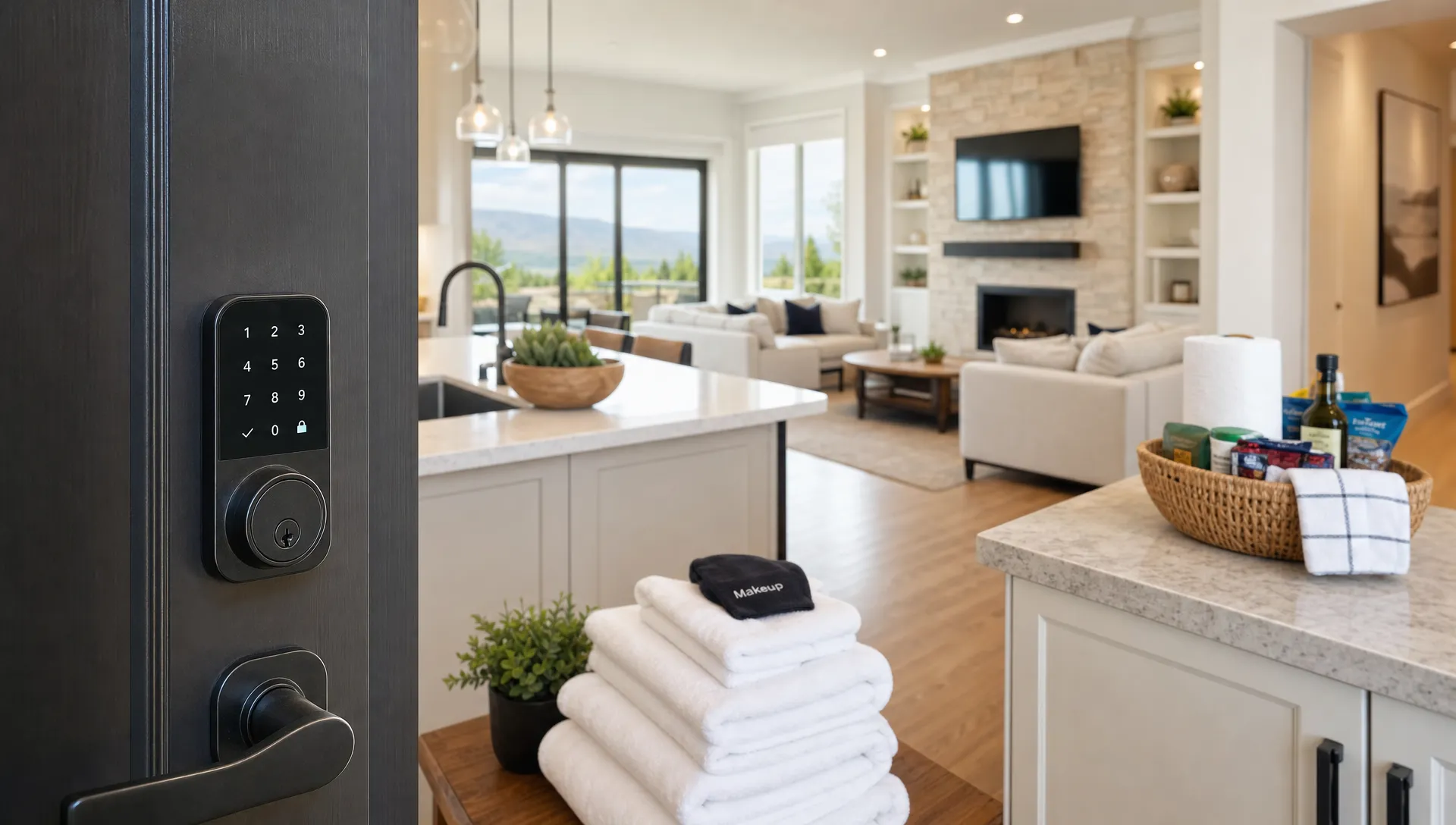
Protection starts before the booking. The home needs clear rules, accurate listing expectations and guest-fit screening. During the stay, smart locks reduce key handoff problems and connected devices can help flag issues. After checkout, cleaners and maintenance vendors need a process for reporting damage, low inventory and recurring concerns.
One of our owners was hesitant about smart locks because he thought they would feel impersonal. Six months later, guest feedback improved because arrivals became easier. Luxury guests do not want to wait for a key handoff after a flight delay. They want private, seamless access and a team that can help if anything feels off.
The same goes for noise monitoring where appropriate. It is not about spying on guests. It is about protecting the home, the neighbors and the long-term ability to operate responsibly.
When hands-off management is not the right strategy
A good manager should be willing to say when a rental strategy does not fit.
If the owner wants unlimited personal use during peak season, the numbers may not work. If the home needs major upgrades but the owner does not want to reinvest, review quality may suffer. If the local rules are restrictive or the property has neighbor concerns, short-term rental income may not be worth the risk.
Sometimes the larger decision is not about management at all. It is about what role the property should play in your life and portfolio. I have seen owners compare rental income with lower-maintenance residential options, lock-and-leave properties or gated lifestyle communities such as luxury park home bungalows in Warfield, Berkshire before deciding which assets they want to keep, rent or sell.
That kind of clarity matters. A vacation rental can be a strong asset, but it should not become a burden disguised as passive income.
How Lumina approaches management for hands-off owners
Lumina manages private luxury homes and extended-stay accommodations across premium U.S. destinations including Scottsdale, Manhattan Beach, Laguna Beach, Moonstone, Edwards, Beaverton and San Juan.
We are not trying to turn every home into a generic rental unit. The homes we manage are individually selected for privacy, design and location. Guests book the entire home, not a shared resort room or cookie-cutter apartment conversion.
For owners, our management model covers the parts that usually create stress:
- Listing creation, positioning and photography coordination
- Dynamic pricing and multi-platform distribution
- Guest communication supported by AI-powered operations
- Cleaning coordination and quality control
- Maintenance dispatch and vendor communication
- Smart lock setup and connected-device oversight where appropriate
- Upsell systems for early check-in, late checkout and other approved options
- Owner visibility into performance, occupancy and revenue
Lumina also brings brand trust to the listing. With 611+ five-star reviews and Superhost quality standards, owners are not starting from zero. That matters in markets where guests have plenty of options and only a few seconds to decide which homes feel trustworthy.
How do I know if a manager is truly full-service?
Ask what happens after something goes wrong. Everyone can describe the perfect booking. Fewer managers can explain how they handle a failed AC unit, a cleaner cancellation, a guest who arrives early, a neighbor complaint or a pricing miss.
A serious manager should be able to answer these questions without vague promises:
- Who monitors guest messages after hours?
- How are cleaning issues verified and corrected?
- Who approves emergency maintenance?
- How often are prices reviewed?
- What reporting does the owner receive?
- How are smart locks, noise monitors and access codes managed?
- What happens when guest expectations and house rules conflict?
If the answers sound loose, the owner will eventually get pulled back in.
Frequently Asked Questions
What does vacation home property management include? It should include listing strategy, pricing, guest communication, housekeeping, maintenance coordination, smart access, compliance support and owner reporting. For luxury homes, it should also include brand positioning and guest experience standards.
Can I be hands-off and still use the home personally? Yes, but owner-use blocks need to be planned carefully. If you block peak dates often, revenue will usually decline. A good manager will help you understand the tradeoff before you commit to a strategy.
How much involvement should I expect as an owner? You should approve major decisions, review performance and stay informed. You should not be scheduling turnovers, replying to guests, troubleshooting locks or chasing vendors.
Is vacation home property management only for short-term rentals? No. Many luxury homes also work for mid-term or extended stays, especially for corporate guests, relocation stays, production crews or families between homes. The right strategy depends on the property, market and owner goals.
Get a free revenue estimate for your vacation home
If you own a luxury vacation home and want income without managing the day-to-day, Lumina can evaluate whether your property fits our management model. For a free revenue estimate or to discuss listing your property with Lumina, contact newhomes@staywithlumina.com or call (602) 905-7540.
I care about this because a beautiful home can still become a stressful rental if no one owns the details after the booking is made. At Lumina, we build management for owners who want real visibility without being dragged into the group chat.
— Shariann