
vacation rental property management companies
What to Ask Vacation Rental Property Managers First
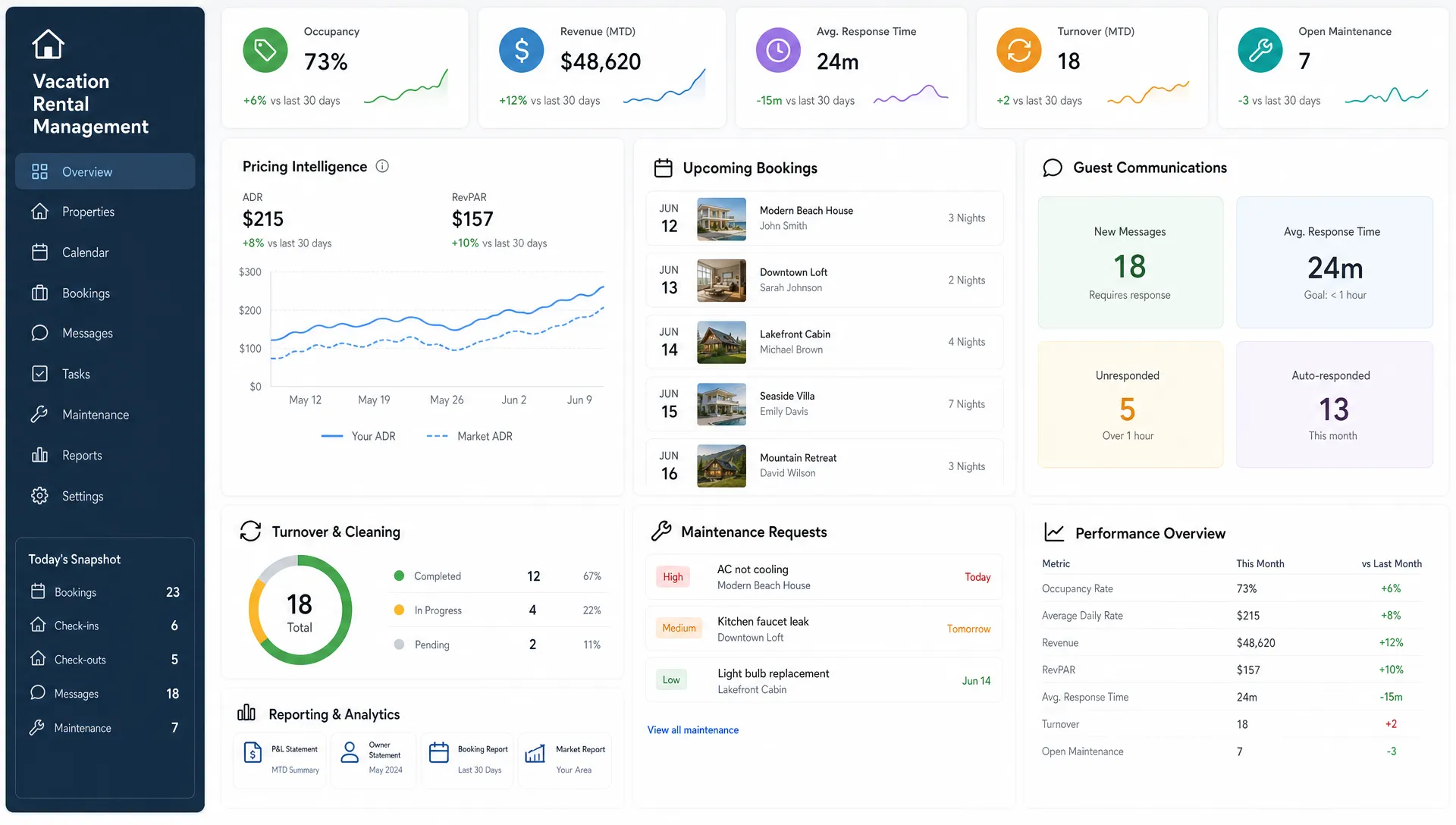
The first thing to ask vacation rental property management companies is simple: how will you protect my net income, my guest experience and my home at the same time? If they only talk about occupancy, fees or listing setup, keep digging. A strong manager should explain pricing, guest communication, cleaning, maintenance, owner reporting, compliance and luxury positioning before you hand them the keys.
For luxury homeowners, the wrong manager is not just inconvenient. It can mean underpriced peak nights, avoidable refund claims, weak reviews, preventable wear and a home that slowly stops feeling premium.
The first questions to ask vacation rental property management companies
Most management pitches sound polished. The difference appears when you ask operational questions and listen for specifics.
A generic answer sounds like this: we handle everything. A better answer sounds like this: we build the listing, position the home by guest type, manage dynamic pricing, answer guests 24/7, coordinate cleaning, inspect between stays, dispatch maintenance, monitor smart devices, review monthly performance and adjust strategy by season.
That level of detail matters because vacation rental management is not one job. It is revenue management, hospitality, asset protection, compliance and brand management happening at the same time.
If you are comparing options broadly, our guide on how to compare vacation rental management companies goes deeper into side-by-side evaluation. This article focuses on the first questions I would ask before the relationship gets serious.
What exactly will you manage for me?
Do not let a manager use the phrase full-service without defining it. Full-service can mean anything from guest messaging and cleaner scheduling to a true hands-off operation with pricing, listing strategy, inspections, maintenance coordination and owner reporting.
Ask them to walk you through what happens before launch, during a stay and after checkout. You want to hear a real process, not a vague promise.
| Area to ask about | Weak answer | Strong answer |
|---|---|---|
| Listing setup | We put it online | We create positioning, photography direction, copy, amenities, pricing and platform setup |
| Guest communication | We respond when needed | We answer 24/7, use automation carefully and escalate human issues fast |
| Cleaning | We have cleaners | We use property-specific checklists, inspections and restocking standards |
| Maintenance | We call vendors | We triage issues, dispatch trusted vendors and keep owners informed |
| Pricing | We use software | We combine dynamic pricing with local judgment, events, seasonality and owner goals |
| Reporting | We send statements | We explain revenue, occupancy, expenses, guest feedback and next steps |
At Lumina, we treat this as an operating system. Owners should not have to chase cleaners, answer a guest at midnight or wonder why a Saturday in peak season was discounted. If you want a fuller benchmark, read our breakdown of what vacation rental management services should include.
What should a full-service manager handle?
A full-service vacation rental manager should handle listing creation, pricing, guest communication, booking management, cleaning coordination, maintenance dispatch, smart lock access, owner reporting and revenue strategy. For a luxury home, they should also manage presentation details such as linens, amenities, arrival experience, photography quality and review protection.
The phrase hands-off should mean you are not the backup plan. If the manager still needs you to approve every minor supply order, text the cleaner or troubleshoot a guest check-in issue, they are not running the property. They are assisting you while you still manage the risk.
How will you improve net owner income, not just bookings?
A booked calendar can still be a poorly managed asset. I have seen owners celebrate high occupancy while leaving thousands on the table because peak nights were priced too low, cleaning fees were misaligned or expensive amenities were included without being priced correctly.
Ask the manager how they think about net income. That means revenue after management fees, cleaning costs, maintenance, utilities, supplies, platform fees and amenity expenses.
The best managers can explain how they balance:
- Nightly rate against occupancy
- Peak season pricing against shoulder season demand
- Owner stays against revenue goals
- Minimum nights against cleaning efficiency
- Guest satisfaction against amenity cost
- Platform distribution against margin and control
One operational lesson we learned in Scottsdale is that pool heat can look like a guest-friendly perk until winter utility costs start eating into owner returns. We price and communicate amenities intentionally because luxury does not mean every cost should disappear into the owner statement.
What fees should I ask about first?
Ask about the management fee, cleaning fee structure, maintenance markup, credit card fees, platform fees, onboarding costs, photography costs, supply charges, linen replacement, smart device costs and any cancellation or termination fees. Then ask how each fee affects your net income.
A low management fee is not automatically a good deal. A cheaper manager who underprices the home, misses premium weekends or mishandles guest issues can cost more than a manager with a higher fee and stronger operations.
Who answers guests when something goes wrong?
Guest communication is where many vacation rental operations break. A delayed response can turn a small issue into a refund request, a poor review or a stressful call to the owner.
Ask who answers guests, what hours they cover and how fast they respond. Then ask what happens when automation is not enough.
At Lumina, we use AI-powered guest service with 24/7 instant response and an under 10-minute average reply time. That does not mean we let technology replace hospitality. It means guests get fast help for routine needs while our team can focus attention on situations that require judgment.
A manager should be able to explain escalation clearly. If the Wi-Fi is down, who checks the router? If the smart lock fails, who has the backup access process? If a guest reports a leak, who decides whether to dispatch maintenance immediately?

What guest communication standards should a manager prove?
A manager should prove average response time, after-hours coverage, escalation procedures, guest screening practices and review management. For luxury homes, they should also show how they personalize communication without making the guest wait.
One of our owners worried that smart locks would make the stay feel less personal. The opposite happened. Guests liked arriving on their own schedule without coordinating a key handoff. The personal touch moved to better pre-arrival messages, local recommendations and proactive check-in support.
How will you protect the home between stays?
Luxury homes need a different standard than entry-level rentals. A basic turnover is not enough when the property has a pool, hot tub, outdoor kitchen, designer furniture, EV charger, expensive linens, art, landscaping or custom finishes.
Ask what the manager checks after every stay. You want a process that catches damage, missing items, supply gaps and maintenance issues before the next guest arrives.
For higher-end homes, I would ask about:
- Smart lock management and access logs
- Noise monitoring where legally allowed and properly disclosed
- Pool, spa and outdoor amenity checks
- Linen inspection and replacement standards
- Photo documentation after cleanings
- Vendor response times for urgent repairs
- Guest screening and house rule enforcement
Linens are a good example of a detail owners underestimate. Guests notice towel weight, bedding quality and whether replacements match. When evaluating standards, suppliers that produce hotel linens and terry towels for hospitality brands are a useful benchmark for the level of durability and consistency a luxury rental should aim for.
What local market knowledge do you bring?
Vacation rental property management is local. A pricing strategy that works in Scottsdale will not map perfectly to Manhattan Beach, Laguna Beach, Edwards, Beaverton or San Juan.
Ask the manager what drives demand in your specific market. They should know seasonality, neighborhood differences, parking expectations, event compression, local regulations and what travelers expect at your price point.
For example, a coastal California guest may care more about walkability, beach gear, parking clarity and outdoor dining space. A Scottsdale guest may filter heavily for private pool, spa, golf access, outdoor entertaining and group-friendly layouts. A Colorado mountain guest may judge the stay by mudroom functionality, heating, gear storage and easy access after a long travel day.
Generic management companies often rely too heavily on software. Software helps, but it does not know that a certain street photographs poorly at sunset, that a driveway confuses guests at night or that a local event changes booking behavior for one specific weekend.
How do I know if a manager understands my market?
Ask for examples of decisions they would make differently in your city compared with another market. A capable manager should discuss local regulations, seasonal pricing, guest expectations, amenity priorities and neighborhood positioning without needing to research everything after the call.
If they cannot explain your market, they may still be able to operate the home, but they are unlikely to maximize it.
What will owner reporting look like?
You should not need to micromanage your manager, but you should have visibility. Good reporting gives you enough information to understand performance without pulling you back into day-to-day operations.
Ask for a sample owner report. Look for clarity, not just spreadsheets.
| Reporting question | Why it matters |
|---|---|
| What was my gross revenue this month? | Shows top-line performance |
| What was my net income after expenses? | Shows what you keep |
| What drove pricing decisions? | Shows whether strategy is active or passive |
| What maintenance occurred? | Shows how the asset is being protected |
| What did guests mention in reviews? | Shows experience trends before they become problems |
| What changes do you recommend? | Shows whether the manager is thinking ahead |
A strong report should make you feel informed. It should not make you feel like you have a second job.
This is especially important for second-home owners, investors and high-net-worth owners who want income without operational drag. If your goal is to be hands-off, our article on vacation rental property management for hands-off owners explains what that should look like in practice.

What red flags should make an owner pause?
Some warning signs appear early if you know what to listen for. I would pause if a manager avoids specifics, talks only about occupancy or cannot explain how they handle problems after hours.
Other red flags include:
- They cannot define their full-service scope
- They promise unrealistic revenue without seeing the home
- They lead with low fees instead of net income
- They do not inspect between stays
- They outsource guest communication without clear standards
- They have no local regulation process
- They cannot explain maintenance approvals
- They treat luxury homes like standard apartments
- They avoid discussing owner reporting
The biggest red flag is vagueness. Luxury homeowners do not need a manager who says yes to everything. They need an operator who can explain tradeoffs before they become expensive.
What should I ask before signing a management agreement?
Before you sign, ask questions that force the manager to show how they operate. A good company will welcome these questions because they reveal the difference between a listing service and a true management partner.
| Question | What you are listening for |
|---|---|
| Who owns the listing and guest reviews? | Clarity around control, transferability and long-term brand value |
| How do you set pricing? | A mix of data, local knowledge and active revenue management |
| What is your average guest response time? | Proof that communication is staffed and measured |
| What happens after a bad guest stay? | Damage documentation, claims support and review strategy |
| How do you handle emergency maintenance? | Real vendors, escalation rules and owner communication |
| How do you prepare a luxury home before launch? | Photography, design feedback, amenities, stocking and quality standards |
| What reports will I receive? | Transparent revenue, expenses, occupancy and recommendations |
| How do I exit the agreement? | Fair terms, no vague lock-ins and clear offboarding |
If the answers are specific, practical and consistent, keep going. If the conversation turns into a sales pitch every time you ask about operations, that tells you enough.
Pros and cons of hiring a vacation rental manager
Hiring a manager is not the right move for every owner. It makes the most sense when the property is high-value, guest expectations are high or you do not want to manage daily operations yourself.
| Option | Pros | Cons |
|---|---|---|
| Self-manage | More direct control and no management fee | Time-intensive, guest issues fall on you and pricing mistakes can be costly |
| Co-host or partial support | Helpful for messaging or turnovers | Owner may still manage strategy, maintenance and quality control |
| Full-service manager | Hands-off operation, professional pricing, guest support and asset protection | Management fees and the need to choose the right partner |
For luxury homes, I usually see the question less as can I do this myself and more as is this the best use of my time and asset. A well-run property should protect your income, your home and your peace of mind.
Frequently Asked Questions
What is the most important question to ask a vacation rental property manager? Ask how they will protect net owner income, guest experience and the physical home at the same time. This reveals whether they think like an operator or only like a booking service.
How many vacation rental property management companies should I interview? Interview at least three if you have the time, but do not compare them only by fee. Compare scope, response time, local knowledge, reporting, review quality and how they handle problems.
Is a lower management fee better? Not always. A lower fee can be expensive if the manager underprices peak nights, misses maintenance, creates poor guest experiences or leaves you doing unpaid work behind the scenes.
What should luxury owners expect from a property manager? Luxury owners should expect full-home positioning, premium guest communication, strong cleaning standards, smart access, proactive maintenance, transparent reporting and a revenue strategy tailored to the market.
Should I choose a local manager or a multi-market company? Choose the company that proves local knowledge and operational depth. A local manager without systems can struggle, and a multi-market company without local nuance can miss demand patterns. You need both.
A practical next step
If you are evaluating managers, start by asking for a sample report, a sample launch plan and a clear explanation of how guest issues are handled after hours. Those three items reveal more than a polished pitch deck.
Lumina provides full-service luxury vacation rental management for owners who want income without managing guests, cleaners, maintenance, pricing or platform operations themselves. We combine smart home technology, AI-powered guest support, revenue strategy and concierge-level hospitality across premium U.S. markets.
For a free revenue estimate or a conversation about whether your home is a fit, contact newhomes@staywithlumina.com or call (602) 905-7540.
A personal note from Shariann: I care about these questions because I have seen what happens when owners hire for low fees instead of operational judgment. A luxury home needs a manager who notices the small things before guests do. That is the standard we try to bring to every Lumina property.