
property rental company
How to Vet a Property Rental Company Before You Book
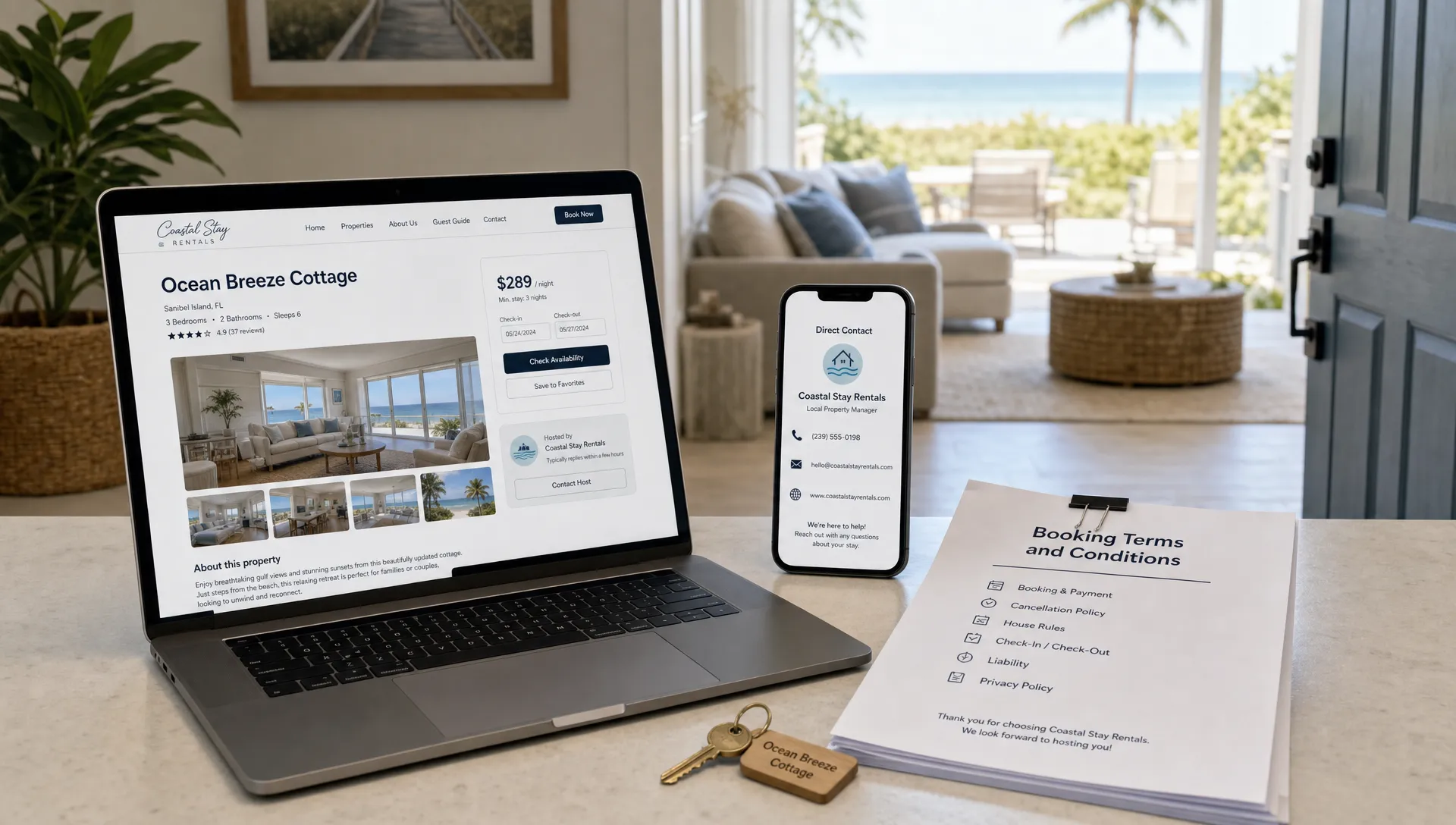
The safest property rental company to book with is the one you can verify before you pay: a real operator, clear terms, responsive guest support, accurate photos, and a written plan for what happens if something goes wrong. Pretty design and a nice pool matter, but they are not enough. Before you book a vacation rental, especially a luxury home, your job is to confirm that the company behind the listing can actually deliver the stay it is selling.
A luxury vacation rental is a private home with elevated design, amenities, location, and service. The service part is where many bookings succeed or fail.
What a property rental company should prove before you book
A good property rental company should make the booking feel boring in the best way. You should know who you are paying, what is included, how you will access the home, who answers questions, and what support exists during the stay.
When I vet a stay, I look less at adjectives and more at proof. Anyone can write “stunning retreat” or “chef’s kitchen.” Fewer operators can show consistent guest reviews, clear policies, professional communication, and clean operational details across multiple homes.
Here is the quick standard I would use:
| What to verify | What good looks like | Red flag |
|---|---|---|
| Company identity | A real website, direct contact method, consistent brand presence, and clear booking terms | No operator name, vague profile, or pressure to pay fast |
| Guest support | Specific response expectations and a plan for after-hours issues | “Message us if needed” with no backup details |
| Reviews | Recent reviews mention cleanliness, check-in, communication, and accuracy | Reviews only praise decor, or there are long unexplained gaps |
| Fees and policies | Cleaning fees, deposits, cancellation terms, pet rules, and pool or hot tub fees are stated upfront | Surprise charges after you ask to book |
| Amenities | Private amenities are clearly described and available for your dates | Photos show amenities that may be shared, seasonal, or unavailable |
| Check-in | Keyless access or a clear arrival process | Complicated key handoff, unclear address rules, or last-minute instructions |
The Federal Trade Commission warns travelers about rental listing scams, and the pattern is usually simple: a beautiful property, an urgent payment request, and not enough verifiable information. Luxury travelers are not immune to that. In fact, high-value trips often create more pressure to secure the “perfect” home quickly.
Start with the operator, not the photos
Photos are useful, but they are also the easiest part of a listing to polish. The operator is harder to fake.
Look for a company that has a real presence beyond one listing page. A professional property rental company should have a website, clear contact information, consistent branding, and a booking flow that explains the terms before you enter payment details. If the property appears on a marketplace and also on a direct booking site, the details should match.
I also check whether the company sounds like it knows the home. Generic answers usually tell on themselves. If you ask, “Is the pool heated in February?” and the response is, “The pool is available,” that is not good enough. You want specifics: whether heat is available, whether it costs extra, how long it takes to warm, and whether there are seasonal limitations.
Pro tip: Ask one practical question before booking. The quality of the answer tells you more than the marketing copy.
At Lumina, we pay close attention to the questions guests ask before arrival because they reveal what matters most in the actual stay: parking, Wi-Fi strength, pool heat, crib availability, pet rules, early check-in, late checkout, and whether the home is truly private. The best operators answer those questions before they become friction.
Read reviews for operations, not compliments
A five-star review that says “beautiful house” is nice. A review that says “spotless, easy check-in, fast response when we had a question, accurate listing, great location” is far more valuable.
When you read reviews, look for operational proof:
- Cleanliness across multiple recent stays
- Smooth check-in without key confusion
- Fast replies before and during the trip
- Accurate descriptions of bedrooms, bathrooms, and amenities
- Mentions of maintenance being handled quickly
- Guests saying they would return
One operational lesson we have learned managing luxury homes: small inconveniences feel bigger when the nightly rate is high. A guest paying for a premium stay does not want to troubleshoot Wi-Fi, guess which remote controls the patio lights, or wait hours for a response about the smart lock. That is why our team built 24/7 guest service with fast response expectations into the way we operate, not as a nice extra.
If you want a deeper framework for comparing homes themselves, not only the company behind them, our guide on how to compare vacation rental properties like an expert walks through layout, location, amenities, reviews, and total cost.
Compare managed luxury stays with owner-managed rentals
There are excellent individual hosts. There are also owner-managed homes where the owner is juggling guest messages between meetings, cleaners are inconsistent, and no one is local when something breaks.
The question is not whether an owner or a company is always better. The question is whether the person or team behind the home has systems.
| Booking type | Best for | Watch for |
|---|---|---|
| Individual owner-hosted rental | Simple trips, flexible guests, unique homes with a highly responsive owner | Slower response times, inconsistent backup support, limited maintenance coverage |
| Professionally managed private home | Families, couples, executives, extended stays, and higher-value trips where reliability matters | Make sure the company is not managing too many generic units with thin service |
| Hotel or resort | Short stays where daily housekeeping and on-site staff matter most | Less privacy, less space, shared amenities, rigid room layouts |
A managed luxury stay should give you the privacy of a home with more accountability than a casual rental. That difference matters most when your trip has moving parts: kids, grandparents, pets, remote work, anniversary plans, production crew schedules, or a month-long stay.
For a fuller breakdown, we compare vacation rentals by owner vs managed luxury stays and explain where each option makes sense.

Ask these questions before you book
The best vetting questions are practical, not confrontational. You are not trying to interrogate the host. You are trying to confirm that the property rental company has real answers.
Who answers if something breaks after 9 p.m.?
This is one of the most important questions. A beautiful home can still have a tripped breaker, a Wi-Fi issue, a smart lock battery problem, or an HVAC question. The difference between a good stay and a frustrating stay is often the response time.
Ask who handles urgent issues, whether support is available outside business hours, and how maintenance is coordinated. If the answer is vague, assume the process is vague too.
Are the amenities private and available for my dates?
Do not assume “pool,” “hot tub,” “gym,” “fire pit,” or “beach access” means private, included, and available. Ask directly.
For luxury homes, I want the listing to clarify whether amenities are exclusive to the home, shared with a community, seasonal, subject to weather, or available for an added fee. This matters in markets like Scottsdale, where pool heat can be a meaningful winter cost, and in beach markets, where access and parking can change the entire experience.
What is the total cost before I book?
Look beyond the nightly rate. The real cost may include cleaning fees, taxes, deposits, pet fees, pool heat, early check-in, late checkout, parking, resort fees, or platform service fees.
A trustworthy company will not make you chase the total. If the rate looks unusually low compared with similar homes, slow down. Sometimes it is a deal. Sometimes the missing cost is hiding in the fine print.
What exactly is the bedroom and bathroom layout?
This sounds basic, but it prevents a surprising number of bad fits. “Sleeps 10” can mean five real bedrooms, or it can mean three bedrooms plus sofa beds and bunk spaces that may not work for adults.
Ask how many true bedrooms there are, whether any sleeping areas are open to common spaces, how many showers the home has, and whether bathrooms are en suite or shared. For families and corporate groups, this is not a small detail.
Look for the small signs of a serious operator
Luxury is not only the view, the pool, or the furniture. It is consistency.
A serious operator thinks about guest-facing details before guests notice them: labeled storage, fresh linens, working batteries, clear house instructions, stocked basics, clean outdoor furniture, accurate Wi-Fi information, and arrival timing. These details are not glamorous, but they protect the stay.
I think about this the same way product brands think about physical trust signals. A company that invests in durable details like custom woven labels is telling the customer, “We expect this product to be used, noticed, and associated with our name.” Hospitality works the same way. The small touchpoints reveal whether the operator stands behind the experience.
One owner we worked with was hesitant about smart locks. He worried guests would find them impersonal. What happened was the opposite. Guests liked not waiting for a key handoff, and arrival anxiety dropped. The lesson was clear: good technology does not replace hospitality. It removes friction so hospitality can show up where it matters.
Red flags that should make you pause
If you notice one red flag, ask a follow-up question. If you notice several, keep looking.
Watch for these before you book:
- The company asks you to pay through an unusual method outside a secure booking flow
- The listing has beautiful photos but few details about rules, fees, or support
- Reviews are old, generic, or unrelated to the current operator
- The operator avoids direct questions about location, amenities, or access
- The cancellation policy is unclear or changes after you inquire
- The home is described as luxury, but the communication feels casual or disorganized
- The price is dramatically lower than comparable homes without a clear reason
- The listing promises everything but explains almost nothing
A strong property rental company does not need to pressure you. It can answer questions, provide clear terms, and let the home stand on its own.
A 10-minute vetting workflow before you book
Use this when you are deciding between two or three homes and do not want to overthink it.
- Search the company name and confirm it has a real website or brand presence.
- Read the 10 most recent reviews and look for comments about cleanliness, communication, check-in, and accuracy.
- Compare the listing photos with the written amenity descriptions.
- Check the total cost, including fees, taxes, deposits, and optional add-ons.
- Ask one specific question about an amenity, layout, or arrival process.
- Review the cancellation policy and house rules before entering payment details.
- Confirm whether support is available during the stay, not only before booking.
- Trust the pattern, not one perfect photo or one glowing review.
If you are still unsure, step back and compare the stay to the purpose of your trip. A romantic weekend needs privacy and atmosphere. A family stay needs layout, laundry, kitchen function, and pool safety. A corporate stay needs Wi-Fi, workspaces, parking, and predictable access. Our broader vacation lodging tips for a better stay can help you match the lodging type to the trip.
Frequently Asked Questions
How do I know if a property rental company is legitimate? Look for a real website, consistent company name, recent guest reviews, secure payment process, clear policies, and responsive communication. If the operator avoids basic questions or pressures you to pay quickly, pause before booking.
Is it safer to book directly with a property rental company or through a platform? Both can be safe if the operator is legitimate and the payment process is secure. Direct booking can offer better communication and clearer brand accountability, while platforms may add familiar payment protections. The key is verifying the company either way.
What should I ask before booking a luxury vacation rental? Ask who provides support during the stay, whether amenities are private and available, what the full cost includes, how check-in works, and what the bedroom and bathroom layout actually is.
Are professionally managed vacation rentals always better than owner-managed homes? Not always. Some owner-hosts are excellent. Professionally managed homes tend to be more reliable for higher-stakes trips because they usually have systems for cleaning, guest communication, maintenance, and check-in.
What is the biggest red flag when booking a vacation rental? The biggest red flag is pressure to pay before you can verify the operator, terms, reviews, and property details. A legitimate company should be able to answer practical questions without rushing you.
Book with a company that is built for the stay, not just the listing
A great trip depends on the home and the operator behind it. Before you book, verify the company, read reviews for operational proof, ask practical questions, and make sure the total cost and support model are clear.
At Lumina, we manage private luxury homes for travelers who want space, privacy, design, and responsive service without the guesswork. If that is the kind of stay you are looking for, you can browse Lumina luxury vacation rentals and book with a team that thinks through the details before you arrive.
Personal note: I care about this topic because most disappointing stays are preventable. The signs usually show up before booking, in the communication, the policies, and the way the operator handles details. Luxury should feel calm, not uncertain.
- Shariann