
short term rental property management
Short Term Rental Property Management Explained
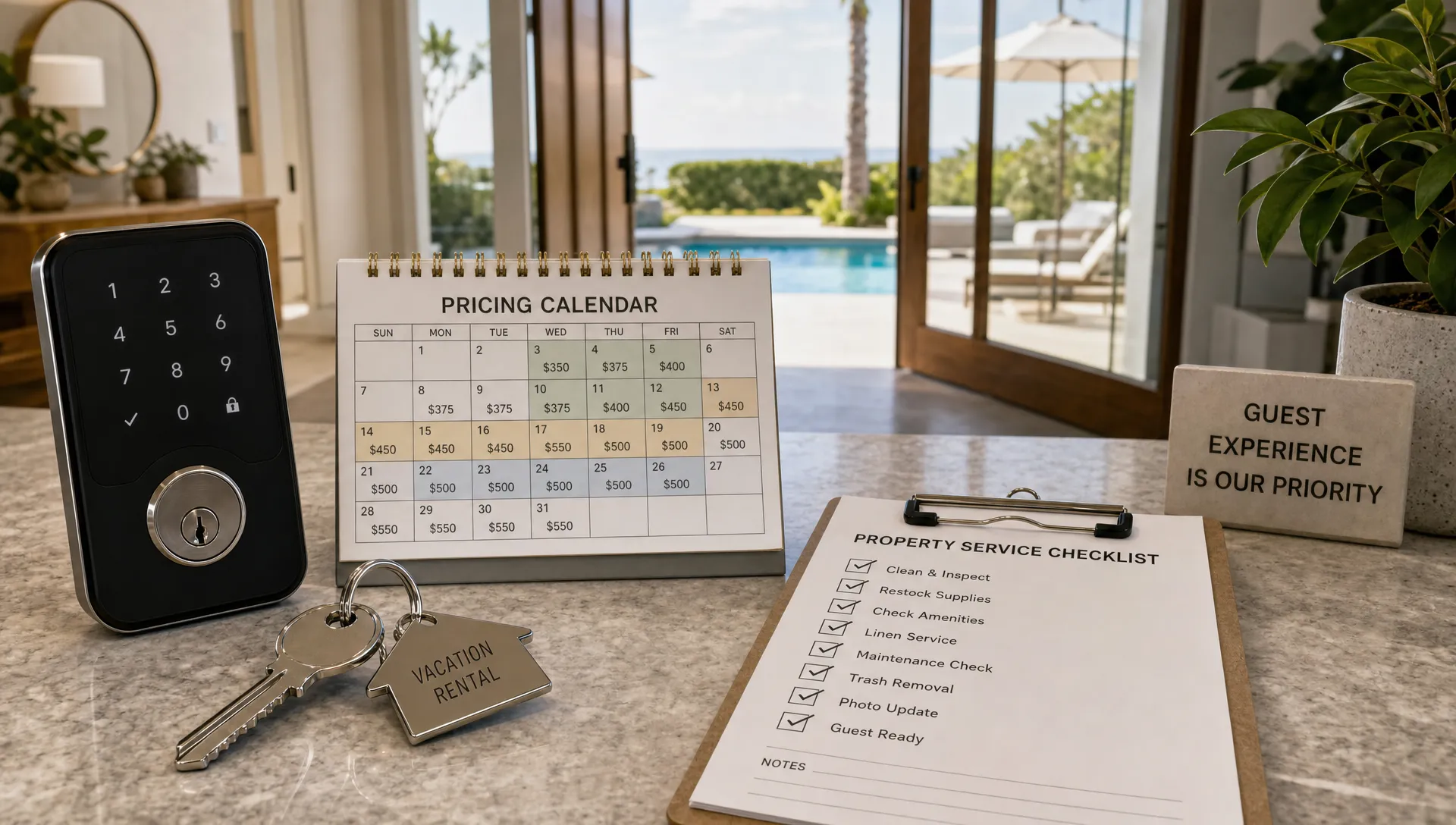
Short term rental property management is the operational system that turns a vacation home into a consistent income-producing hospitality asset. It covers pricing, listing strategy, guest communication, cleaning, maintenance, smart-home access, compliance, and owner reporting. For luxury homeowners, the right manager does more than fill a calendar. They protect the property, protect the guest experience, and make the home perform without putting the owner on call.
Most owners come to us after realizing the same thing: a beautiful home does not manage itself. The photos, nightly rate, response time, cleaning standards, pool heat settings, parking instructions, maintenance vendor list, and review strategy all matter. Miss one piece, and the property can underperform even if the location is excellent.
Short Term Rental Property Management: The Plain-English Definition
Short term rental property management is the full coordination of a furnished home rented for short stays, typically through direct booking sites, Airbnb-style platforms, and corporate or extended-stay channels.
A good manager handles three jobs at once:
- Revenue management: pricing, occupancy strategy, listing optimization, seasonality, minimum stays, and channel distribution.
- Hospitality operations: guest messaging, check-in, cleaning, inspections, supplies, maintenance, and issue resolution.
- Asset protection: house rules, smart locks, noise monitoring where appropriate, vendor oversight, compliance, and owner reporting.
That combination is why short term rental management is different from traditional property management. A long-term rental manager might collect rent once a month and coordinate occasional repairs. A short term rental manager may coordinate a checkout, inspection, cleaning, guest arrival, pool service, maintenance call, and guest question within the same afternoon.
Luxury homes raise the stakes. Guests paying premium nightly rates expect privacy, design, fast answers, spotless presentation, and a home that works exactly as promised.
What Does a Short Term Rental Property Manager Actually Handle?
The easiest way to evaluate a manager is to ask what happens before, during, and after every stay. Many companies say they offer full-service management, but the details vary widely.
| Management area | What it should include | Why it matters |
|---|---|---|
| Property launch | Positioning, photography, listing copy, amenities review, setup guidance | Determines first impressions and conversion rate |
| Pricing | Dynamic pricing, seasonal strategy, event rates, gap-night rules | Protects revenue without relying on guesswork |
| Guest communication | Pre-arrival instructions, 24/7 support, issue handling, review follow-up | Drives reviews and reduces owner interruptions |
| Turnover operations | Cleaning coordination, inspections, restocking, linen systems | Prevents the small failures guests remember |
| Maintenance | Vendor dispatch, preventive checks, emergency response | Protects both the guest stay and the home itself |
| Technology | Smart locks, Wi-Fi, climate control, access codes, noise awareness | Reduces friction and improves owner visibility |
| Owner reporting | Revenue, occupancy, expenses, maintenance notes | Keeps the owner informed without managing daily tasks |
At Lumina, we think about this as a hospitality operating system, not a side hustle. The property needs to be priced correctly, presented correctly, cleaned correctly, and supported in real time.
How is this different from co-hosting?
Co-hosting usually means partial support. A co-host might respond to guests, update a listing, or coordinate cleaners, but the owner often remains responsible for vendor decisions, repairs, supply purchasing, design choices, compliance, and financial oversight.
Full-service short term rental property management is more comprehensive. The owner should not be texting cleaners, troubleshooting Wi-Fi, replacing sheets, updating rates, or answering a guest at 10:47 p.m. because the hot tub panel is confusing.
What is not included by default?
This is where owners need to read contracts carefully. Some managers include inspections, maintenance coordination, smart lock management, and restocking. Others charge separately for almost every operational task.
Common add-ons can include photography, listing creation, onboarding labor, design procurement, permit assistance, deep cleans, maintenance markup, linen replacement, and supply reimbursement. None of those are automatically bad. What matters is whether the fee structure is transparent and whether the manager can explain how each cost supports net income.
Why Luxury Homes Need a Higher Management Standard
Generic short term rental management is built for volume. Luxury management has to be built for trust.
A generic setup often looks like this: basic listing copy, automated messages, cheapest available cleaners, one-size-fits-all pricing, and reactive maintenance. That may work for a simple condo. It does not work for a high-value home with a pool, spa, chef’s kitchen, outdoor living space, expensive finishes, and guests arriving for anniversaries, family holidays, executive stays, or production work.
Luxury guests notice the details. They notice if the entry lighting feels harsh, if the primary bedroom lamps do not match the room, if outdoor furniture has sun damage, if the pool instructions are unclear, or if the host takes two hours to respond. Even design choices that seem cosmetic can affect perceived value, which is why we pay attention to finishes, including fixtures and sources for premium designer lighting when a room needs to feel intentional rather than pieced together.
We learned early in Scottsdale that pool heat is not a casual amenity. In winter, heating costs can quietly eat into a host’s margin if the property is priced as if utilities are flat year-round. Now we treat pool and spa expectations as part of revenue strategy, guest communication, and operating cost control. That is the kind of operational detail owners often miss when they are only looking at nightly rate.
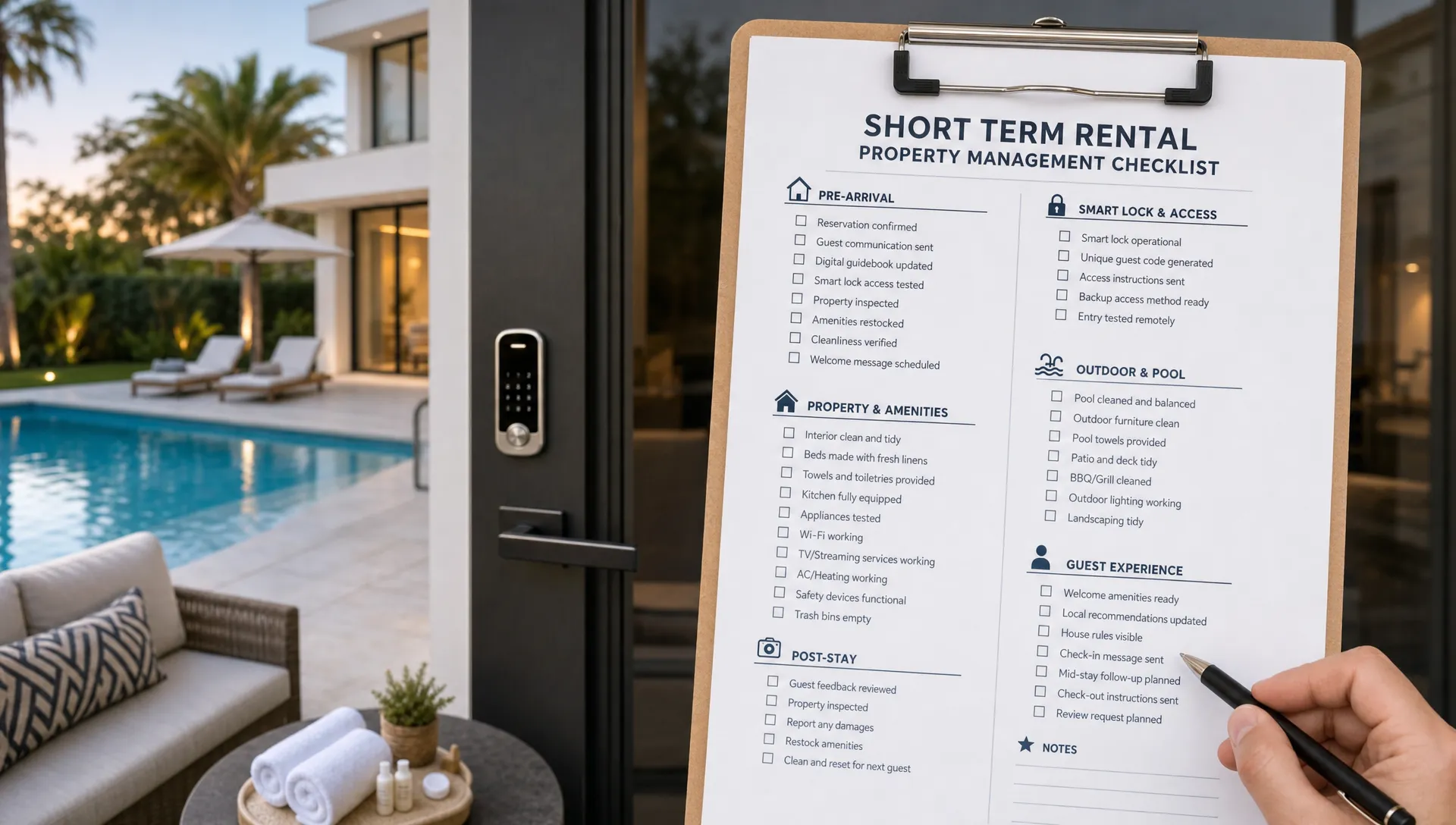
Full-Service Management vs Self-Management
Self-management can work if an owner has time, local vendors, strong hospitality instincts, and a willingness to be available every day. It gets harder when the home is remote, high-end, frequently booked, or dependent on fast issue resolution.
| Factor | Self-managed rental | Full-service management |
|---|---|---|
| Owner time | High, especially during turnovers and guest issues | Low, if the manager is truly full-service |
| Guest response | Depends on owner availability | Should be fast, consistent, and documented |
| Pricing | Often manual or inconsistent | Should adjust for demand, seasonality, and events |
| Cleaning quality | Owner must hire and audit vendors | Manager should coordinate and inspect standards |
| Maintenance | Owner sources vendors and handles emergencies | Manager dispatches vendors and tracks issues |
| Revenue potential | Can be strong, but often capped by owner bandwidth | Can improve when operations and pricing mature |
| Stress level | Higher during peak season and problem stays | Lower when systems are in place |
The honest tradeoff is control versus leverage. Self-management gives you direct control, but it also makes you the operator. Full-service management gives you leverage, but only if the company is competent, transparent, and aligned with your property’s positioning.
If you are trying to decide whether to stay hands-on or delegate the operation, our guide to vacation rental property management for hands-off owners goes deeper into what owners should expect from a true full-service partner.
If you own a luxury home and want a practical second opinion, Lumina can review your property, market, and operating assumptions before you commit to a management model.
How Short Term Rental Property Management Fees Work
Most short term rental managers charge a percentage of booking revenue. Some also charge setup fees, onboarding fees, maintenance coordination fees, design fees, supply costs, or platform-related expenses.
The fee percentage matters, but it is not the whole story. A lower-fee manager who misses revenue opportunities, responds slowly, uses weak cleaners, or lets reviews slide can cost more than a higher-fee manager with stronger operations.
Owners should evaluate net income, not just management cost. Ask these questions before signing:
- What revenue is the management fee calculated on?
- Are cleaning fees passed through, marked up, or retained?
- Who pays for supplies, linens, repairs, and replacements?
- Are maintenance vendors billed directly or through the manager?
- Is there an onboarding fee or photography fee?
- How often will I receive owner statements?
- Can I see performance assumptions before I sign?
The best conversations are specific. If a manager cannot explain seasonality, expected guest profile, likely amenities that drive bookings, and cost assumptions for your market, they are not ready to manage a luxury asset.
What Makes a Good Short Term Rental Manager?
A good manager protects four things: revenue, reviews, the home, and the owner’s time.
For us, the clearest signs of a strong operator are not flashy sales decks. They are operational habits.
A strong short term rental property manager should have:
- Fast guest response systems, not occasional manual replies.
- Clear cleaning standards with inspection accountability.
- Dynamic pricing logic that changes by season, event, and booking window.
- Local vendor relationships for urgent repairs.
- Smart lock and access systems that reduce arrival friction.
- Review management habits that catch issues before they become patterns.
- Transparent owner reporting with revenue and expense visibility.
Lumina uses AI-powered guest service for 24/7 instant response, with an under 10-minute average reply time, paired with human oversight and property-specific operating knowledge. That combination matters. Automation alone can sound cold. Human-only response can be too slow. Luxury rentals need both speed and judgment.
We also believe smart-home technology should make the stay smoother, not more complicated. Smart locks, high-speed Wi-Fi, smart climate control, and EV chargers at select properties can improve guest experience when they are installed, explained, and supported correctly.
Red Flags When Hiring a Management Company
Not every company that manages vacation rentals is equipped to manage a luxury home. I would be cautious if a manager focuses only on occupancy, avoids net-income conversations, or cannot explain how they handle guest issues after hours.
Other red flags include vague reporting, no local vendor depth, weak photography, generic listing copy, no inspection process, unclear fee language, and resistance to owner questions. A luxury property owner should not have to chase basic answers.
If you are interviewing multiple companies, use a structured comparison. We put together a practical guide on how to compare vacation rental management companies because the cheapest proposal is rarely the best one.
When Does Short Term Rental Management Pay Off?
Management pays off when the manager improves net owner outcome enough to justify the fee. That can happen through higher nightly rates, better occupancy, stronger reviews, fewer preventable refunds, better cost control, and less owner time.
It also pays off when the owner values freedom. If you bought a second home to enjoy it, not to become a 24/7 hospitality operator, that time has real value.
| Situation | Management is more likely to pay off because |
|---|---|
| The home is in a premium market | Pricing mistakes are more expensive at higher nightly rates |
| The owner lives out of town | Local vendor and turnover oversight become essential |
| The home has a pool, spa, or complex systems | Guest instructions and maintenance coordination matter more |
| The property attracts families or groups | Cleaning, supplies, and communication need tighter controls |
| Reviews are inconsistent | Better operations can protect long-term performance |
| The owner is busy | Delegating prevents the rental from becoming a second job |
For a deeper look at the math, our article on when vacation rental management pays off breaks down how owners should think about the return on professional management.
Where Lumina Fits
Lumina manages luxury short-term and mid-term rentals for owners who want income without running the operation themselves. We handle guest communication, booking management, cleaning coordination, maintenance dispatch, pricing strategy, listing creation, photography coordination, smart-home setup, and owner reporting.
Our portfolio is built around private luxury homes, not generic apartment conversions. We work across premium U.S. destinations including Scottsdale, Manhattan Beach, Laguna Beach, Moonstone, Edwards, Beaverton, and San Juan. The common thread is not just location. It is privacy, design, and operational care.
Owners come to us because they want a manager who understands both hospitality and asset protection. Guests book Lumina properties because they trust the experience, supported by 611+ five-star reviews and Airbnb Superhost credibility.
Frequently Asked Questions
What is included in short term rental property management? Short term rental property management usually includes listing setup, pricing, guest messaging, cleaning coordination, maintenance, check-in systems, review management, and owner reporting. Full-service managers may also handle photography, smart-home setup, supply systems, and revenue optimization.
How much do short term rental property managers charge? Most managers charge a percentage of booking revenue, sometimes with additional setup, maintenance, cleaning, or supply costs. Owners should compare projected net income, not just the management fee percentage.
Is short term rental management worth it for a second home? It can be worth it if the manager increases net income, protects reviews, reduces owner workload, and prevents operational mistakes. It is especially useful for out-of-town owners, luxury homes, and properties with pools, spas, or frequent turnovers.
Can I still use my home if I hire a manager? In most cases, yes. Owner usage should be discussed before signing so the manager can block personal dates, plan around peak seasons, and set expectations for revenue impact.
What should I ask before hiring a short term rental manager? Ask who handles after-hours guest issues, how pricing is set, how cleaning is inspected, what fees are charged, how maintenance is approved, how often owners receive reports, and what experience the company has with homes like yours.
Want a Realistic Revenue Estimate?
If you own a luxury home and want to know whether short term rental property management makes sense, we can help you evaluate the opportunity without turning it into a sales pitch. Lumina will look at your property, market, amenities, likely guest profile, and operating requirements so you can make a grounded decision.
To list your property with Lumina or request a free revenue estimate, contact newhomes@staywithlumina.com or call (602) 905-7540.
I care about this topic because I have seen beautiful homes underperform for preventable reasons: slow replies, weak cleaning systems, poor pricing, and managers who did not understand the guest they were serving. Luxury rental income is not luck. It is the result of disciplined hospitality, property care, and daily follow-through.
— Shariann