
short let
Short Let or Hotel? What Smart Travelers Choose

A short let is the smarter choice when your trip needs privacy, real living space, kitchen access, laundry, flexible arrival and a stay that feels personal rather than processed. A hotel still makes sense for one-night stops, daily housekeeping or travelers who want lobby restaurants and conference facilities. The right answer is not about status. It is about how you will live during the trip.
Most travelers compare the wrong things. They look at nightly rate, square footage and photos, then miss the operational details that shape the stay: arrival, parking, Wi-Fi, climate control, noise, kitchen setup, support speed and whether anyone responds when something goes wrong.
At Lumina, we manage private luxury homes across premium U.S. destinations, so I look at this question less like a travel writer and more like an operator. A beautiful home can disappoint if it is poorly run. A hotel suite can feel efficient but cramped if the trip needs privacy and rhythm.
What is a short let, and how is it different from a hotel?
A short let is a furnished private residence rented for a temporary stay, usually from a few nights to several weeks or months. In the U.S., travelers often call the same concept a short-term rental, vacation rental or furnished rental.
The main difference is control. In a hotel, you rent a room inside a shared hospitality property. In a private home, you rent the whole environment: bedrooms, kitchen, living areas, outdoor space and amenities that do not have to be shared with strangers.
For luxury travelers, a short let works best when the home is professionally managed, properly stocked and supported by a responsive team. The property type alone does not guarantee a better stay. The operation behind it does.
The smart traveler decision matrix
Use this table before you book. It is the same practical lens we use when helping guests decide whether one of our homes makes sense for their trip.
| Travel need | Better fit | Why it matters |
|---|---|---|
| One-night business stop | Hotel | Faster for sleep-only trips with minimal unpacking |
| Family vacation | Private rental | Separate bedrooms, kitchen, laundry and outdoor space reduce friction |
| Romantic retreat | Private rental | Privacy, hot tub or pool access and a quieter setting feel more personal |
| Corporate extended stay | Private rental | Workspaces, reliable Wi-Fi and full kitchens support daily routines |
| Event or conference attendance | Depends | A hotel may win if the event is on-site, a home wins if privacy matters more |
| Luxury leisure trip | Private rental | The whole-home experience usually feels more exclusive than a suite |
A well-run short let should feel effortless, not like borrowing someone’s house. That means keyless entry that works, enough towels, clear instructions, fast support and honest expectations before arrival.
If you are comparing options for a flexible itinerary, our guide to short-term home rentals for flexible travel plans goes deeper into when a private home gives travelers more breathing room than a standard hotel reservation.
When a short let beats a hotel
The private-home format wins when the trip includes more than sleeping. If you plan to cook breakfast, host grandparents for dinner, take work calls from different rooms or let children swim without sharing a crowded pool deck, the hotel model starts to feel limiting.
Is a short let better for families?
Yes, for most family trips of more than two nights, a private home is usually more comfortable. Parents get real bedrooms instead of sofa beds, children can keep normal routines and everyone has space to decompress.
Hotels can work well for families that want resort programming, daily room turnover or restaurants downstairs. But when families book Lumina homes, the comments we hear most often are practical: they liked having laundry, a kitchen, parking, outdoor space and a place to sit together after the kids went to bed.
Is a short let better for couples?
For couples, the answer depends on the occasion. If the trip is a quick city weekend built around restaurants, a boutique hotel may be enough. If it is an anniversary, proposal, honeymoon-style escape or quiet reset, the privacy of a home changes the feel of the trip.
We have had anniversary guests choose a private Lumina property because they did not want a lobby, elevator or shared pool in the middle of their stay. Small details mattered: easy arrival, a clean outdoor area, a kitchen for slow mornings and responsive support without having to call a front desk.
Is a hotel better for one-night stays?
Often, yes. If you land late, leave early and will not use the space, a hotel near the airport or meeting venue can be the rational choice. I do not pretend a private home is always better.
A short let becomes more compelling once the stay has a rhythm: unpacking, cooking, working, resting, entertaining or using outdoor amenities. That is when the value moves beyond the bed.
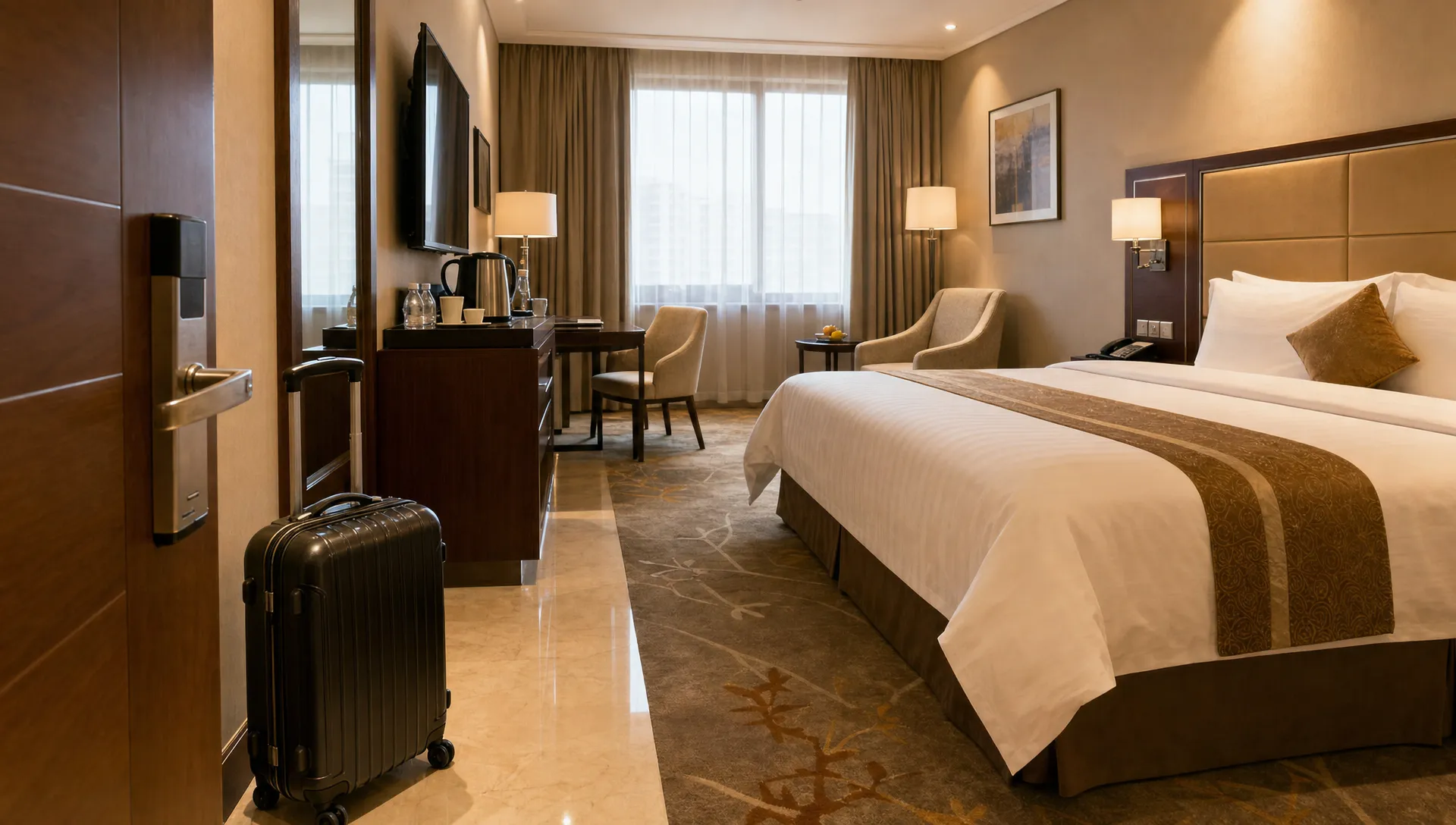
Compare total cost, not just nightly rate
Smart travelers do not stop at the headline price. They compare the total cost of the stay and the quality of what is included.
For hotels, add resort fees, parking, breakfast, multiple rooms, laundry, room service, pet fees if applicable and the cost of eating out more often. For private rentals, add cleaning fees, service fees, pool heat, pet fees, early check-in, late checkout and any optional services.
The mistake is judging a short let against one hotel room when your group would need two or three rooms to travel comfortably. A private home may show a higher nightly rate but a lower per-person cost once space, meals, parking and shared amenities are considered.
Operator note: We learned early that pool heat can surprise guests and owners if it is not discussed clearly. In markets like Scottsdale, winter travelers often want a warm pool, but heating a large pool is a real operating cost. We would rather price and communicate it clearly than bury the conversation after booking.
Travel logistics matter the same way. If your trip includes a road segment, equipment, sports gear or a vehicle-related errand, handle those details before arrival. For example, travelers planning onward driving in the Netherlands might use a specialist wheel supplier as part of their pre-trip checklist instead of spending vacation time solving it later.
Service is the real luxury divider
A hotel has one built-in advantage: there is usually someone on-site. A private rental has to earn trust through systems.
At Lumina, we rely on smart home technology, keyless access and AI-powered guest service so guests are not waiting on a call center or a delayed email chain. Our team also stays involved from booking to checkout because luxury guests notice gaps quickly.
For corporate guests, a short let can function more like a private residence than temporary lodging. That matters for executives, production crews and extended-stay travelers who need work zones, laundry, strong Wi-Fi, parking and a predictable home base.
The point is not technology for its own sake. The point is fewer delays and fewer awkward handoffs. One owner we work with was initially hesitant about smart locks because he thought they would feel impersonal. Guest feedback moved the other direction. People liked arriving on their own schedule without waiting for a key exchange.
If you are evaluating premium homes, this breakdown of what makes luxury short-term rentals worth the rate explains the difference between a high price and a stay that genuinely feels high-end.
Pros and cons: private home versus hotel
No lodging category wins every trip. Here is the honest tradeoff.
| Option | Pros | Cons |
|---|---|---|
| Private luxury home | More privacy, more space, kitchen, laundry, outdoor amenities and flexible routines | Quality depends heavily on the manager, fees vary and daily housekeeping is not always standard |
| Hotel | Predictable check-in, daily service, on-site staff, restaurants and loyalty benefits | Less privacy, shared amenities, smaller space and higher total cost for groups needing multiple rooms |
A short let is not automatically more luxurious because it has a pool or a large kitchen. It becomes luxurious when the home, service and location work together without making the guest manage the details.
This is where generic listings fall short. A pretty living room photo does not tell you whether the Wi-Fi reaches the workspace, whether the smart lock battery is monitored or whether anyone has checked the grill before a holiday weekend. We obsess over those details because that is where reviews are won or lost.
What smart travelers check before booking
Before you book any private stay, ask sharper questions than “Does it look nice?” A well-informed traveler looks for operational signals.
- Response speed: Slow answers before booking usually mean slow answers during the stay.
- Access details: Keyless entry, parking instructions and arrival timing should be clear.
- Home readiness: The listing should mention kitchen basics, laundry, Wi-Fi and climate control.
- Amenity rules: Pool heat, hot tub use, EV charging and pets should be explained before payment.
- Review patterns: Look for repeated praise or repeated complaints, not one dramatic review.
- Management quality: A professional team should communicate proactively, not only when asked.
When guests ask us whether a short let or hotel is better, I usually ask about the shape of the day. Where will you drink coffee? Where will you take calls? Who needs quiet at night? Will anyone cook? Do you care about private outdoor space? The answer becomes obvious once the trip is described honestly.
Frequently Asked Questions
Is a short let cheaper than a hotel? It can be, especially for families, groups and longer stays that would otherwise require multiple hotel rooms. Compare the full stay cost, including fees, meals, parking and amenities, not just the nightly rate.
How many nights make a private rental worth it? Two or three nights can be enough if you will use the kitchen, outdoor space or multiple bedrooms. For one-night stays, a hotel often remains the simpler choice.
Do private luxury rentals include hotel-style service? Some do, but many do not. Look for professional management, fast guest communication, clear arrival instructions and support before and during the stay.
Are hotels safer than private rentals? Not automatically. Safety depends on location, access control, maintenance and management. A professionally managed private home with smart locks, clear instructions and responsive support can feel both private and secure.
Who should choose a hotel instead? Choose a hotel if you need daily housekeeping, on-site dining, a conference venue, loyalty points or a fast one-night stop with minimal planning.
Book the stay that fits how you travel
If your trip is built around privacy, space, comfort and a more personal rhythm, a short let is usually the smarter choice. If your stay is quick, transactional or tied to on-site hotel services, book the hotel and do not overcomplicate it.
For travelers who want the private-home experience without self-service chaos, book your stay with Lumina. We handpick luxury homes for design, privacy and location, then support the stay with fast communication, smart access and concierge-level care.
I care about this topic because I have seen both sides: guests who overpay for cramped hotel rooms and guests who book beautiful homes that are poorly managed. The sweet spot is a private home with real hospitality behind it. That is the standard we try to protect at Lumina.
- Shariann