
vacation rental management
What Great Vacation Rental Management Should Handle
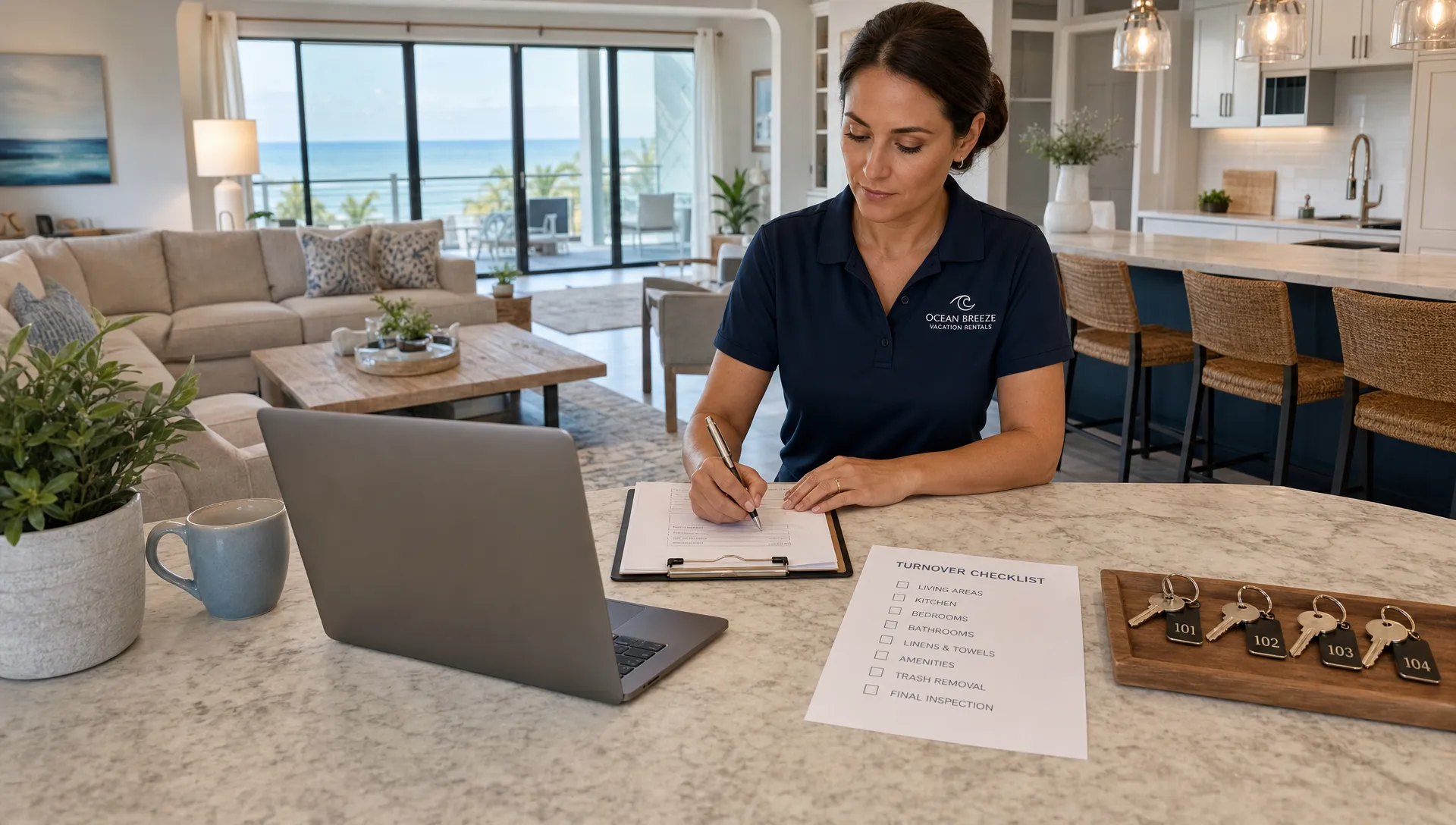
Great vacation rental management should handle every operational layer between owning a beautiful home and earning consistent five-star guest experiences. That includes launch strategy, pricing, listing performance, guest communication, cleaning, maintenance, smart home access, compliance coordination, owner reporting, and revenue optimization. If you still have to chase cleaners, answer midnight messages, approve every rate adjustment, or solve Wi-Fi issues from another state, you do not have management. You have help.
At Lumina, we manage luxury homes like hospitality assets, not side projects. That distinction matters because high-end guests notice the details immediately, and owners feel the difference when the day-to-day work disappears.
Vacation rental management is not just putting your home online
A vacation rental manager runs the business of renting your home. A good one manages guest experience, property care, revenue strategy, brand presentation, and owner communication in one connected system.
A weak manager does the visible tasks only. They create a listing, answer guest messages, schedule a cleaner, and hope the home performs. That may work for a spare bedroom or a casual weekend rental. It does not work for a luxury home with a pool, premium furnishings, neighbors, local rules, and guests paying premium rates.
Great management should protect two things at the same time: your income and your asset. If a manager focuses only on bookings, maintenance slips. If they focus only on property protection, revenue stalls. Luxury owners need both.
| Management area | What great management handles | What weak management leaves to the owner |
|---|---|---|
| Launch strategy | Positioning, guest profile, photography readiness, amenity standards | Owner guesses what guests will pay for |
| Pricing | Dynamic rates, seasonality, minimum stays, fee strategy | Static pricing or random manual changes |
| Guest experience | Fast replies, check-in instructions, issue resolution, local guidance | Owner gets looped into routine guest questions |
| Cleaning and inspections | Turnover standards, restocking, damage checks, quality control | Cleaner sends a text and hopes nothing was missed |
| Maintenance | Vendor coordination, urgent repairs, preventive care | Owner handles calls from another city |
| Owner visibility | Revenue, occupancy, performance, and operational updates | Owner asks for reports after problems happen |
This is where many owners get frustrated. They thought they hired a manager, but they still feel responsible for every decision. A true management company should reduce decisions, not create new ones.
What does a vacation rental manager do for owners?
A vacation rental manager handles the operational work required to market, book, service, maintain, and optimize a rental home. For luxury owners, that should include guest communication, professional listing management, pricing strategy, cleaning coordination, maintenance dispatch, smart access, review management, and clear owner reporting.
The key phrase is operational work. Owners should still make big-picture decisions about the home, brand fit, major upgrades, owner stays, and long-term goals. They should not be managing towel counts, Wi-Fi resets, pool heat complaints, or cleaner availability.
If you are comparing providers, our guide on how to choose a trusted vacation home rental agency goes deeper into the questions I would ask before signing with anyone.
What should vacation rental management handle before the first guest arrives?
The launch phase sets the ceiling for your rental performance. Many owners want to go live quickly, but speed without standards creates expensive problems later.
Before a property is listed, management should review the home through three lenses: guest experience, owner risk, and revenue potential. A luxury home may be beautiful for personal use but not ready for high-frequency guest stays. Personal closets, fragile decor, missing blackout shades, unclear parking, inconsistent Wi-Fi, and understocked kitchens can all drag down reviews.
A strong manager should handle or coordinate the following before launch:
- Rental positioning: Who is the ideal guest, and why would they choose this home over a hotel, resort, or another private rental?
- Amenity audit: Are the kitchen, linens, outdoor areas, workspaces, and entertainment features aligned with the nightly rate?
- Photography readiness: Is the home staged in a way that sells the stay honestly and beautifully?
- House rules and guest flow: Can guests understand parking, access, pool use, trash, quiet hours, and checkout without confusion?
- Smart access setup: Are locks, codes, Wi-Fi instructions, and climate controls reliable before guests arrive?
- Maintenance baseline: Are HVAC, plumbing, appliances, pool systems, hot tubs, and outdoor lighting ready for guest use?
We learned this early with larger homes: the biggest launch risk is not a missing decorative pillow. It is the unglamorous item guests discover at 9 p.m., like a confusing thermostat, a dull kitchen knife, a garage remote that was never tested, or pool instructions written for the owner instead of a traveler.
If an owner is converting a second home into a rental, the setup can also involve moving personal furniture, clearing locked owner storage, or bringing in more durable rental-ready pieces. For Bay Area owners doing that transition before photography, working with a licensed, insured provider like Zapt Movers can keep the pre-launch timeline from getting derailed by a messy move-out.
Who decides what stays in the rental home?
The owner should make final decisions about personal items, art, heirlooms, and locked storage. The manager should advise on what belongs in a guest-facing luxury rental.
I usually tell owners to remove anything they would be upset to lose, repair, or replace. Luxury guests are careful most of the time, but a vacation rental is still a working hospitality environment. Wine glasses break. Outdoor cushions fade. Children find drawers. A manager should help you design for real use, not showroom perfection.
Guest communication should be 24/7, but not robotic
Guest messaging is one of the first places owners feel the weight of self-management. Questions come before booking, after booking, on arrival day, during the stay, and after checkout. In luxury homes, guests also expect confident answers, not canned responses.
Great management should handle:
- Pre-booking questions about layout, amenities, pets, parking, pools, hot tubs, EV chargers, workspaces, and local access
- Arrival instructions, smart lock codes, Wi-Fi details, and house-specific guidance
- In-stay support for maintenance, comfort, supplies, climate control, and local recommendations
- Checkout reminders, damage follow-up, lost items, and review requests
At Lumina, we use AI-powered guest service for speed, with an average reply time under 10 minutes, but we do not treat hospitality as a chatbot exercise. Automation should remove friction, not remove care. When a guest has a sensitive issue or a stay-specific request, the human operator still matters.
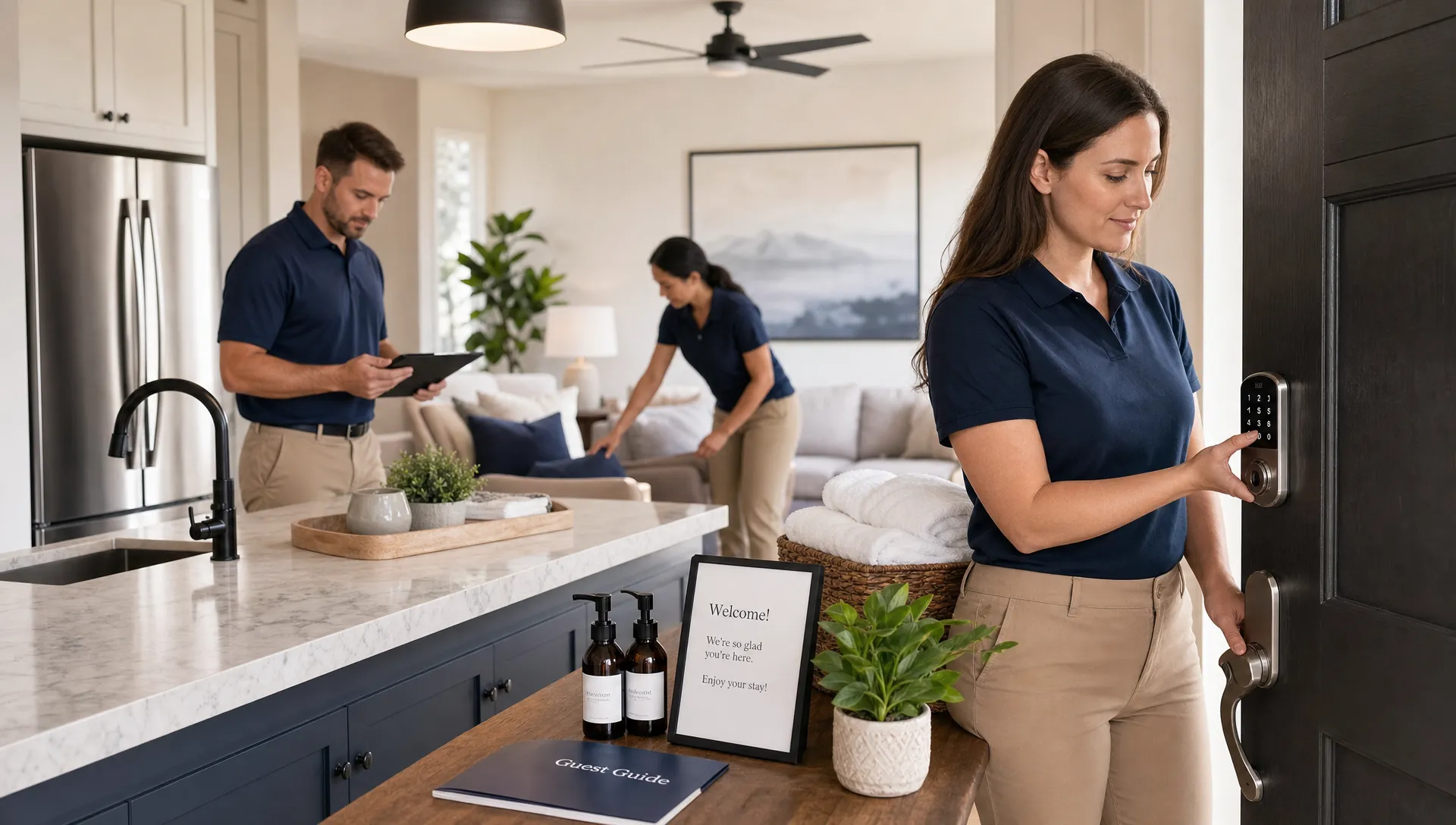
One owner was hesitant about smart locks because he thought guests would find them impersonal. The opposite happened. Guests preferred not waiting for a key handoff, especially after late flights or long drives. The lesson was simple: luxury is not always more human contact. Sometimes luxury is a quiet, seamless arrival with no one standing between the guest and the front door.
If you want a second set of operator eyes on whether your home is ready for high-end guests, you can connect with Lumina and ask for a free revenue estimate.
Should a manager answer guests at night?
Yes, a vacation rental manager should have a system for after-hours guest communication. Not every late message is an emergency, but every late message affects the guest’s confidence.
A guest who cannot find the smart lock code, restart the Wi-Fi, or adjust the heat does not care that it is 11:30 p.m. They care whether someone responds. For owners, the goal is not to be available around the clock. The goal is to hire an operation that is.
Pricing and revenue management should be proactive
Pricing is not a set-it-and-forget-it task. It changes with seasonality, events, booking windows, minimum stay patterns, local demand, and the specific strengths of the home.
Great vacation rental management should handle pricing with a revenue strategy, not a gut feeling. That means tracking how far out bookings are coming in, when to hold rate, when to adjust minimum stays, and when an amenity should be priced separately.
Pool heat is a good example. In Scottsdale, winter guests often want heated pools, but pool heat can materially affect owner margin if it is not priced correctly. We learned to treat it as an operational cost with a pricing policy, not as a casual courtesy. The same principle applies to hot tub care, early check-in, late checkout, pet fees, and EV charging at select properties.
A manager should be able to explain the pricing logic in plain English. If the only answer is “the algorithm says so,” that is not enough. Tools are useful, but luxury homes need judgment.
Cleaning and maintenance are where reviews are won
Guests remember the view, the pool, and the design. They review the cleanliness, the bed comfort, the water pressure, the check-in, and how quickly someone fixed the issue.
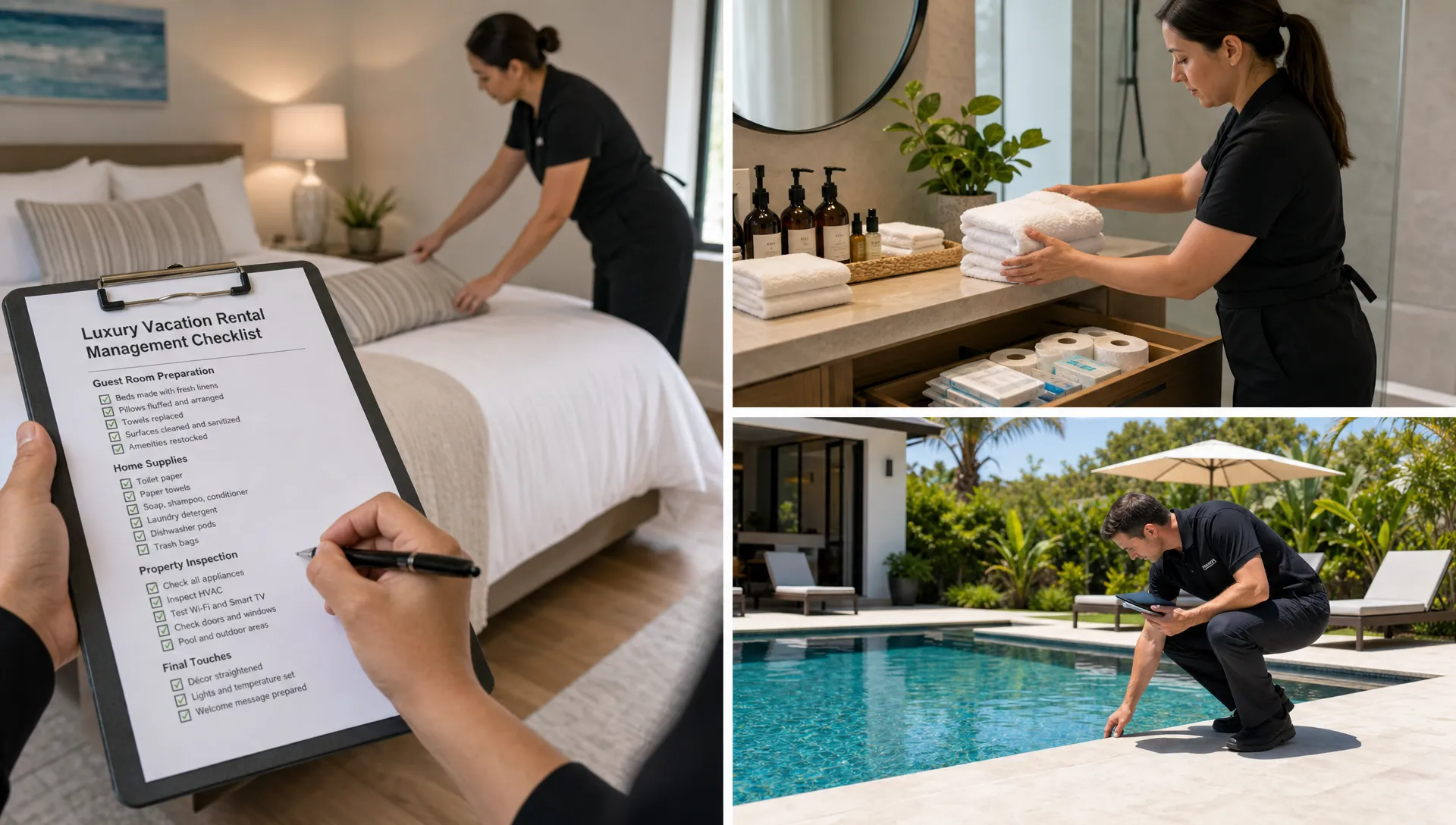
A great manager should not simply schedule cleaning. They should define cleaning standards, train for the property, inspect quality, manage restocking, and close the loop when something is missed. In luxury homes, the difference between “clean” and “guest-ready” is meaningful.
Guest-ready means the grill is not just wiped down, it has propane. The hot tub is not just uncovered, it is balanced and ready. The primary bedroom is not just made, it has the right pillows, working lamps, and clean remote controls. The kitchen is not just tidy, it has the tools a family or private chef would expect.
Maintenance works the same way. A good manager should coordinate repairs quickly, but a great manager prevents recurring issues from becoming review patterns. If the same door sticks after every summer storm, or the same bathroom drain slows every third stay, that is not a guest problem. That is an operations problem.
For a guest-side view of why these details matter, our article on luxury vacation rentals that feel worth every night explains how operational quality translates into perceived value.
Compliance, neighbors, and property protection should not be afterthoughts
Short-term rental rules vary by market, and they change. A manager should help owners understand the operational requirements that apply to the property, including permits, taxes, parking rules, occupancy limits, quiet hours, safety equipment, and local registration where required.
This does not mean a manager replaces your attorney, CPA, or insurance advisor. It means they should know enough to operate responsibly and flag issues before they become expensive.
Neighbor relations also matter. Luxury homes are often in residential neighborhoods. A manager should set clear guest expectations, monitor for issues where appropriate, and respond quickly if a neighbor raises a concern. The best complaint is the one prevented by good house rules, clear communication, and smart guest screening.
Property protection should include practical controls:
- Smart lock access that can be changed between stays
- Clear maximum occupancy rules
- Documented maintenance and damage follow-up
- Vendor accountability after repairs or turnovers
- Owner storage boundaries
- House rules written for real guest behavior, not legal theater
The owner should feel informed, not exposed.
What should owners still control?
Owners should still control major capital decisions, owner-use calendars, long-term financial goals, and the level of wear they are comfortable accepting. A manager should make recommendations, but the home still belongs to the owner.
For example, I may recommend replacing delicate dining chairs with something more durable if the home attracts families or executive groups. The owner decides whether that fits the property’s design and budget. My job is to explain the operational tradeoff before reviews or repair invoices force the decision.
Self-managed vs. full-service vacation rental management
Some owners can self-manage successfully, especially if they live nearby, enjoy guest communication, have reliable vendors, and treat the rental like a part-time job. Most luxury owners I speak with do not want that job.
Here is the honest comparison.
| Model | Best for | Owner workload | Main advantage | Main risk |
|---|---|---|---|---|
| Self-managed | Local owners with time and hospitality experience | High | Maximum control | Burnout, missed revenue, inconsistent standards |
| Co-host or partial help | Owners who want help with messaging or turnovers | Medium | Lower cost than full-service | Owner still manages gaps between vendors |
| Full-service management | Remote owners, luxury homes, investors, second-home owners | Low | Integrated operations and revenue strategy | Requires choosing the right operator |
The question is not “Can I do this myself?” Many owners can. The better question is, “Is this the best use of my time, and will I outperform a professional operation?”
For high-value homes, the cost of weak management is rarely just one bad booking. It is underpricing during peak dates, slow replies that reduce conversion, rushed turnovers that hurt reviews, and maintenance issues that get worse because no one owns the whole system.
What poor vacation rental management looks like
Poor management usually looks fine from a distance. The listing is live. Guests are checking in. Money is coming through. Then the cracks show.
Common warning signs include:
- You are still the escalation point for routine issues
- The manager cannot explain pricing decisions
- Cleaners are not inspected or held to a property-specific standard
- Maintenance is reactive and poorly documented
- Guest messages sound generic or confused
- The listing photos and description no longer match the actual home
- Owner statements are late, vague, or hard to interpret
- Reviews mention the same preventable issue more than once
That last point matters. One complaint may be random. A repeated complaint is data. A good manager treats reviews like operational feedback, not personal criticism.
What Lumina handles for luxury homeowners
Lumina’s owner model is built for people who want income without becoming the operator. We handle guest communication, booking management, cleaning coordination, maintenance dispatch, pricing optimization, listing creation, and photography coordination for luxury short-term and mid-term rentals.
We also bring the brand layer. Guests do not only book a house. They book trust. Lumina has 611+ five-star reviews and Airbnb Superhost credibility, which matters when a traveler is choosing between multiple premium homes. Strong operations help earn that trust, and the brand helps convert it into bookings.
Our approach combines smart home technology, AI-powered operations, revenue strategy, and hospitality judgment. We operate across multiple U.S. markets, including Arizona, California, Colorado, Oregon, and Puerto Rico, so we pay close attention to local demand patterns and guest expectations by destination.
We are not trying to make every home feel the same. That is the mistake I see in generic management. A Scottsdale home with a private pool, a Manhattan Beach coastal property, and an Edwards mountain stay should not be positioned identically. The operating standards should be consistent. The guest experience should feel specific to the home.
Frequently Asked Questions
What is included in full-service vacation rental management? Full-service management usually includes listing setup, pricing, guest communication, cleaning coordination, maintenance support, review management, owner reporting, and operational oversight. For luxury homes, it should also include brand positioning, amenity standards, smart access, and proactive guest experience planning.
How much work should an owner still expect to do? With true full-service management, the owner should focus on major decisions such as owner stays, capital improvements, and long-term goals. The manager should handle routine guest, vendor, pricing, and turnover operations.
Is vacation rental management worth it for a second home? It can be worth it if the manager improves revenue, protects the property, reduces owner workload, and creates a more consistent guest experience. The value is highest for remote owners, luxury homes, and properties with amenities that require hands-on operations.
Should a vacation rental manager handle maintenance? Yes. A manager should coordinate maintenance, dispatch vendors, document issues, and follow up after repairs. Owners should not be troubleshooting guest-facing problems from another city during a stay.
What is the difference between a co-host and a management company? A co-host may handle selected tasks, often messaging or listing support. A full-service management company should own the entire operating system, including pricing, guest care, cleaning, maintenance, reporting, and quality control.
A note from Shariann
I have seen beautiful homes underperform because no one owned the details. The linens were nice, but the arrival instructions were confusing. The pool looked incredible, but the heat policy was vague. The photos sold luxury, but the operations delivered stress.
That is why we built Lumina around the unglamorous work guests rarely see when it goes right. Great management is not louder marketing. It is a calmer owner experience and a better stay, repeated over and over.
— Shariann
List your luxury property with Lumina
If you own a luxury home and want professional vacation rental management without running the day-to-day operation yourself, Lumina can help. We manage private homes with full-service operations, revenue strategy, smart guest support, and a standard built for premium stays.
To get a free revenue estimate or talk through whether your property is a fit, contact sales@staywithlumina.com, call (602) 905-7540, or list your property with Lumina.