
family vacation homes
Family Vacation Homes That Fit Everyone Comfortably
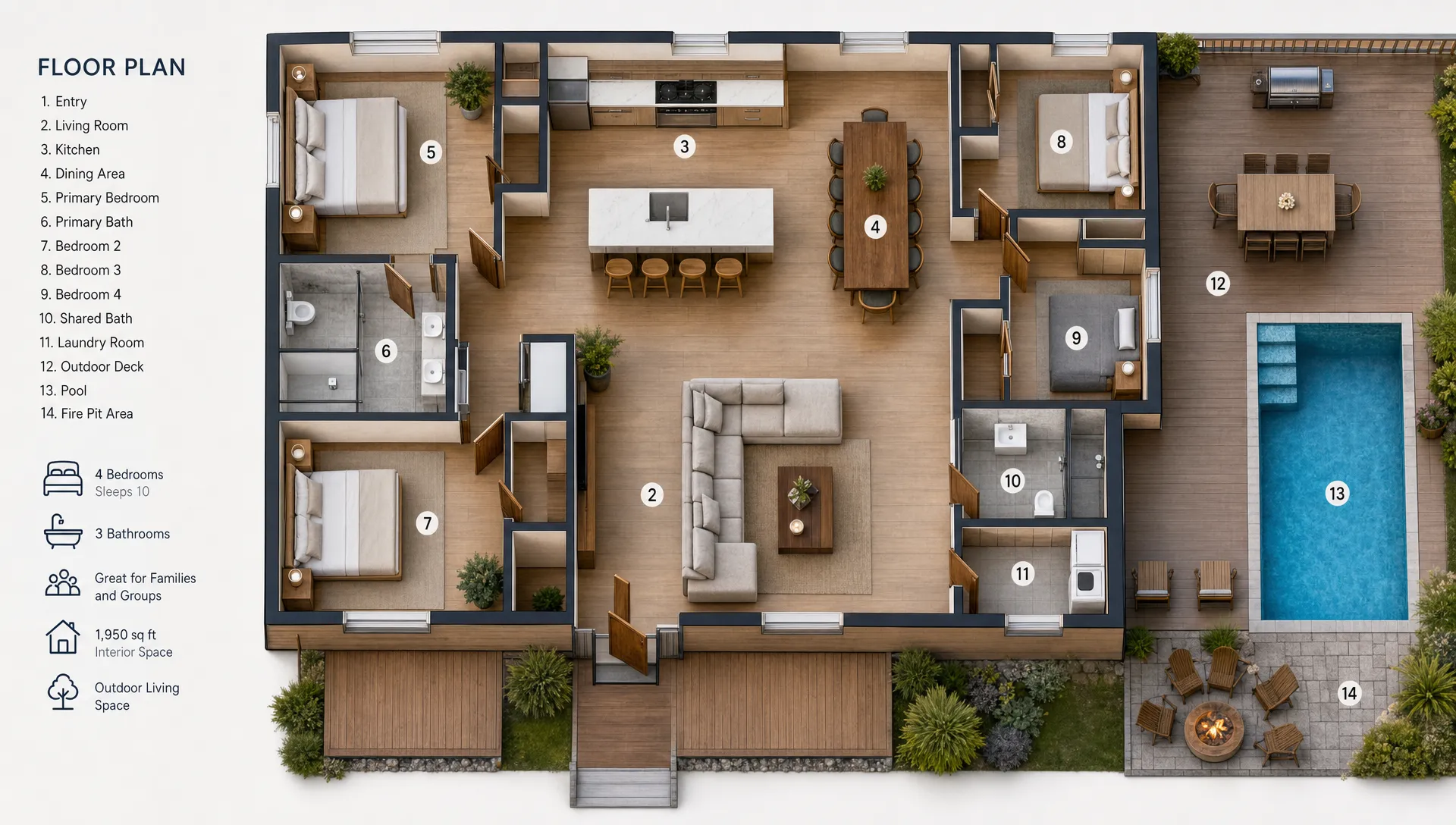
Family vacation homes should solve the hardest part of traveling with a group: giving everyone enough room to be together without forcing everyone to be together all day. The right home has real bedrooms, enough bathrooms, a kitchen that works for daily meals, private outdoor space and a support team that answers when plans change. For families, comfort is rarely about square footage alone. It is about layout, privacy and how smoothly the home functions from the first grocery run to the last load of laundry.
What makes family vacation homes comfortable for everyone?
A luxury family vacation home is a private, fully equipped home designed to support daily living for multiple guests, not just overnight sleeping. That distinction matters.
A house can list a high guest count and still feel cramped if the sleeping arrangements are stacked with pullouts, the dining table only seats half the group or the only quiet workspace is the kitchen island. We see this often when families compare homes by max occupancy instead of livability.
At Lumina, we look at how a home works at 8 a.m., 3 p.m. and 10 p.m. Mornings need coffee space, breakfast flow and enough bathrooms. Afternoons need pool towels, shade, laundry and somewhere for a toddler or grandparent to rest. Evenings need a dining setup that does not turn dinner into a rotation system.
How many bedrooms does a family vacation home need?
For most families, the right number of bedrooms depends less on the guest count and more on the relationships inside the group. Parents with young children may want adjacent rooms. Grandparents often need a quieter bedroom away from the main gathering area. Teenagers usually do better with their own sleeping zone than a sofa bed in the living room.
As a practical rule, I like one true bedroom for every adult couple, plus flexible space for children. If the listing relies heavily on air mattresses, trundles or living room sleepers, it may work for a quick weekend but not for a relaxed family stay.
Why do bathrooms matter more than square footage?
Bathrooms determine how a home feels during peak moments. A 3,500-square-foot home with two bathrooms can feel more crowded than a smaller home with four well-placed bathrooms.
For multigenerational trips, I prefer at least one bathroom for every two bedrooms, with one bathroom accessible without walking through someone else’s sleeping area. En suite bathrooms are ideal for grandparents, visiting couples or corporate travelers joining a family trip.
What does the home need besides beds?
The best family vacation homes include the unglamorous details that protect the trip: laundry, parking, pantry space, Wi-Fi, climate control and clear check-in instructions. These do not make the hero photo, but they decide whether guests relax or spend the week troubleshooting.
We learned early that the first hour after arrival sets the tone. If guests cannot find parking, unlock the door, connect to Wi-Fi or figure out where everyone is sleeping, even a beautiful home starts behind. That is why Lumina uses smart lock keyless access, proactive communication and 24/7 AI-powered guest support with an under 10-minute average reply time.
The family comfort test we use before recommending a home
Before we describe a home as family-ready, we ask a simple question: can this property handle real family behavior without friction?
That means we look beyond finishes and photos. Marble counters are lovely, but they do not help if there are not enough seats for breakfast. A pool is a major win, but not if towels, outdoor lighting and shade are afterthoughts.
Our family-fit checklist usually includes:
- Real bedrooms with doors, storage and separation between sleeping zones
- Enough bathrooms for morning and evening routines
- A kitchen that can support groceries, snacks and full meals
- Indoor and outdoor gathering spaces so the group can spread out
- Laundry, strong Wi-Fi and practical parking
- Responsive support when a question comes up during the stay
For larger gatherings, the same principles apply at a bigger scale. Our guide to vacation properties that work better for groups goes deeper on layouts, bathrooms and hosting logistics for bigger trips.
| Comfort factor | What families should look for | Why it matters |
|---|---|---|
| Bedrooms | True rooms, not just advertised sleep capacity | Better rest, privacy and fewer awkward sleeping arrangements |
| Bathrooms | Multiple bathrooms in convenient locations | Faster mornings and less tension before outings |
| Kitchen | Full-size appliances, cookware and dining space | Easier meals, snacks and grocery-based travel |
| Outdoor space | Private pool, patio, yard or lounge area where available | More room for kids, grandparents and evening downtime |
| Guest support | Fast responses before and during the stay | Small issues get solved before they become trip problems |
Family vacation homes vs. hotels for real family travel
Hotels work well for short stays, solo business trips and travelers who plan to spend little time in the room. Families usually need something different.
A hotel can give you daily housekeeping and a lobby, but it often splits families across rooms, limits private gathering space and turns every meal into a restaurant bill. A private home gives the group one shared base with more control over the day.
| Stay type | Best for | Common limitation |
|---|---|---|
| Hotel rooms | Short stays, couples, solo travelers | Families are often separated across rooms |
| Resort suites | Amenity-heavy trips with on-site dining | Less privacy and more rigid schedules |
| Private family vacation homes | Multigenerational trips, longer stays, families who value privacy | Quality depends heavily on layout and management |
| Extended-stay apartments | Work trips and budget-conscious stays | Often less character, privacy or outdoor space |
The main advantage of a private home is not just space. It is control. You choose when breakfast happens, when the kids swim, when grandparents rest and when everyone gathers for dinner.
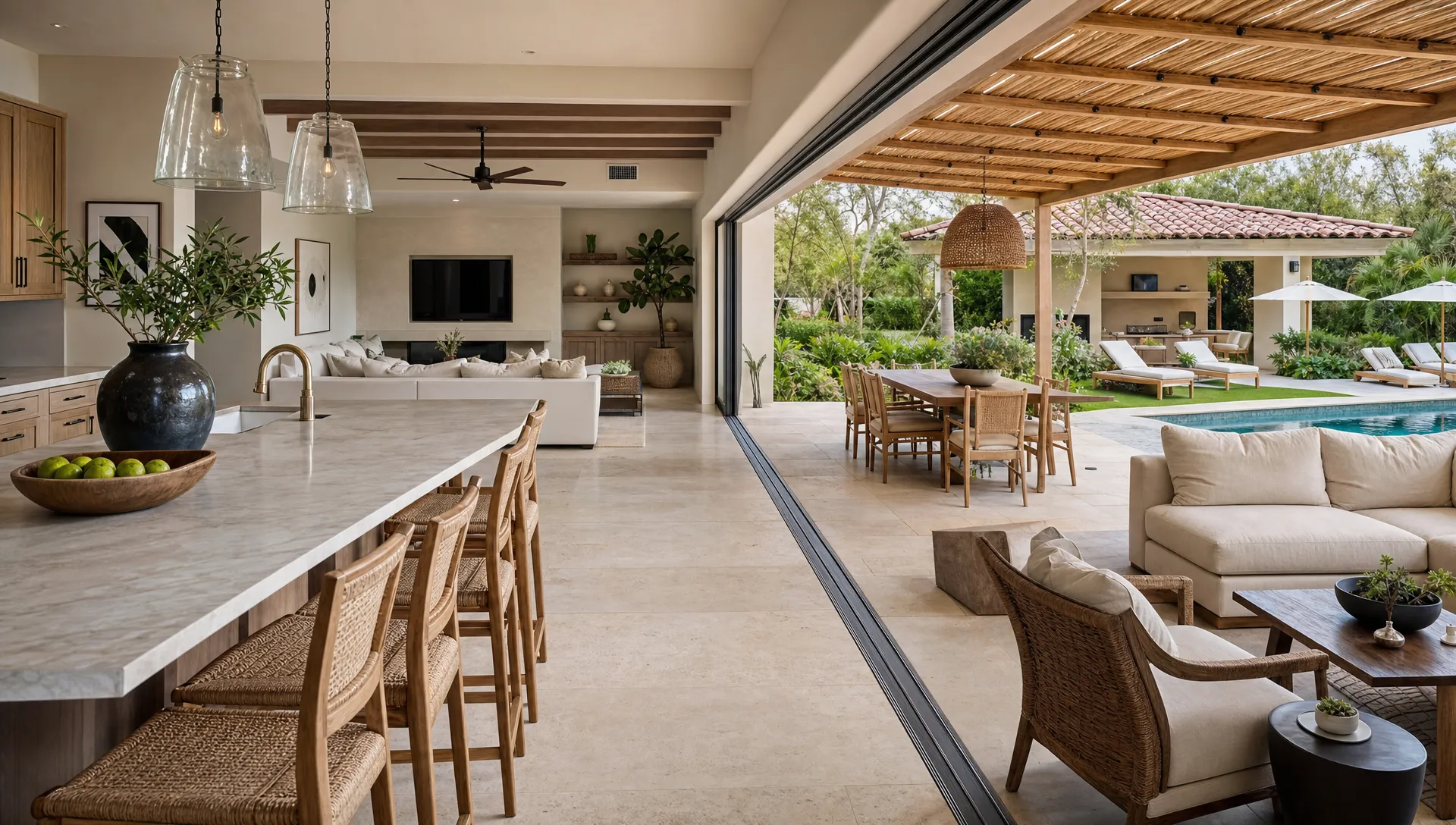
Layout details that matter once everyone arrives
Family comfort is built into the floor plan. A home can photograph beautifully and still create daily frustration if bedrooms are clustered poorly, the kitchen is undersized or every conversation echoes through the house.
Sleeping zones should match the family structure
If two families are traveling together, look for balanced bedroom quality. One primary suite and several small overflow rooms can create an awkward split. If grandparents are joining, a main-level bedroom can be the difference between easy and exhausting.
For families with children, proximity matters. Parents of younger kids often want rooms close enough to hear movement at night. Parents of teenagers may prefer more separation. Neither is wrong, but the layout should match your group.
Kitchens should be evaluated like working spaces
A vacation kitchen does not need to be restaurant-grade, but it should support how families eat. That means enough refrigerator space, real cookware, coffee options, dishware for the whole group and counter space for snacks.
We pay close attention to dining capacity because it is one of the most common mismatches in vacation homes. If a home sleeps 10 but the dining table seats six, the group will feel it every day.
Laundry is not optional for family trips
Laundry changes the packing strategy. Families with young children, beach gear, pool towels or sports uniforms need access to a washer and dryer. For extended stays, it becomes essential.
This is one reason private homes work so well for longer travel windows. Guests can pack lighter, reset midweek and keep the home feeling organized.
Wi-Fi and workspaces matter, even on vacation
Many family trips include at least one person taking a call, checking in with work or managing travel logistics. Strong Wi-Fi and a quiet workspace protect the rest of the group from having the kitchen table become a temporary office all week.
Corporate guests traveling with family need this even more. We see executives and production teams choose private homes because they can combine privacy, work readiness and residential comfort better than most hotels.
Destinations that fit different family trips
Not every destination fits every family. The right location depends on the rhythm of the trip.
Scottsdale is strong for families who want private pools, outdoor dining, golf, spa days and warm-weather gatherings. Manhattan Beach works well for families who want walkable coastal time, restaurants, sand and a residential beach feel. If you are comparing South Bay options, our guide to Manhattan Beach vacation rentals for families covers parking, beach access and layout considerations in more detail.
Laguna Beach and Moonstone fit families looking for quieter coastal scenery. Edwards and the Vail area are better for mountain stays, ski access and summer hiking. San Juan works beautifully for families who want culture, beaches and a more vibrant city rhythm. Beaverton is practical for extended stays, corporate travel and family visits tied to the Portland area.
Some family trips are anchored around more than sightseeing: a wedding weekend, youth tournament, reunion dinner, graduation, private event or fundraiser. If someone in the group is organizing a paid event alongside the stay, modern event ticketing tools with fast checkout can reduce RSVP and payment friction before everyone arrives.
How to compare family vacation homes before you book
A polished listing is not enough. Families should compare homes the way they will use them.
- Map the sleeping arrangements before booking: Assign every guest to a room or bed before you reserve, not after arrival.
- Count bathrooms by morning demand: If several people need to get ready for the same outing, bathroom placement matters.
- Review dining and seating capacity: The living room and dining area should fit the group without constant reshuffling.
- Check parking rules: This is especially important in beach markets, mountain towns and residential neighborhoods.
- Ask about outdoor amenities: Pools, hot tubs, patios, grills and yards should be private, usable and clearly described.
- Look for smart access and responsive support: Keyless entry and fast messaging remove the old arrival headaches.
- Read reviews for comfort clues: Mentions of cleanliness, communication, quiet bedrooms and stocked kitchens are more useful than vague praise.
I would rather a guest choose a slightly smaller home with a smarter layout than a huge house that creates friction. Comfort comes from how the property lives, not how impressive the maximum occupancy number looks.
What Lumina looks for before calling a home family-ready
Lumina properties are private luxury homes, not hotel rooms, shared resort units or generic apartment conversions. Every booking gives guests exclusive access to the home and its amenities. Depending on the property, that may include a private pool, hot tub, outdoor living areas, smart home features, high-speed Wi-Fi or EV charging.
Our operating standard is simple: the home needs to feel easy before guests ask for help. That starts with accurate listings, clean arrival instructions, smart locks and proactive communication. It continues with concierge-level support for local recommendations, special requests and practical questions during the stay.
One operational lesson we carry into every family stay is that small details become big details when children, grandparents and multiple households are involved. A missing pool towel is not just a towel issue when six people are heading outside. A confusing thermostat is not small when a baby is trying to nap. A delayed response feels longer when the whole group is waiting by the front door.
That is why we care about systems as much as design. The design gets guests excited to book. The systems earn the five-star review.
Frequently Asked Questions
What size vacation home does a family need? Most families should choose a home based on true bedrooms, bathroom count and usable living space rather than max occupancy alone. A smaller home with the right layout can feel more comfortable than a larger home with poor bedroom separation or not enough bathrooms.
Are family vacation homes better than hotels? For many family trips, yes. Private vacation homes usually offer more space, privacy, kitchen access, laundry and shared gathering areas. Hotels may be better for short stays where daily service, on-site dining and individual rooms are the priority.
What should I ask before booking a luxury family rental? Ask about bedroom layout, bathroom placement, dining capacity, parking, Wi-Fi, laundry, pool or hot tub access, check-in instructions and response times. These details matter more than decorative finishes once the family arrives.
Do family vacation homes work for extended stays? They can work extremely well when the home has a full kitchen, laundry, reliable Wi-Fi, comfortable work areas and enough storage. Extended-stay families should pay close attention to noise, parking, grocery access and the quality of guest support.
Find a family vacation home that lives well
The best family stays feel calm because the home supports the group without constant compromise. If you want privacy, real amenities and a team that understands how families use a home day to day, book your stay with Lumina and compare private luxury homes across our U.S. destinations.
We manage these homes with real families in mind: early arrivals, late dinners, sandy towels, work calls, grocery runs and grandparents who need a quiet room. That is the difference between a house that photographs well and a stay that feels effortless.
- Shariann