
dynamic pricing vacation rentals
Dynamic Pricing Vacation Rentals Owners Should Understand
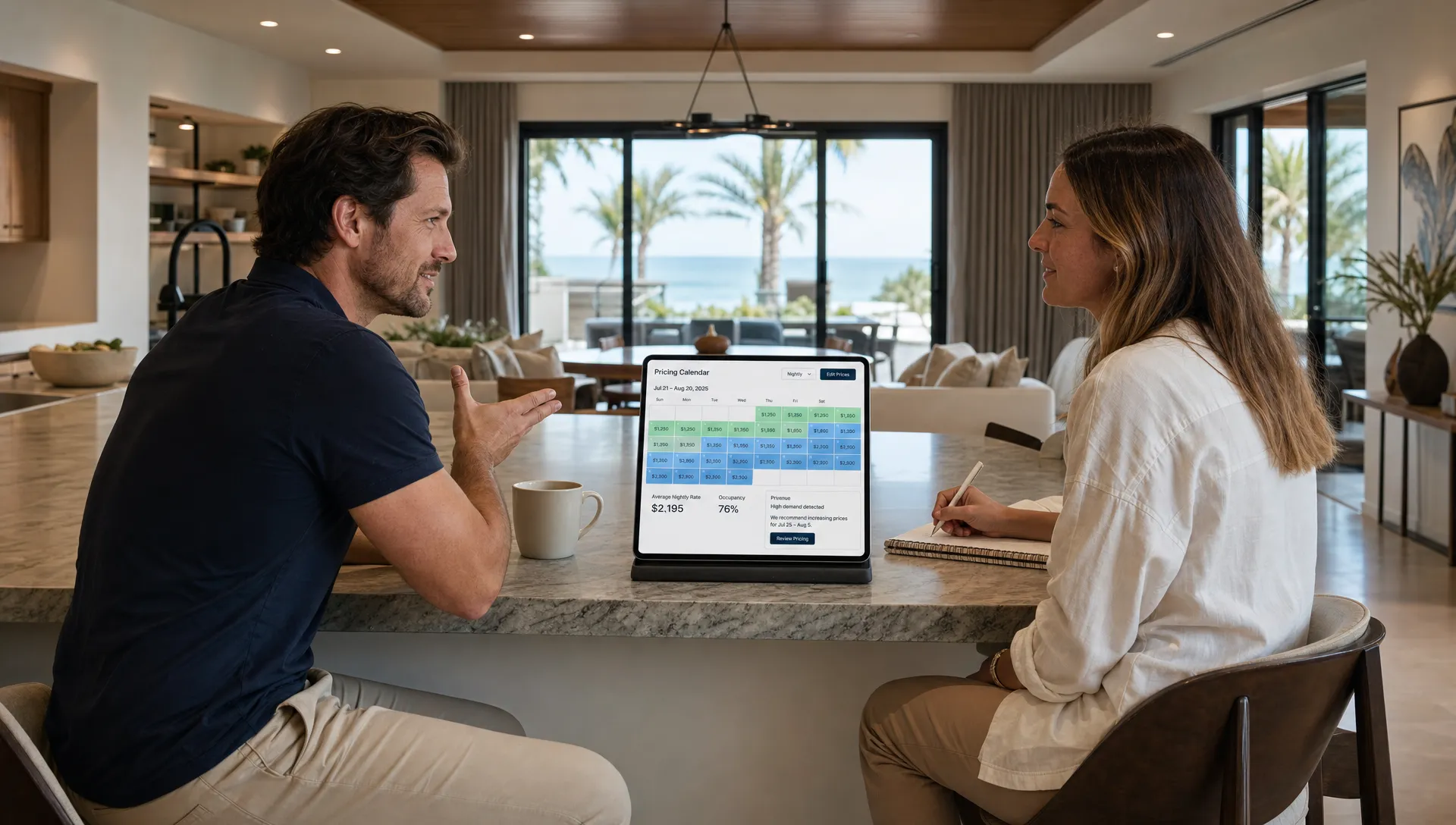
Dynamic pricing vacation rentals means adjusting nightly rates, minimum stays and booking rules based on real demand, not gut feel or last year’s calendar. For luxury owners, the goal is not simply “charge more.” The goal is to protect premium positioning, fill the right dates, avoid low-quality bookings and keep margins intact after utilities, cleaning, platform fees and wear.
I see owners lose money in two opposite ways: they set one flat rate all year and underprice peak demand, or they let software chase occupancy so aggressively that the home feels discounted. Neither is revenue management. Luxury homes need a pricing strategy that respects the property, the market and the guest profile.
What dynamic pricing vacation rentals actually means for owners
Dynamic pricing is a revenue strategy that changes the price of a vacation rental as demand changes. The model looks at factors like seasonality, holidays, local events, booking lead time, day of week, comparable listings, occupancy pace and last-minute availability.
For a standard condo, a pricing tool might be enough. For a luxury home, the price has to reflect much more: privacy, design, pool heat, views, outdoor space, garage access, workspaces, EV charging, hot tubs and the kind of guest the property is built to attract.
Dynamic pricing vacation rentals works best when the software recommendation is treated as a starting point, then reviewed by someone who understands the home’s real cost structure and guest expectations.
What does dynamic pricing adjust besides the nightly rate?
Nightly rate is only one lever. A well-managed pricing strategy also adjusts minimum stays, orphan-night rules, length-of-stay discounts, premium fees for high-demand dates and sometimes arrival-day restrictions.
That matters because two bookings with the same nightly rate can produce very different owner outcomes. A three-night weekend stay during peak season may generate strong revenue but leave awkward gaps on both sides. A 12-night corporate stay may come in at a slightly lower nightly average but reduce turnover cost, guest risk and calendar friction.
Fixed pricing vs. dynamic pricing for luxury rentals
Many owners start with fixed seasonal pricing because it feels controlled. The problem is that travel demand does not move in neat seasonal blocks. A Tuesday in September, a holiday weekend in December and a spring training week in Scottsdale do not belong in the same pricing conversation.
Here’s the simple comparison we use when explaining dynamic pricing vacation rentals to owners who have only self-managed or used basic platform settings.
| Pricing approach | How it works | Where it helps | Where it hurts |
|---|---|---|---|
| Flat annual rate | One rate for most nights | Simple to manage | Leaves peak demand money on the table |
| Seasonal rate | Different rates by season | Better than flat pricing | Misses event spikes and soft weeks |
| Platform smart pricing | Automated suggestions from one booking platform | Easy for beginner hosts | Can optimize for platform bookings, not owner net income |
| Managed dynamic pricing | Software plus human revenue review | Best for premium homes with variable demand | Requires discipline, market knowledge and ongoing review |
The last option is the one we prefer for luxury homes. Software can scan patterns quickly, but it does not know that a pool-heated Scottsdale home has a different winter margin than a coastal California home with lower utility swings. It also does not know when a property should reject a low-value booking because the dates could be better used.
Mid-article owner note: If pricing is only one part of what you need help with, we break down the broader operational picture in our guide to vacation property management services owners need. Pricing only works when cleaning, maintenance, guest communication and calendar control support it.
The owner math that matters most
The mistake I see most often is owners tracking gross revenue but not owner-quality revenue. A $1,200 booking is not always better than a $950 booking if it creates a short gap, adds a same-day turnover, uses heavy pool heat or attracts a mismatched guest.
Dynamic pricing vacation rentals should be judged by net performance, not just average daily rate. For a luxury owner, I would rather have fewer high-fit stays than a calendar full of discounted bookings that wear down the home.
Key numbers owners should watch
You do not need to stare at a dashboard every morning, but you should know which numbers your manager is using to make decisions.
- ADR, or average daily rate: The average nightly rate across booked nights.
- Occupancy rate: The percentage of available nights booked.
- RevPAR, or revenue per available rental night: Rental revenue divided by all available nights, booked or not.
- Booking window: How far in advance guests reserve.
- Length of stay: The average number of nights per reservation.
- Owner net after costs: The number that matters most after fees, cleaning gaps, utilities and management costs.
A high ADR with weak occupancy may signal overpricing. High occupancy with weak ADR may signal underpricing. Strong gross revenue with poor net income usually means the pricing strategy is ignoring operating costs.
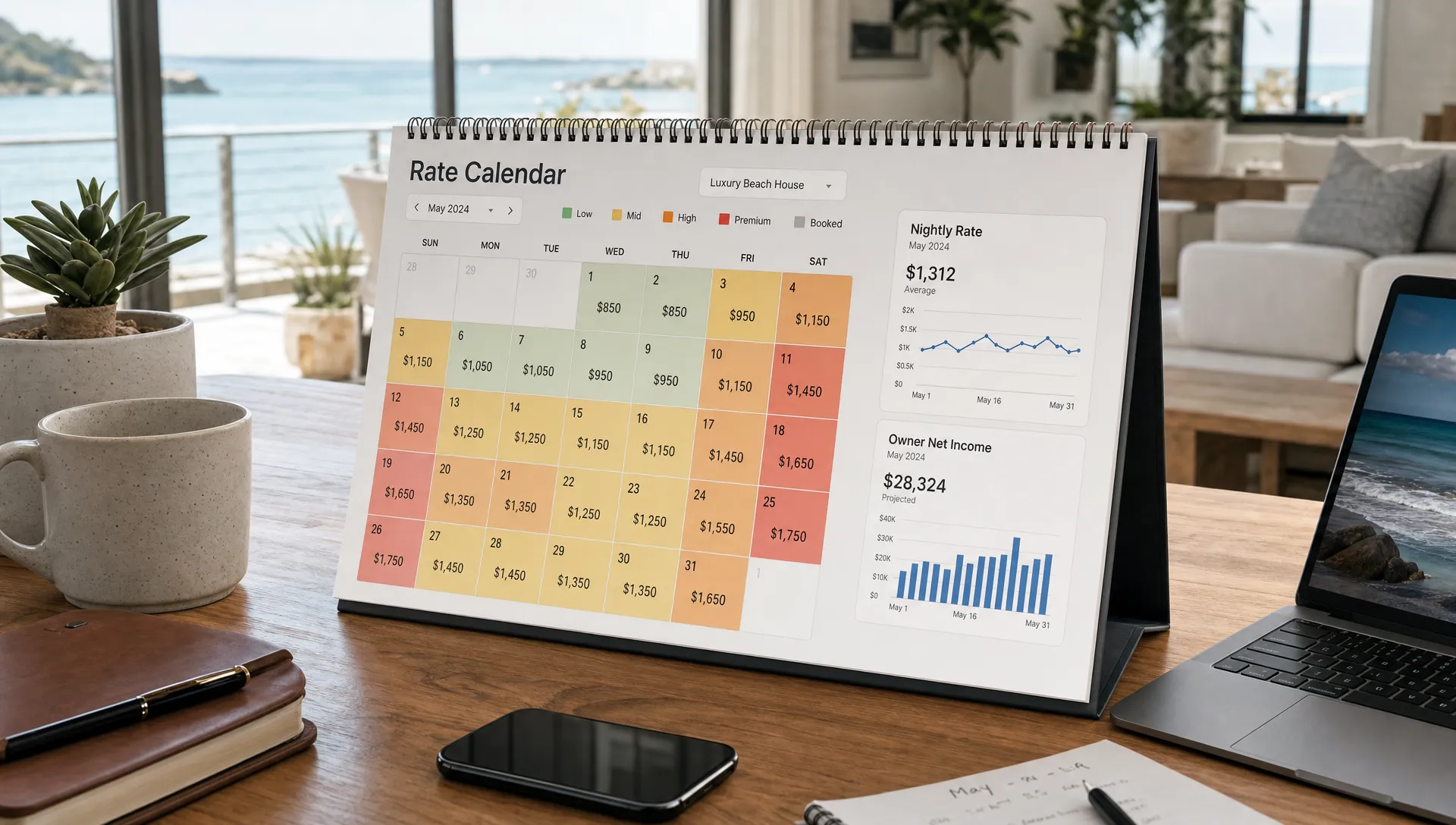
Why luxury homes need human oversight
Pricing tools are useful, but they are not operators. They do not walk the property after a family stay, review guest messages, track maintenance patterns or feel the difference between a bargain hunter and a guest who values the home.
When we manage a luxury property, we look at what the market is doing and what the house can responsibly support. Dynamic pricing vacation rentals is partly data and partly judgment. That judgment becomes especially important when a home has features that change costs by season.
An operational lesson from Scottsdale pool heat
We learned the hard way that pool heat costs in Scottsdale can eat a painful share of a host’s winter margin if you do not price it into the nightly rate or charge for it correctly. Guests love a warm pool in cooler months, but gas and electric costs do not care about nightly revenue screenshots.
Now, we treat pool heat as a pricing and expectation issue, not an afterthought. If a guest expects a resort-level outdoor experience in January, the rate has to support that experience. Discounting the stay and absorbing the pool heat is not hospitality, it is bad math.
This is where self-managing owners often feel the pain. They want to be generous, so they include everything. Then winter arrives, utilities spike and the “good booking” becomes a weak booking.
What pricing software can and cannot do
Most pricing tools can evaluate demand signals faster than a human can. They can compare similar listings, track occupancy pace and suggest rate changes by date. That is useful.
They cannot fully understand your brand position, your owner goals or your tolerance for risk. Dynamic pricing vacation rentals can go wrong when the tool is allowed to discount premium homes too quickly just because nearby inventory is not moving.
Pros and cons of automated pricing
Automated pricing is not the enemy. Unsupervised pricing is the problem.
| Automated pricing benefit | Owner risk if unmanaged |
|---|---|
| Responds quickly to market demand | May follow weak comps that do not match your home |
| Reduces manual calendar work | Can discount too early during soft periods |
| Captures obvious event demand | May miss property-specific costs or restrictions |
| Helps avoid stale rates | Can prioritize bookings over owner net income |
The right approach is structured review. At Lumina, we want automation doing the repetitive work and experienced operators making the judgment calls. That is the same logic owners should use when comparing other business expenses too. A cheap quote and a thoughtful quote rarely include the same scope, which is why this breakdown of why website prices vary for small businesses is relevant beyond websites: setup, support, strategy and ongoing work change the real value of the service.
How a strong pricing strategy is built
A good pricing plan starts before the listing goes live. If the initial positioning is wrong, dynamic adjustments only move a flawed number up and down.
For luxury owners, dynamic pricing vacation rentals should begin with the property’s market position. Is it a family home with a private pool? A couples retreat near the beach? A long-stay executive rental with workspaces and laundry? Each profile changes the rate strategy.
Step 1: Define the premium guest
Pricing should filter for the right guest. If the home is designed for families, the strategy may favor longer stays during school breaks. If it is better for couples, weekend demand and occasion stays may carry more weight.
A property built for executives or production crews needs a different lens again. Extended stays may justify length-of-stay discounts because they reduce turnovers and create steadier income.
Step 2: Build the rate floor
Every luxury home needs a rate floor. That is the lowest nightly rate the owner should accept after considering cleaning complexity, utilities, linen wear, amenity costs, platform fees and management effort.
The floor should not be based on fear. It should be based on margin. If a booking cannot clear the floor, it may be better to leave the home open.
Step 3: Layer in demand signals
Once the floor is clear, the strategy can account for seasonality, school calendars, holidays, local events, weather patterns and booking lead time. The key is not to wait until the calendar is empty before reacting.
Good revenue management reads pace. If peak dates are booking too quickly, the price may be too low. If ideal dates are not getting views or saves, the issue may be price, photos, copy, restrictions or listing placement.
Step 4: Connect pricing to the booking engine
Pricing only works if the booking path is clean. If rates are accurate but the booking experience creates friction, you still lose demand.
That is why we care about direct booking infrastructure, calendar accuracy and the way guests see fees before they confirm. We wrote more about this in why a vacation rental booking engine matters, because owners often focus on rates while overlooking the path that turns interest into reservations.

Common dynamic pricing mistakes owners make
The most expensive pricing mistakes usually look reasonable at first. Owners lower rates to “get activity.” They open one-night gaps. They copy a neighbor’s price. They accept a short stay in the middle of a peak week because an empty night feels worse than a low-value booking.
Dynamic pricing vacation rentals should prevent those mistakes, not automate them faster. If your system does not have rules, every open date starts to feel like a problem that must be solved with a discount.
Mistake 1: Copying nearby listings
Comparable listings are useful, but only if they are truly comparable. A four-bedroom home with a private pool, updated interiors and smart access should not be priced like an older rental with shared amenities.
Luxury owners have to be careful here. Underpricing may improve occupancy, but it can also attract guests who are not aligned with the property’s care standards.
Mistake 2: Ignoring minimum stays
Minimum-stay rules can protect your calendar. A two-night booking over a holiday period might block a five-night guest who would have paid more and created less turnover stress.
This is especially true in premium leisure markets where families plan longer stays during school breaks and holidays.
Mistake 3: Discounting too early
Some owners panic when a date is not booked far in advance. But booking windows vary by market, season and guest type. Dropping rates too early can train the calendar downward.
A better approach is to watch demand pace and adjust deliberately. Sometimes the correct move is better listing presentation, not a lower price.
What owners should ask their manager
If a manager says “we use dynamic pricing,” ask what that means in practice. Many companies plug in a tool and call it revenue management.
Here are the questions I would ask before trusting someone with a luxury home:
- Who reviews the pricing recommendations, and how often? Automation without review is not enough for premium properties.
- What data informs the rate floor? The answer should include operating costs, owner goals and guest profile, not only market averages.
- How do you handle event dates and holidays? You want proactive planning, not last-minute rate changes.
- How do minimum stays change by season? This shows whether the manager protects the calendar structure.
- How do you report performance to owners? You should see more than gross booking revenue.
This is also where full-service management can pay for itself. If better pricing, fewer operational mistakes and stronger guest handling increase owner net income, the management fee becomes part of the revenue strategy. We explain that break-even thinking in when vacation rental management pays for itself.
FAQ
What is dynamic pricing for vacation rentals? Dynamic pricing for vacation rentals is the practice of changing rates and booking rules based on demand, seasonality, local events, occupancy pace and property-specific factors. For luxury homes, it should also account for operating costs and guest fit.
Is Airbnb Smart Pricing enough for a luxury home? It can be a useful input, but I would not rely on it alone for a luxury home. Platform tools may help fill dates, but owners also need rate floors, minimum-stay strategy, amenity cost controls and human review.
How often should vacation rental prices change? Prices can change daily, but the strategy should not be random. A manager should review rates regularly, especially before peak seasons, holidays, major local events and periods where the booking pace changes.
Can dynamic pricing lower my nightly rate? Yes, but that is not always a bad thing. Strategic discounts can fill soft dates or close short gaps. The problem is discounting below the rate floor or lowering prices without understanding margin.
Does dynamic pricing vacation rentals strategy work for extended stays? Yes, but extended-stay pricing should use different rules. Longer stays often deserve adjusted rates because they reduce turnovers, stabilize income and may attract corporate guests, relocating families or production crews.
A final word for owners
Dynamic pricing is not about squeezing every guest for the highest possible rate. It is about matching price to demand, protecting the home’s premium position and making sure the owner keeps more of the revenue that matters.
At Lumina, we manage pricing as part of the whole operation: guest communication, smart access, cleaning coordination, maintenance, listing strategy, booking flow and owner reporting. Dynamic pricing vacation rentals only works when the stay itself supports the price.
If you own a luxury home and want to know what it could earn with professional pricing and full-service management, email newhomes@staywithlumina.com or call (602) 905-7540 for a free revenue estimate.
I care about this topic because pricing is where a lot of owners quietly lose money. The calendar can look busy and still underperform if the strategy is wrong. We would rather price with discipline, protect the home and build income owners can trust. - Shariann